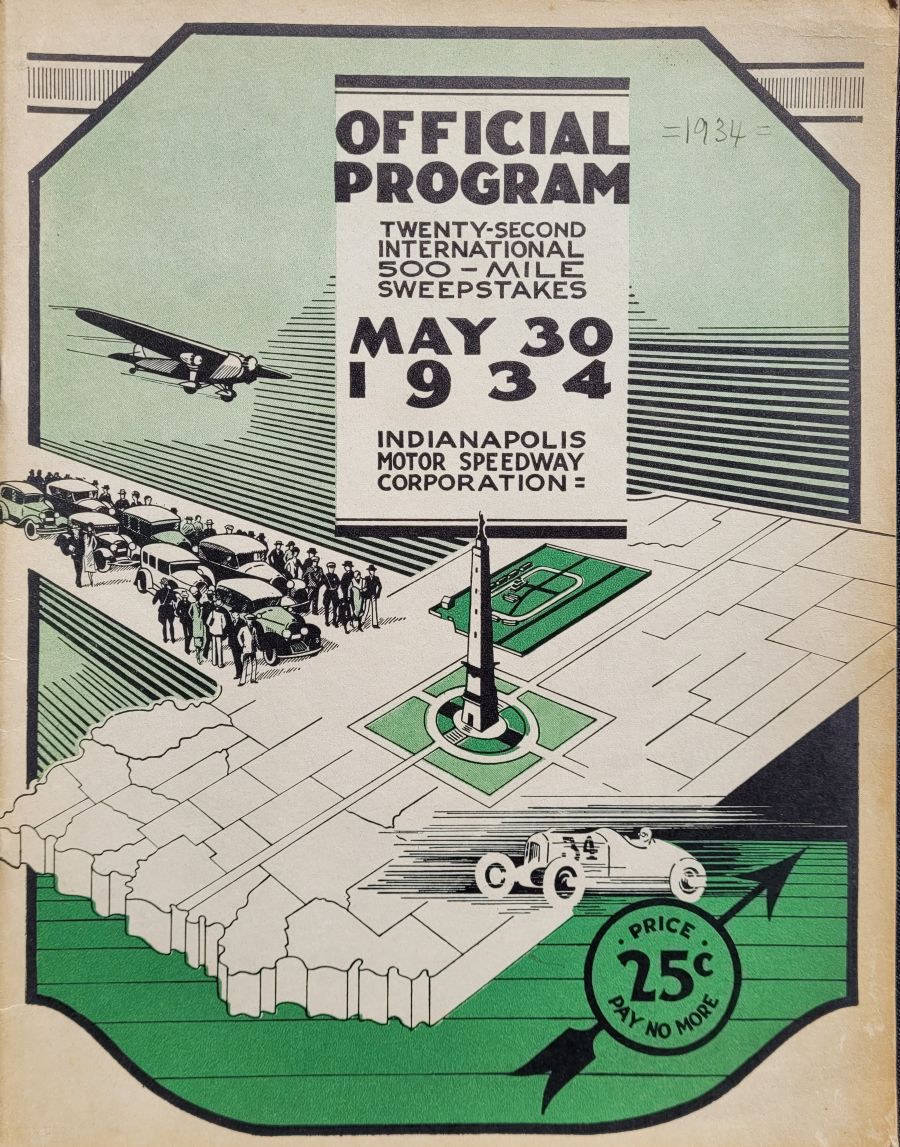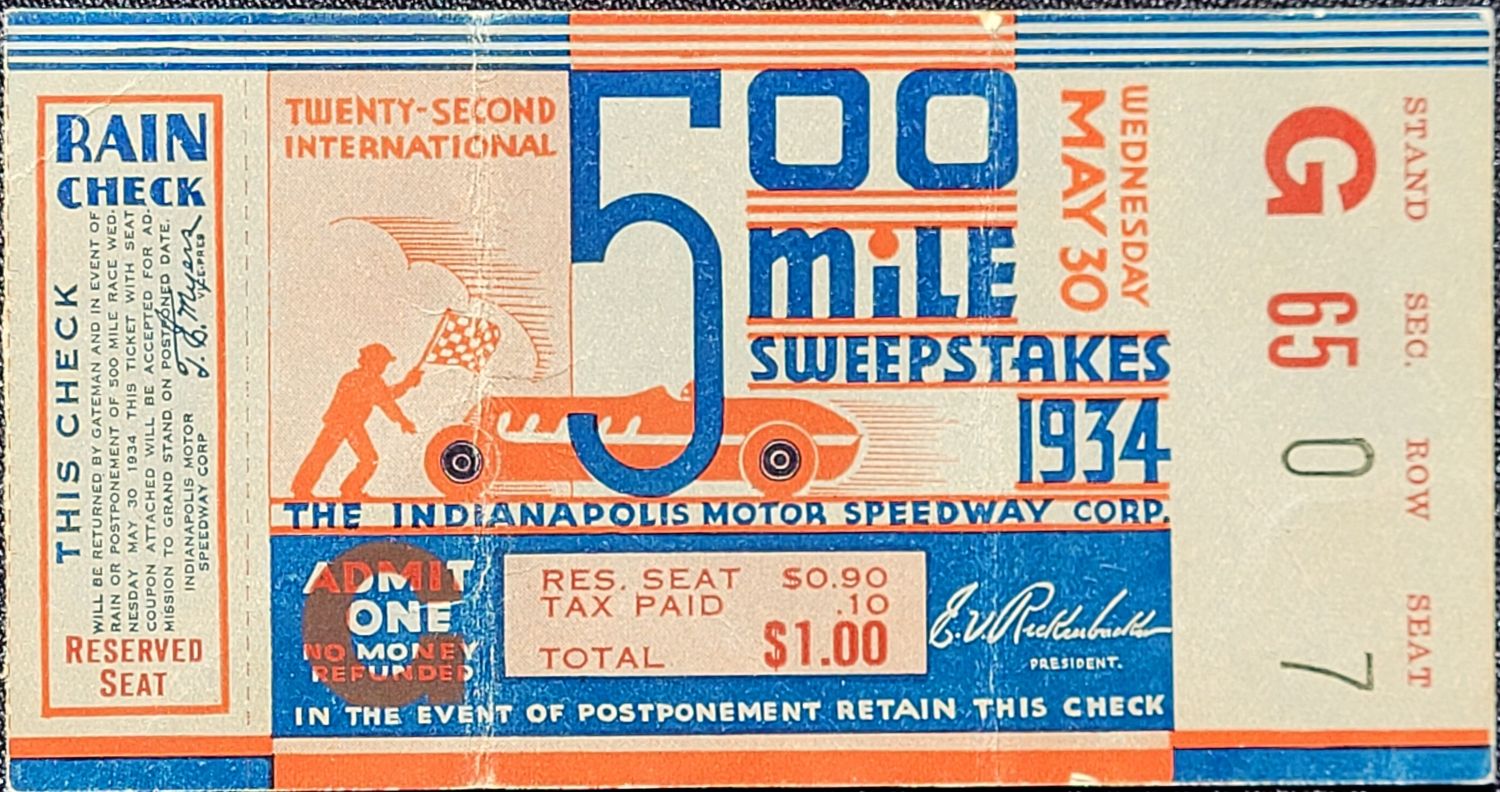
The 22nd Indianapolis 500, held on May 30, 1934, was one of the closest and most dramatic races in Speedway history. Bill Cummings won driving the Boyle Products Miller, completing the 500 miles in 4 hours, 46 minutes, 5.20 seconds, at a then-record average speed of 104.863 mph. Cummings narrowly defeated Mauri Rose by just 27.25 seconds, making it the closest finish in Indianapolis 500 history at the time. Although neither driver led during the first 71 laps, the race evolved into a prolonged duel, with Cummings and Rose trading the lead repeatedly over the final two-thirds of the event. Cummings ultimately led the final 26 laps to secure victory. Lou Moore finished third. The race featured eight lead changes among four drivers and saw only 12 of the 33 starters finish, reflecting both mechanical fragility and the grueling demands of the event.
In response to serious accidents and fatalities during the 1933 season, officials implemented strict fuel and oil limits to reduce speeds and improve safety, restricting cars to 45 gallons of fuel and six gallons of oil. Qualifying procedures were also tightened, forcing cars to complete ten-lap runs using just three gallons of fuel. Despite these restrictions, race speeds continued to climb, and the 1934 event produced a new record pace. Importantly, no fatalities occurred during the race itself, a significant improvement compared to earlier years. However, tragedy did strike during practice when Pete Kreis and his riding mechanic Bob Hahn were killed in a violent accident, underscoring the era’s persistent dangers. The 1934 race remains notable for its intense competition, historic closeness of finish, and pivotal role in shaping early safety reforms at Indianapolis.