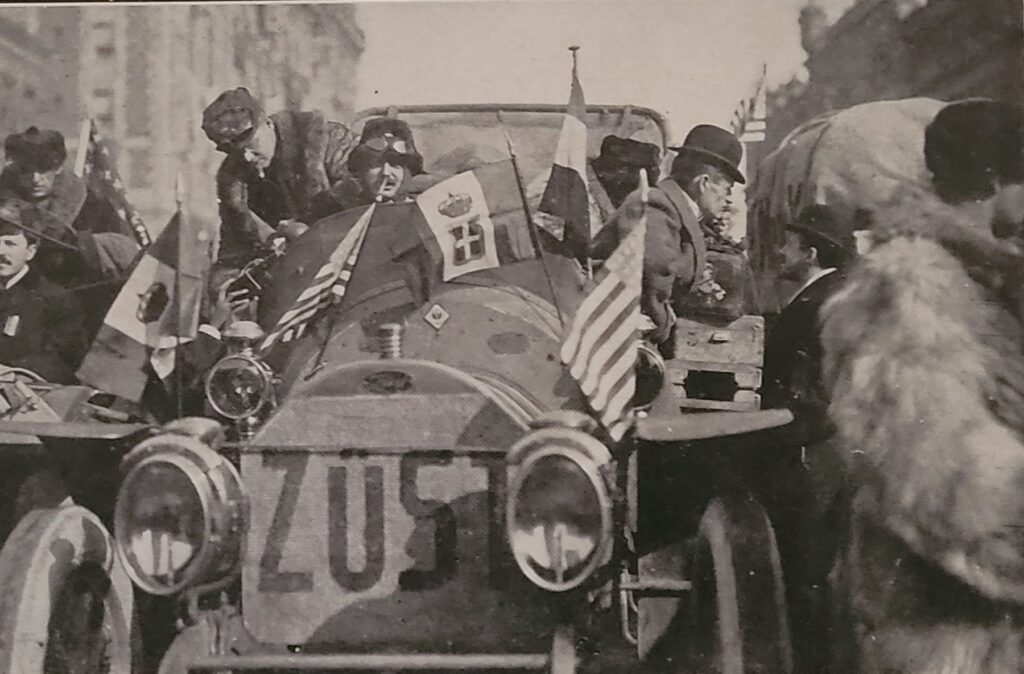
The 1900s marked the true beginning of organized automobile racing, as experimental machines and fearless drivers pushed the limits of early automotive technology. Races were often held on public roads, horse tracks, and improvised courses, with reliability proving just as important as speed. Manufacturers used competition to showcase innovation, while drivers competed with little protection and minimal rules, making each event a test of endurance and ingenuity.
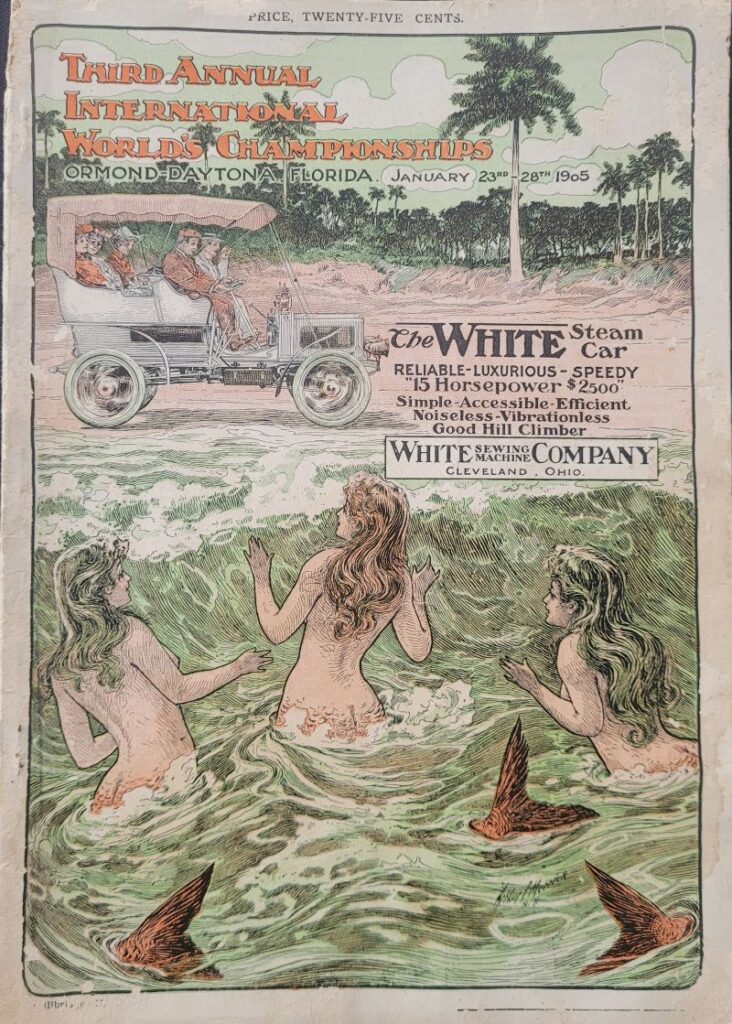
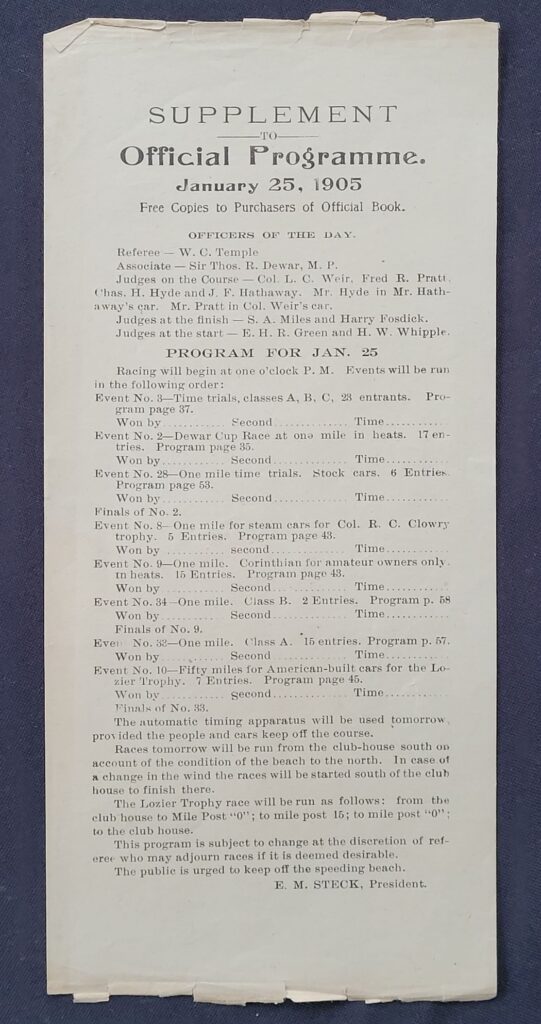
This decade laid the foundation for modern motorsports, introducing the first sanctioned races, international competitions, and purpose-built racing vehicles. Programs, promotional materials, and early ephemera from the era reflect a sport still finding its identity—where engineering breakthroughs, daring personalities, and public fascination combined to create the roots of racing as we know it today.