
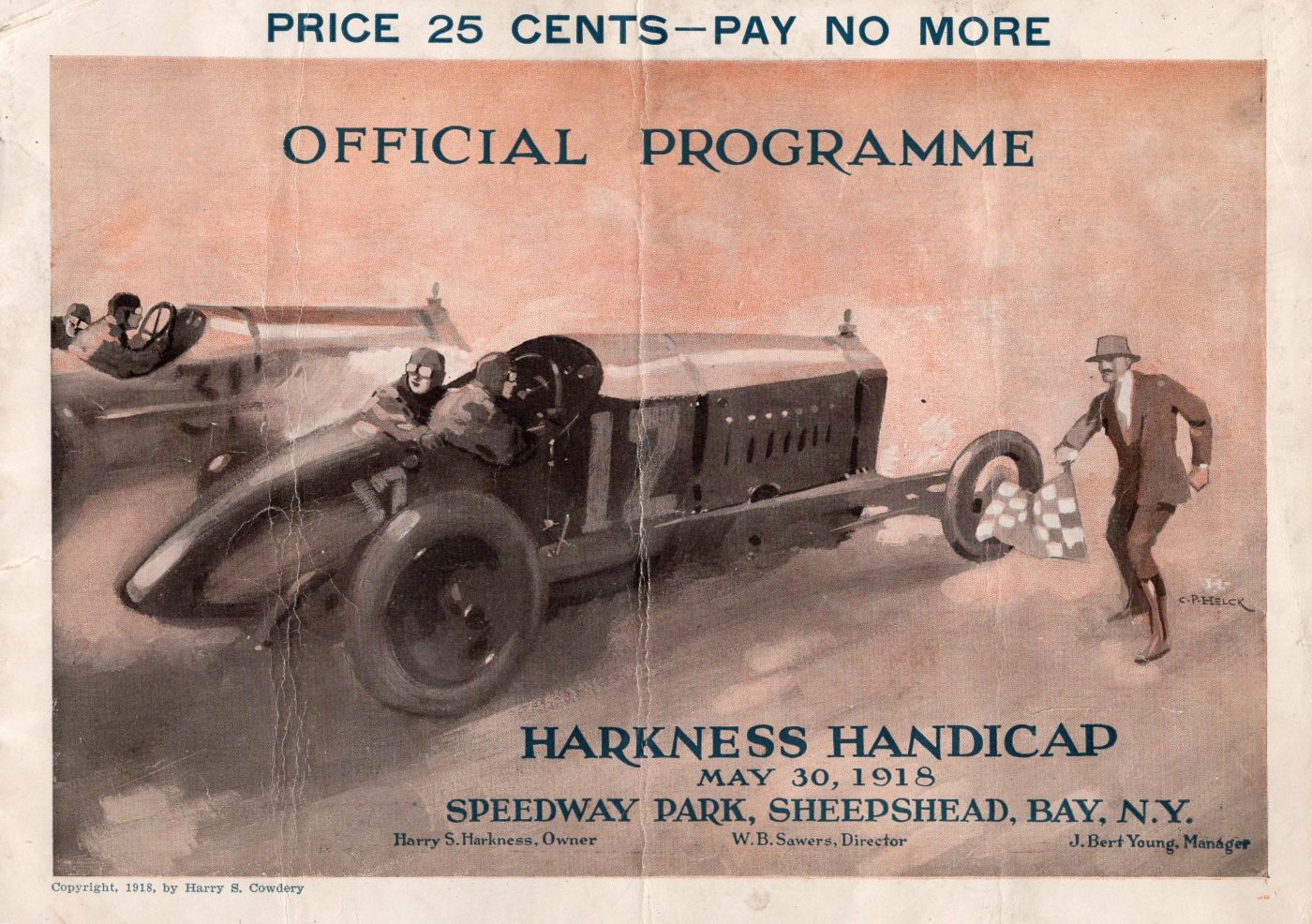
The 1918 Harkness Handicap, a 100-mile AAA-sanctioned event, was held on Sunday, June 1 at the Sheepshead Bay Speedway, a demanding 2-mile wooden board oval located in Sheepshead Bay, Brooklyn, New York. Originally scheduled for Decoration Day (May 30) but postponed due to misty and rainy weather, the race attracted a large crowd—estimates around 40,000 or more spectators filling the grandstands—for what became one of the final major events on the historic timber track.
The race employed a handicap starting system based on engine displacement and car performance to equalize competition. Only eight cars started the 50-lap main event. Ralph DePalma, driving a powerful Packard and starting from a significant handicap, overcame the staggered starts to win in a corrected official time of 58 minutes and 21 seconds at an average speed of 102.8 mph.
Tommy Milton, in a Duesenberg, initially appeared to be the winner after a strong performance but was officially placed second after a scoring correction two days later, finishing just 10 seconds behind DePalma. Barney Oldfield placed third in his famous armored Golden Submarine, followed by Eddie Hearne, and Denny Hickey.
Wartime constraints during World War I limited the field—no European cars or drivers were present due to import restrictions and manufacturing shifts to war production—and contributed to fuel shortages and smaller entries compared to pre-war years. A supporting 10-mile Futurity Handicap heat race earlier in the day featured several of the same drivers, including Milton and Hearne.
DePalma’s victory was part of the limited 1918 AAA National Championship Trail. The win came amid broader challenges for motorsport, including patriotic “Motorless Sundays” and resource conservation efforts. This race highlighted the twilight of the golden era of American board-track racing; the Sheepshead Bay Speedway (opened 1915) would host only a few more events before closing in 1919.

May 30, 1918

May 30, 1918

June 1, 1918

June 1, 1918

June 2, 1918

June 3, 1918

June 4, 1918

June 6, 1918