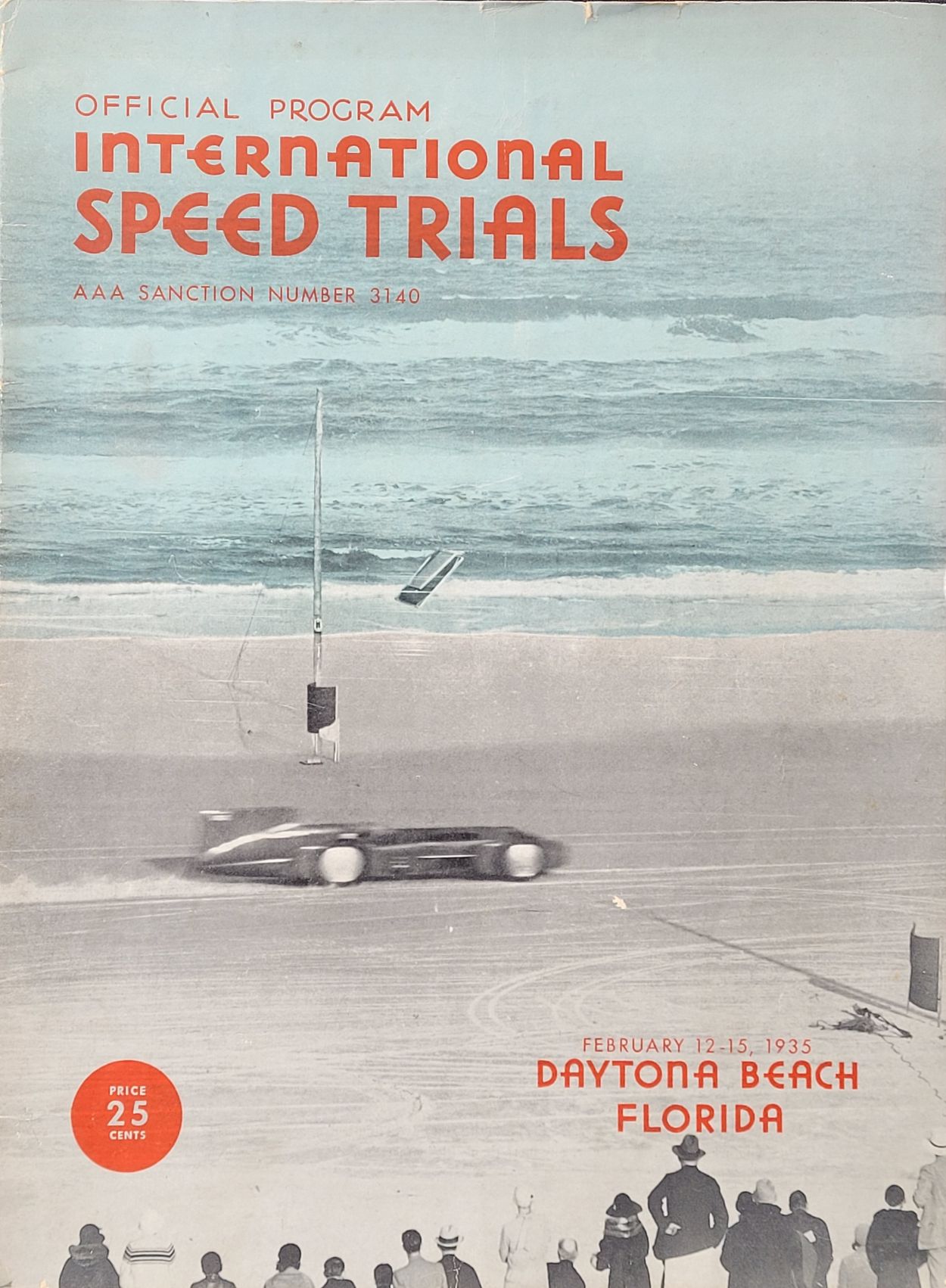
The 1935 Daytona Speed Trials marked a historic milestone in American motorsports and the final chapter of Daytona Beach’s role as a world land-speed record venue. Held on the hard-packed sands of Daytona Beach and Ormond Beach, Florida, the trials drew international attention as drivers and engineers pushed the limits of speed on one of the most famous racing surfaces in the world.
The headline moment of the 1935 trials came on March 7, 1935, when Sir Malcolm Campbell set a new world land speed record driving the Campbell-Railton Blue Bird. Campbell achieved a two-way average speed of 276.82 miles per hour, establishing what would become the last official world land speed record ever set on the sands of Daytona Beach. Although Campbell recorded higher speeds on individual passes, the official average reflected the challenges of achieving consistent runs on a beach surface.
The 1935 trials highlighted both the promise and the limitations of beach-based speed racing. While Daytona’s long, flat shoreline had hosted record attempts since 1905 and produced numerous world records, increasing speeds made sand conditions difficult to manage safely and consistently. As a result, record seekers soon shifted to more suitable venues, most notably the Bonneville Salt Flats, where Campbell would later exceed 300 mph in the same year.
The 1935 Daytona Speed Trials remain a defining moment in motorsport history, closing the era of beach-based land speed records while cementing Daytona’s legacy as a cornerstone of American racing and setting the stage for the city’s later association with organized stock-car competition.