
Paula Murphy, born Paula Muhlhauser on June 16, 1928, in Cleveland, Ohio, grew up with a passion for speed influenced by her father’s enthusiasm for racing sailboats. After earning a degree in Physical Education from Bowling Green State University, she relocated to California in 1956, initially working a desk job while dipping into motorsports. She purchased her first race car, a 1954 MG-TF, and began competing in ladies’ sports car events before transitioning to more serious competition, including the Mobilgas Economy Run where she achieved strong finishes. By the early 1960s, Murphy had committed fully to racing, quitting her job to pursue it professionally and often competing against men in a male-dominated field.
In the 1960s and 1970s, Murphy became a trailblazing figure across multiple disciplines, earning the nickname “Miss STP” through her high-profile sponsorship with Andy Granatelli and STP. She set numerous women’s records at the Bonneville Salt Flats, including a standout 236 mph in a jet-powered car prepared by Art Arfons (making her the first woman to pilot a jet car there) and earlier marks with piston engines. In drag racing, she pioneered as the first woman licensed by the NHRA to drive a nitromethane-fueled Funny Car, campaigning the iconic “Miss STP” Plymouth with crew chief Jack Bynum. She also drove in stock car events, including high-speed laps at Talladega, and achieved firsts like becoming the first woman to secure an NHRA nitro Funny Car license, though she faced challenges such as a temporary license revocation by the NHRA citing safety concerns for women.
Known as “the fastest woman on wheels,” Murphy’s fearless career spanned drag racing, land speed records, stock cars, and beyond until the mid-1970s, inspiring future generations of female racers despite injuries and barriers. Inducted into the Motorsports Hall of Fame of America in 2017, she remained a beloved icon until her passing on December 21, 2023, at age 95, leaving a legacy of breaking barriers and achieving extraordinary speeds in an era when women in racing were rare.
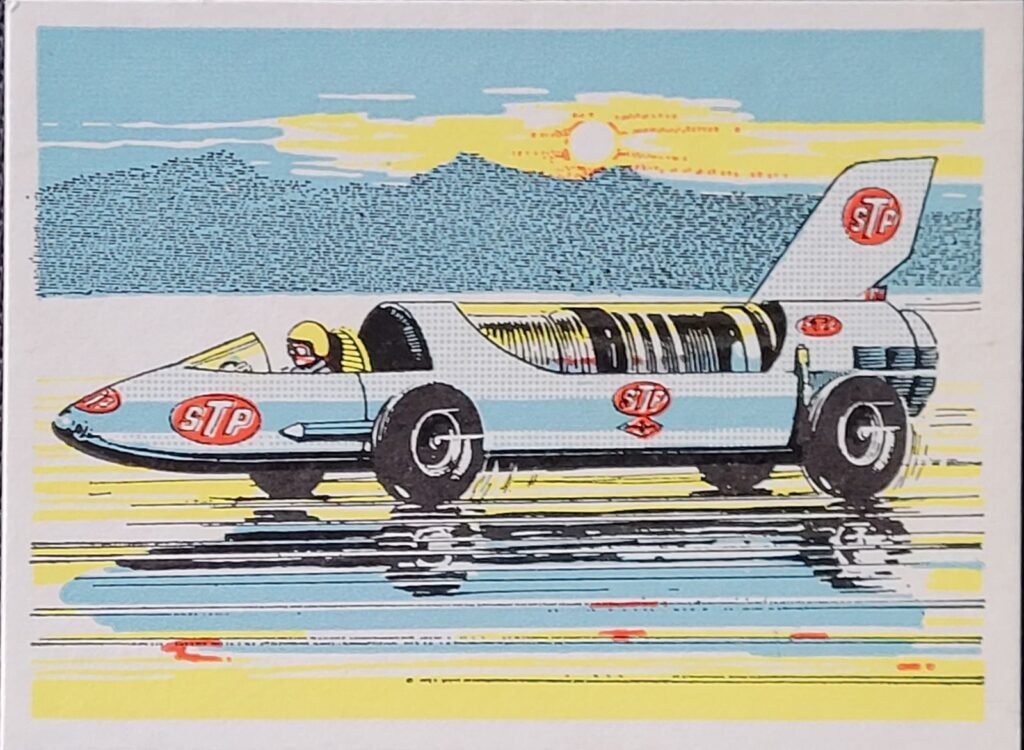
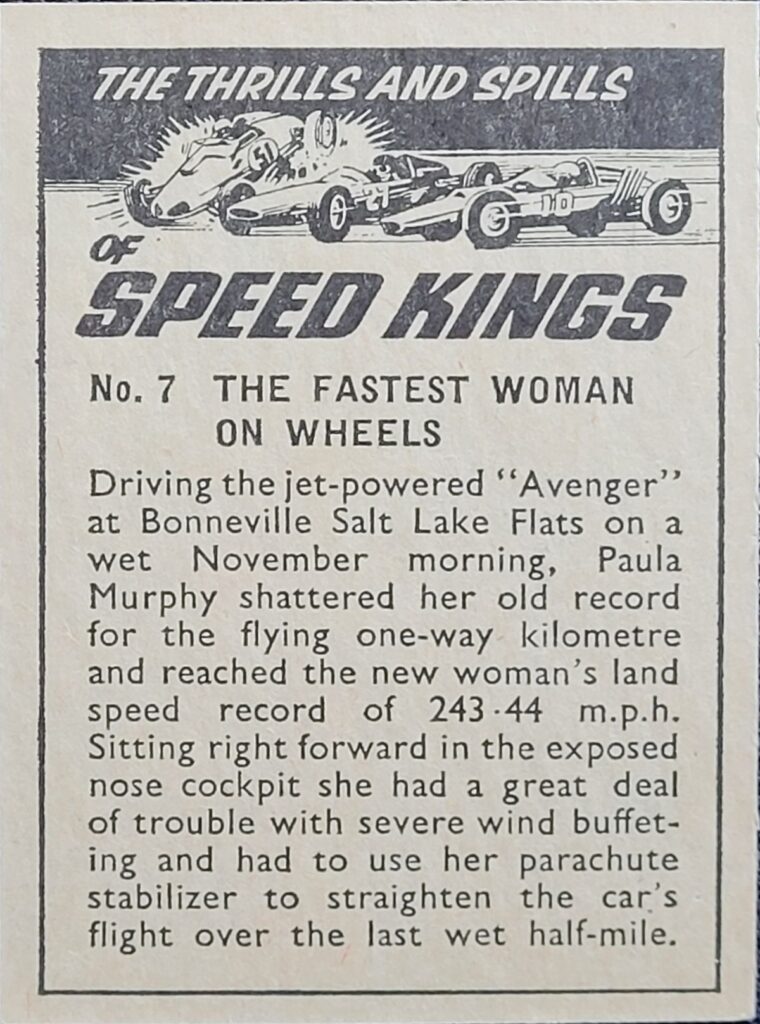
1966 Prescott Confectionary “Speed Kings”