
Peter Collins, born Peter John Collins on November 6, 1931, in Kidderminster, Worcestershire, England, grew up in a family connected to the motor trade—his father Pat was a garage owner and haulage merchant who supported his son’s early racing ambitions. Expelled from school at 16, Collins apprenticed with his father before starting competitive racing at age 17 in 1948 with a 500cc Cooper-Norton in Formula 3 events, quickly showing promise in hillclimbs, sprints, and circuit races. He progressed through British club racing and sports cars, driving for teams like HWM and briefly Vanwall, while also competing in high-profile endurance events. His breakthrough came with a victory at the 1955 Targa Florio for Mercedes-Benz, leading to a full-time contract with Scuderia Ferrari in 1956. Charismatic, handsome, and highly skilled, Collins became a key member of Ferrari’s young driver lineup, known for his smooth style and speed in both single-seaters and sports cars.
Collins achieved his greatest successes with Ferrari, winning three Formula One Grand Prix’s along with nine podiums and 47 championship points from 35 entries (32 starts). In 1956, he finished third in the World Drivers’ Championship and famously handed his car to teammate Juan Manuel Fangio at Monza and another race, helping secure Fangio’s title in a selfless act of team spirit. He also excelled in sports cars, winning events like the 1958 Buenos Aires 1000 km and Sebring 12 Hours. Tragically, on August 3, 1958, at age 26, Collins died during the German Grand Prix at the Nürburgring when his Ferrari Dino 246 ran wide in the Pflanzgarten section, somersaulted, and threw him into a tree—fatal injuries in an era without seatbelts. His death deeply affected Ferrari and teammate Mike Hawthorn, who won the 1958 title before retiring. Collins remains remembered as a talented, generous driver who might have become Britain’s first F1 World Champion had his career not ended prematurely.
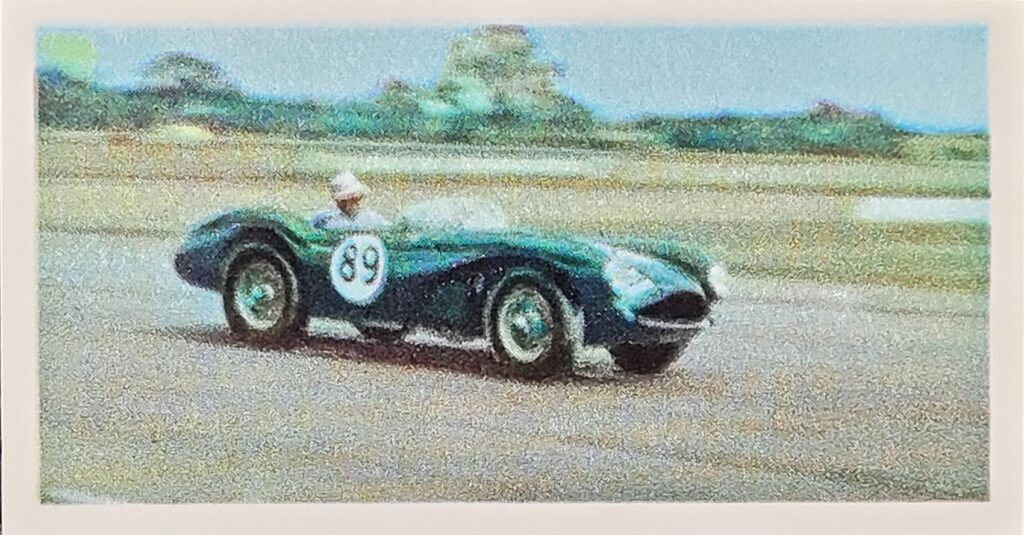
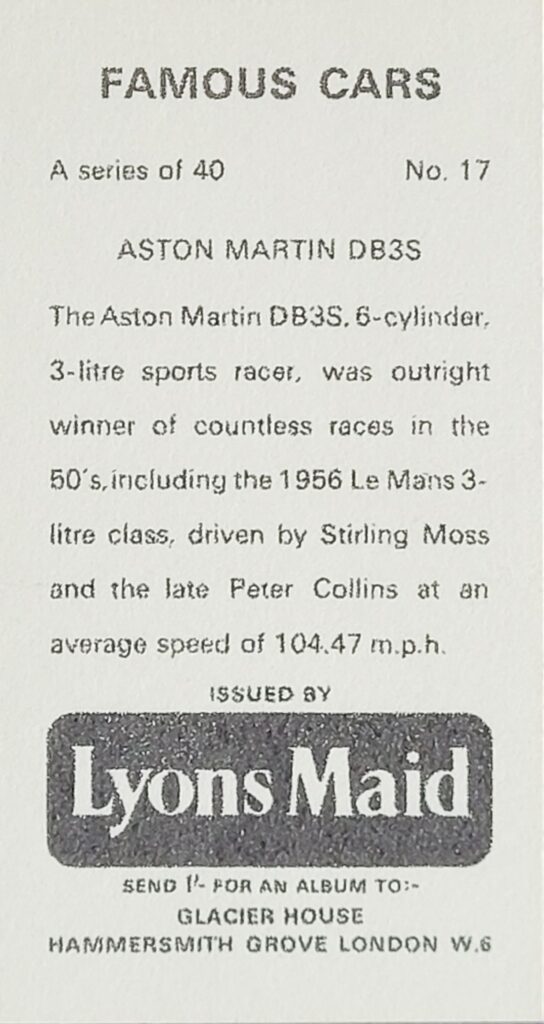
1966 Lyons Maid (UK) “Famous Cars”