
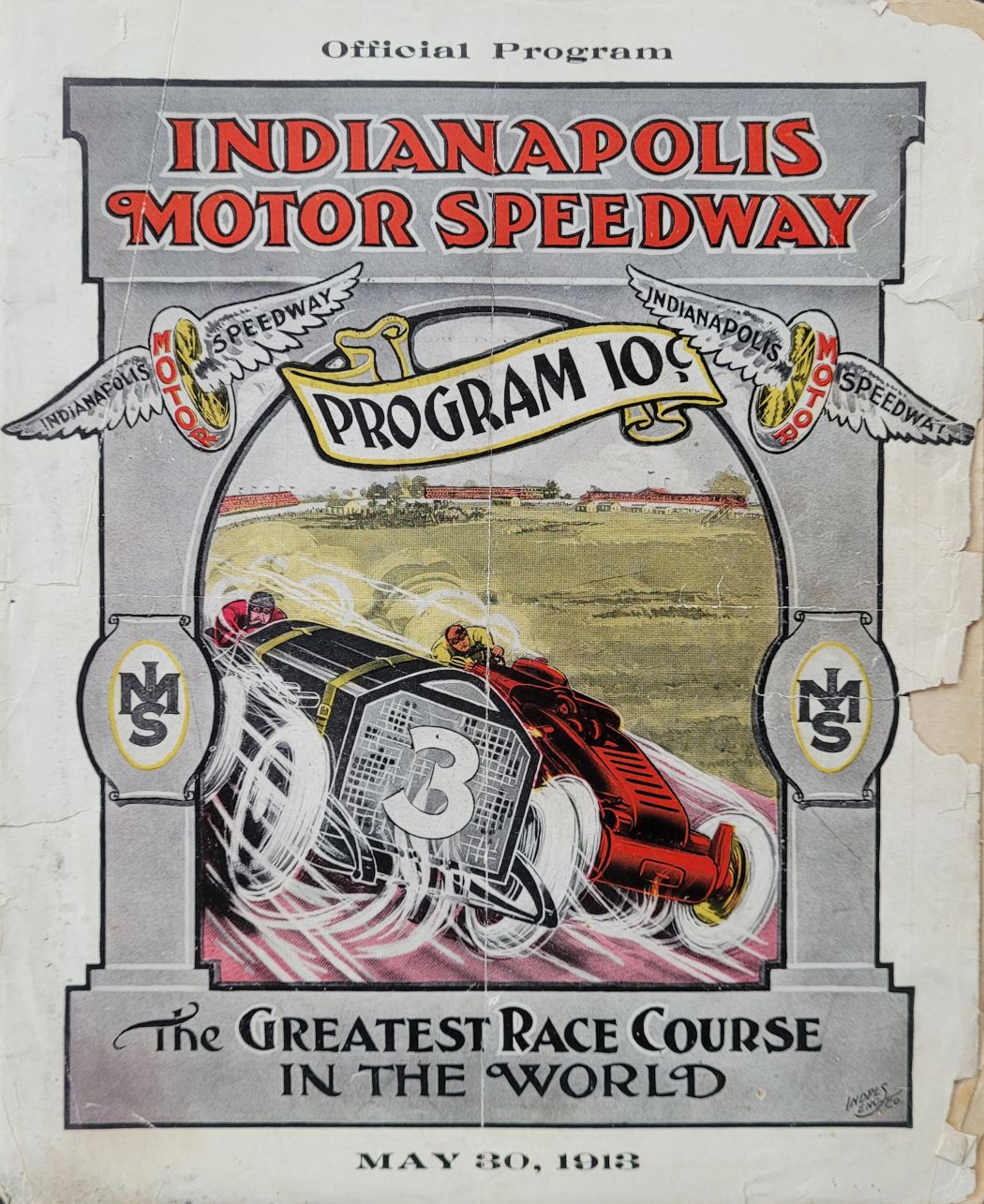
The 1913 Indianapolis 500, held May 30, 1913 at the Indianapolis Motor Speedway, was a landmark race that established the event as an international spectacle. French driver Jules Goux won convincingly in a Peugeot at an average speed of 75.9 mph, becoming the first European victor and winning by a record margin of over 13 minutes. Spencer Wishart finished second, followed by Charles Merz in third, with Albert Guyot fourth and Théodore Pilette fifth. Attendance was reported at approximately 90,000 spectators, reflecting the race’s rapidly growing popularity. The event was notable for Peugeot’s revolutionary dual overhead camshaft engine design, which outclassed much of the American competition and influenced future race car engineering. It is also remembered for the often-told (though likely exaggerated) story that Goux consumed champagne during pit stops. With strong European participation and technological innovation on display, the 1913 race marked a turning point that elevated the Indianapolis 500 to world-class status.
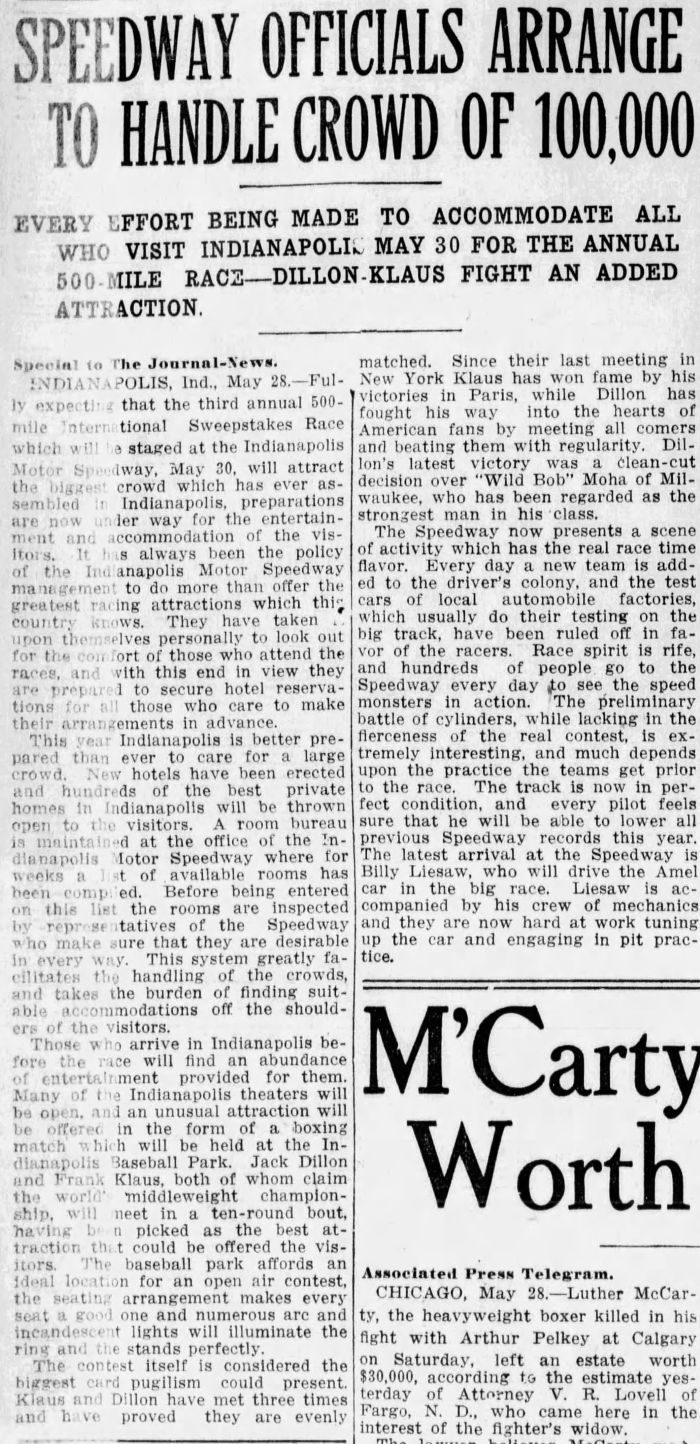
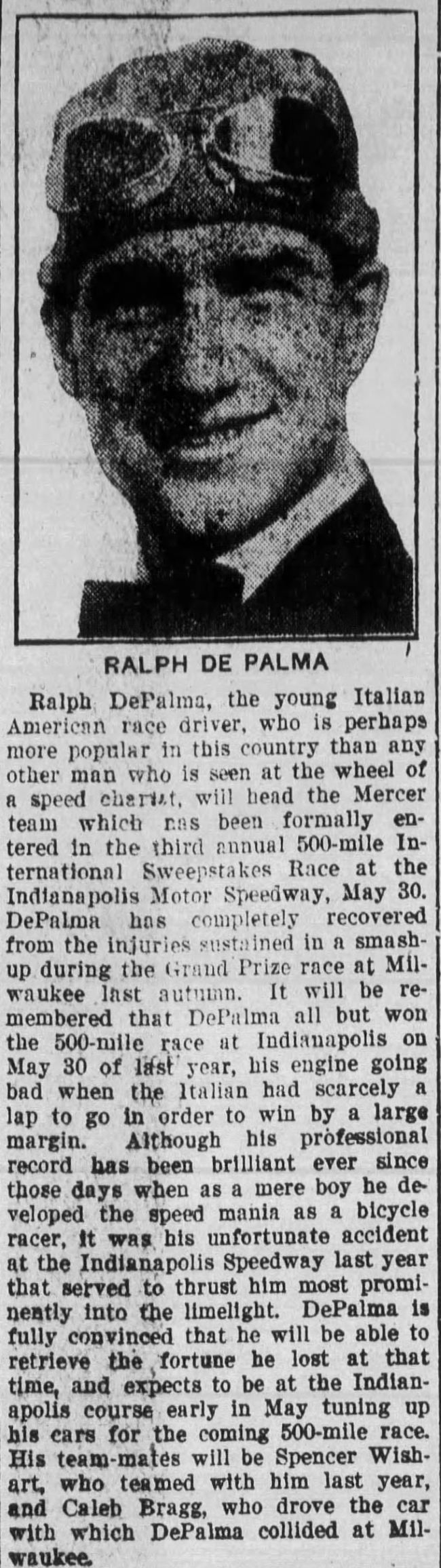
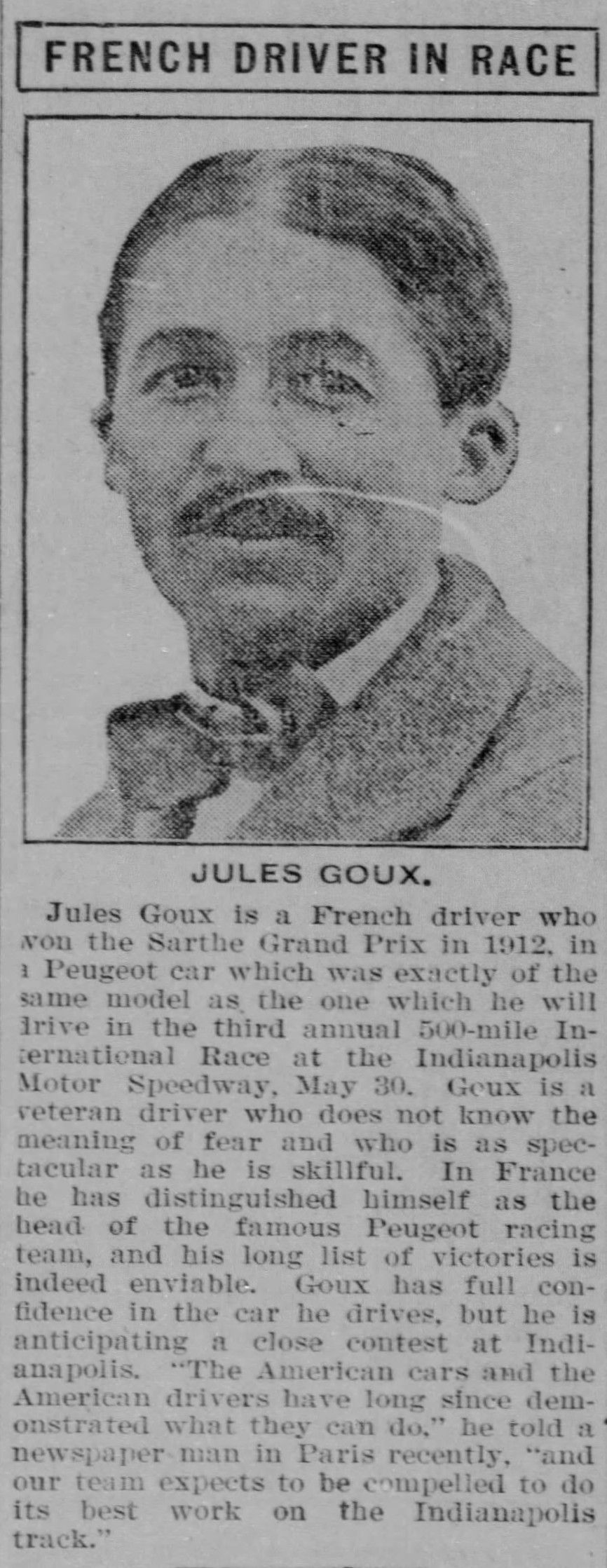
May 29, 1913
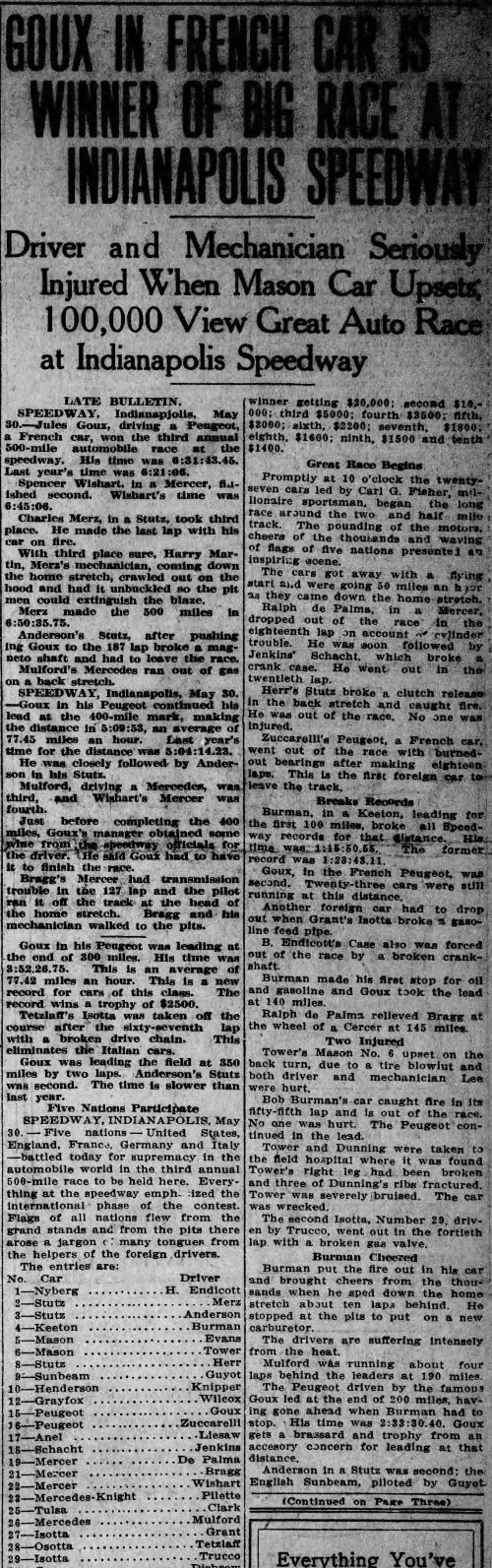
May 30, 1913
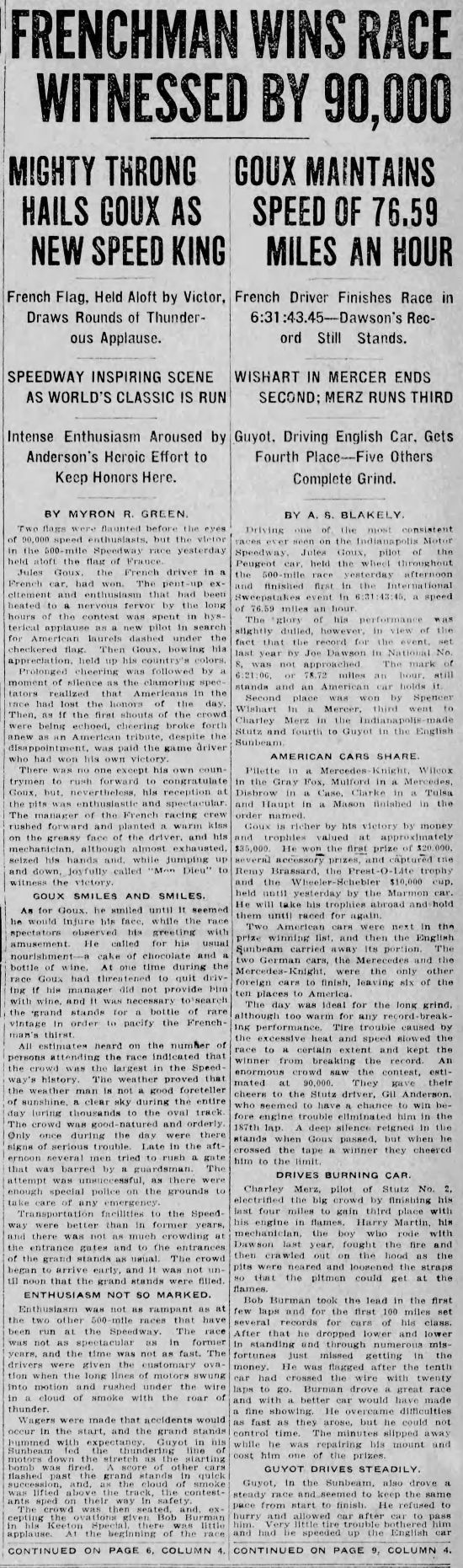
May 31, 1913
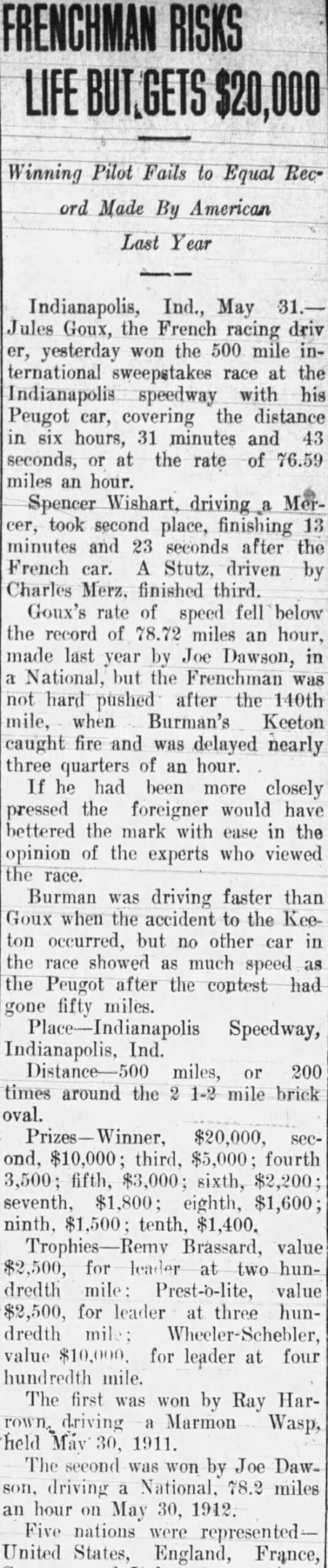
May 31, 1913