
In the summer of 1941, as the world edged closer to full-scale war, stock car racing on the sands of Daytona Beach delivered thrilling, high-stakes entertainment that resonated deeply with American fans. On July 27, promoters Bill France Sr. and Charles Reese organized a 160-mile National Championship Beach Road event on the classic 3.2-mile course that combined a stretch of A1A highway with the hard-packed Atlantic beach. The race featured a rugged field of modified 1930s and 1940s Fords and Mercurys piloted by colorful competitors, many of whom were former moonshiners and dirt-track veterans from Georgia and the Southeast.
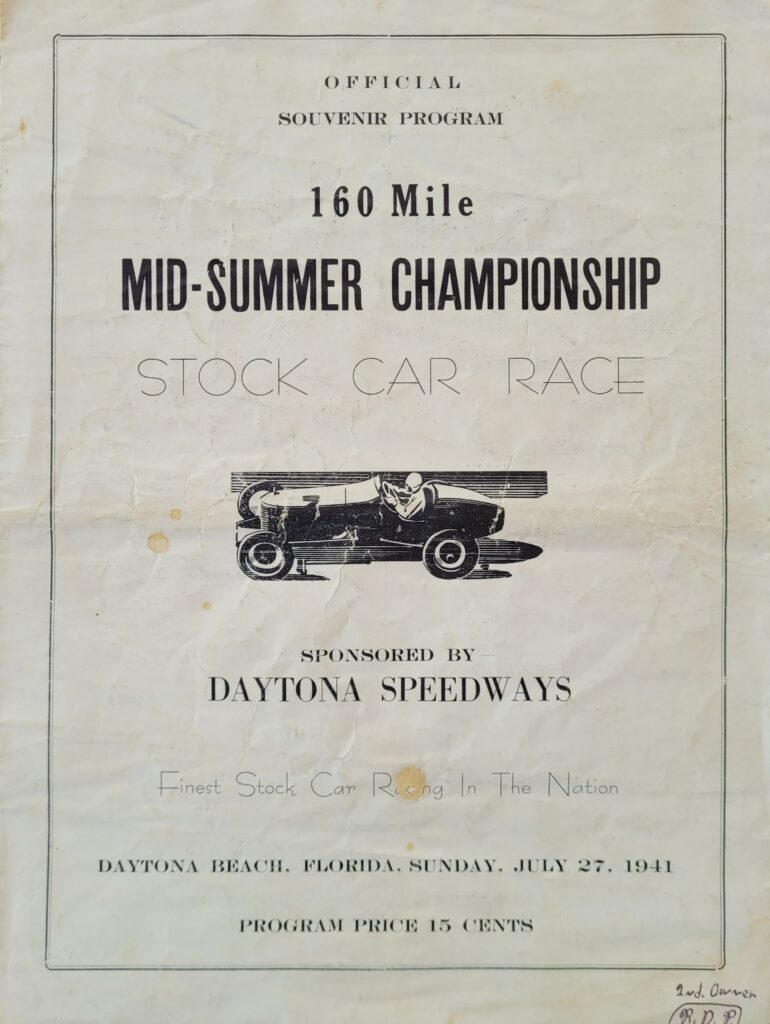
The July 27, 1941, stock car race at Daytona Beach was the third of four major events held that year on the famous beach-and-road course, which continued to grow in popularity under the promotion of Bill France Sr. The race covered 160 miles over 50 laps and attracted approximately 50 entries, although the starting field was limited to the 33 fastest qualifiers. Lou Hawkins recorded the fastest qualifying time but turned his car over to Fonty Flock for the race, placing Flock on the pole position alongside Roy Hall. At the start, Flock jumped into the lead, but the race was quickly overshadowed by a violent crash when he and Hall made contact entering the south turn. Flock’s car rolled repeatedly into the palmetto bushes, and he was transported to a local hospital with serious injuries, ending his day, and nearly his career, almost immediately.
With early favorites eliminated, the race developed into a contest between Florida’s Bill Snowden and Georgia driver Bernard Long. Long, driving a 1940 Mercury, steadily worked his way to the front and claimed the biggest victory of his racing career. Snowden finished second, while Joe Littlejohn placed third. Lloyd Seay produced one of the day’s most remarkable performances by recovering from two rollovers to finish fourth. Among the competitors was Bill France Sr., who was still racing while building his reputation as a promoter. France finished 13th in the 33-car field.
What made stock car racing explode in popularity that year went far beyond any single race. Fans were drawn to the relatable nature of the sport. These were not exotic Grand Prix machines but modified versions of the same cars people drove every day. The drivers were local heroes—tough, skilled men who often ran illegal whiskey through the mountains at night and translated that same daring into daytime racing. The beach course itself added unique drama, with cars sliding through soft sand, bouncing over ruts, and occasionally launching into the wooden stands or palmetto bushes.

Ticket prices were kept affordable, and the events carried a patriotic undertone, with proceeds supporting “Bundles for Britain” as Europe faced Nazi aggression. This blend of danger, familiarity, Southern ingenuity, and working-class rebellion struck a powerful chord during uncertain times. Crowds grew steadily throughout 1941, drawn by the chaos, rivalries, and sheer spectacle that polished big-league racing often lacked.
By the end of the season, these wild beach races had solidified stock car racing’s place in American culture. Though World War II would soon halt most activity, the foundation laid in 1941—raw excitement, relatable heroes, and grassroots appeal—directly paved the way for the organized success of NASCAR after the war. It was a summer when fans didn’t just watch racing—they felt it in their bones.