
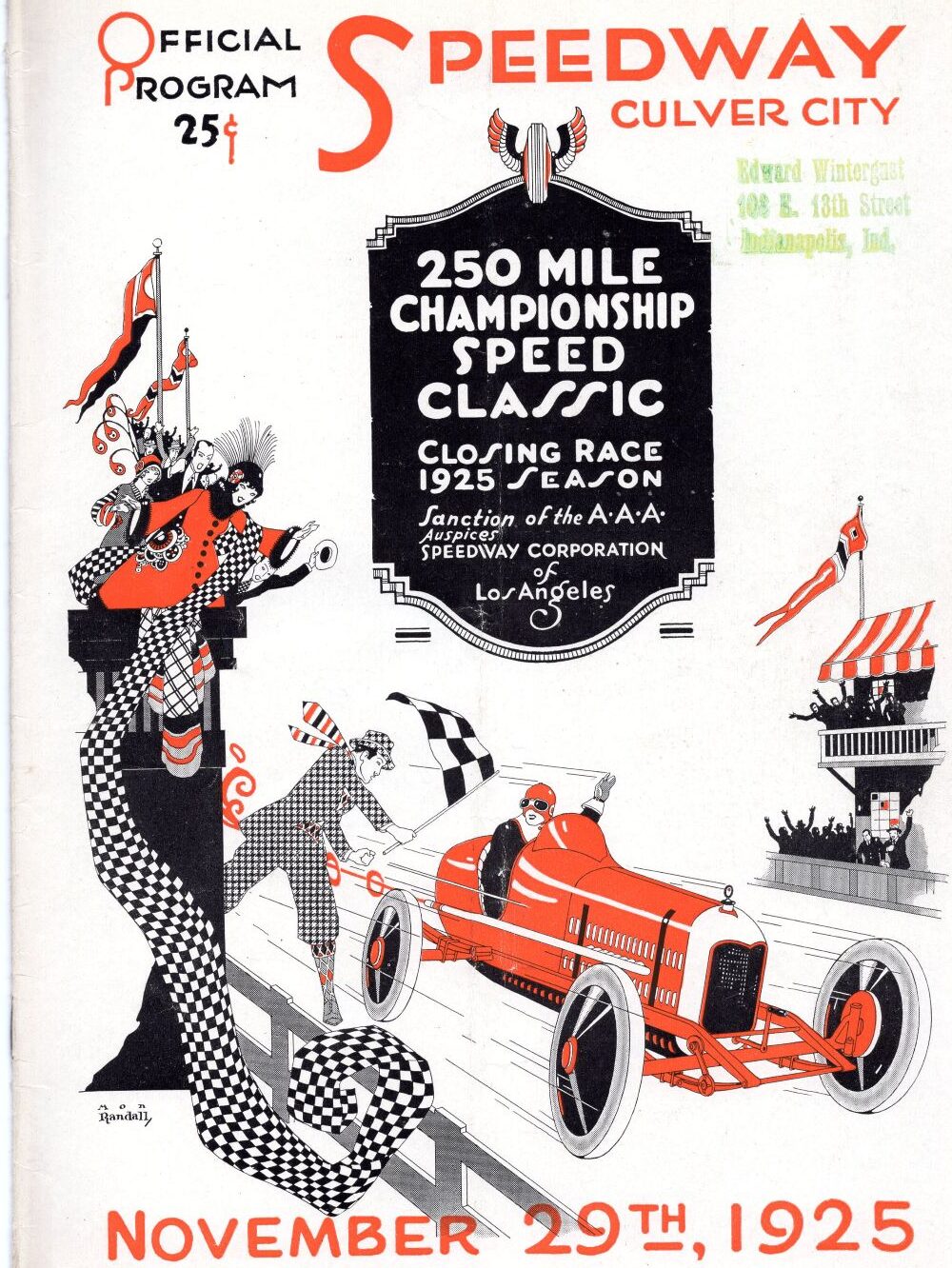
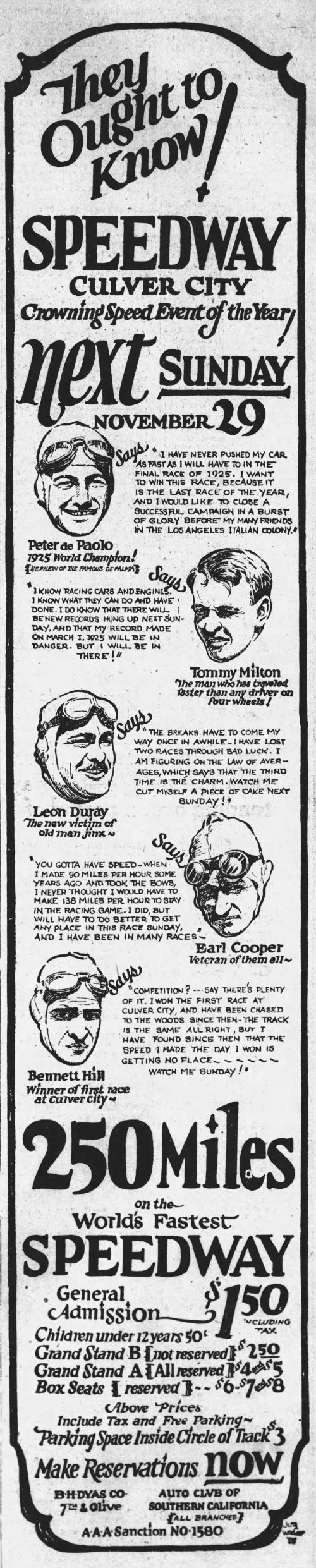
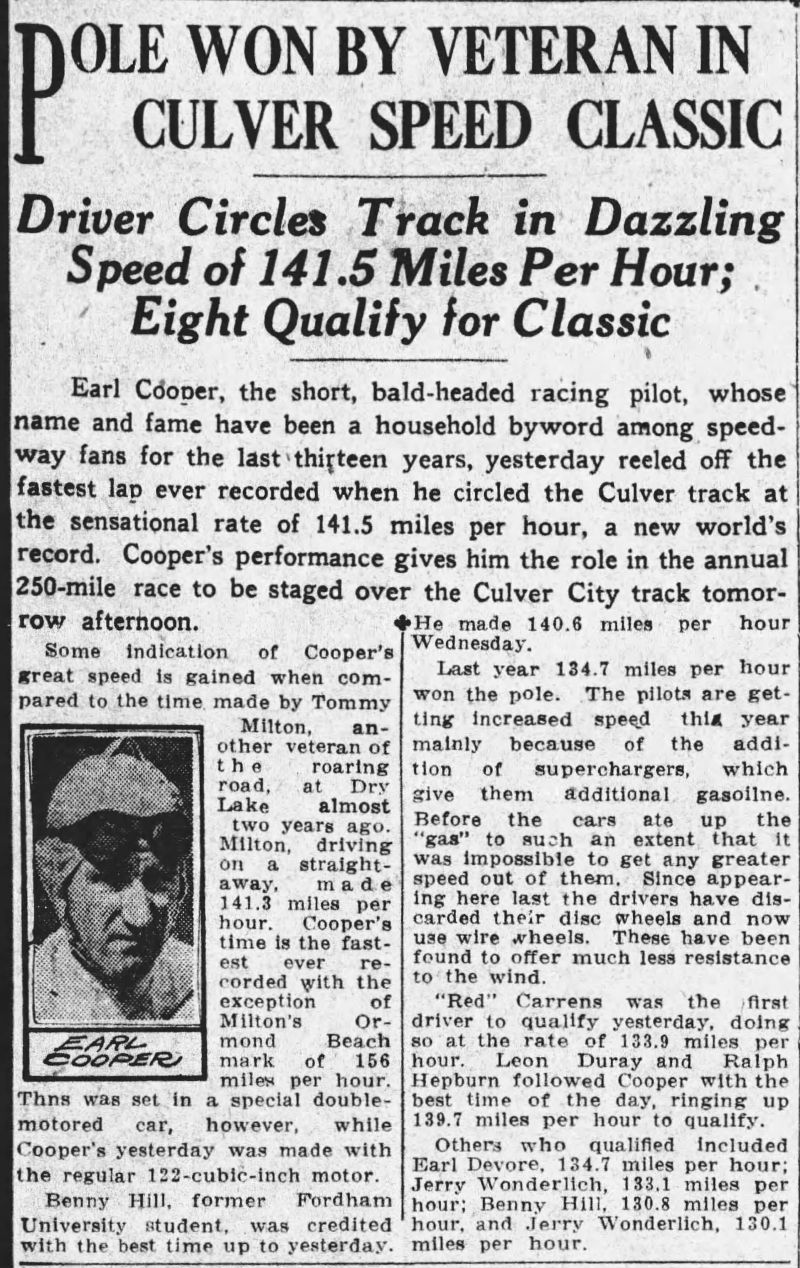
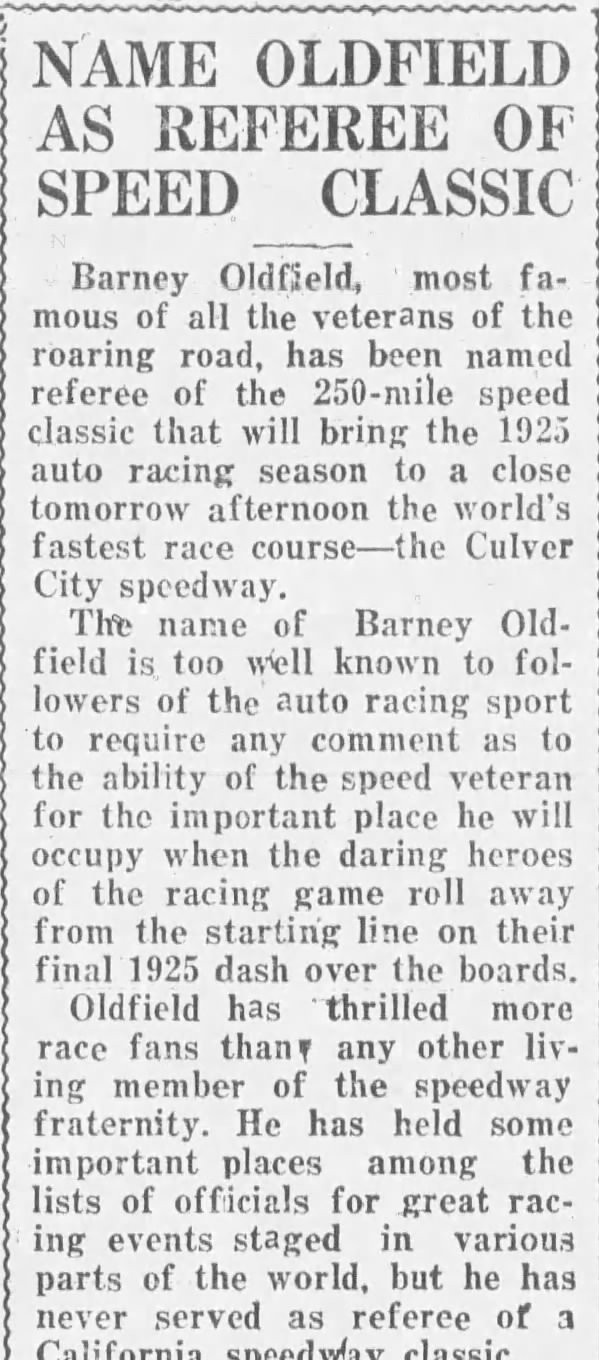
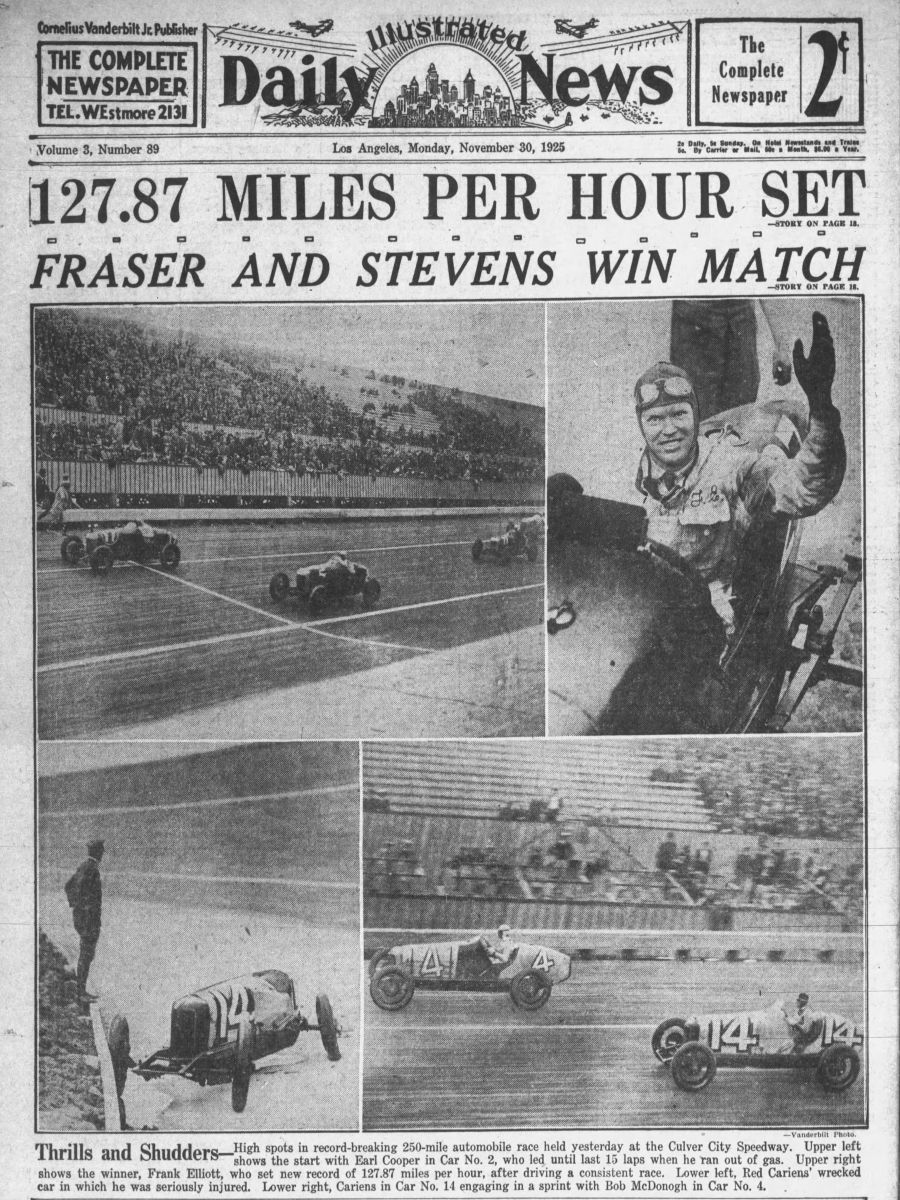
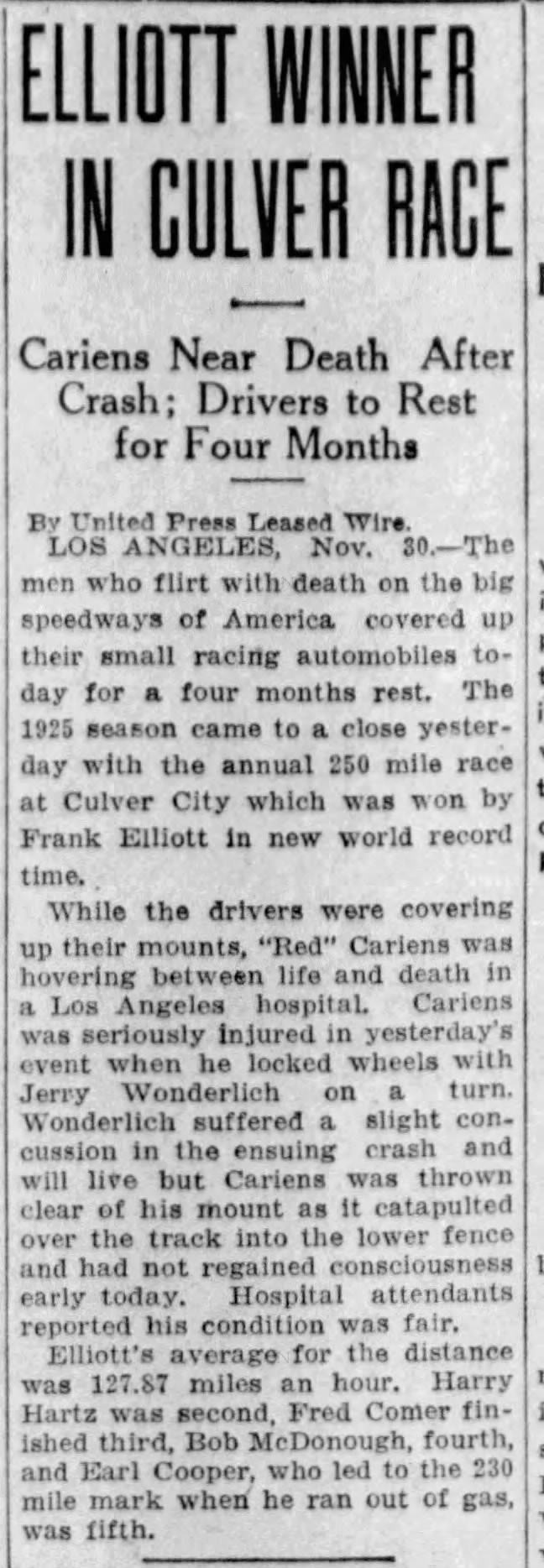
The 1925 Culver City Race 2 was held on November 29th. This race served as the season-ending 250-mile championship event for the AAA National Championship at the high-banked 1.25-mile wooden board track in Culver City, California. This finale capped a grueling 11-race schedule that began at the same venue back in March, emphasizing the high-speed, high-risk nature of board track racing with powerful supercharged engines and steep banking that allowed for blistering velocities but demanded precision amid tire wear and structural hazards.
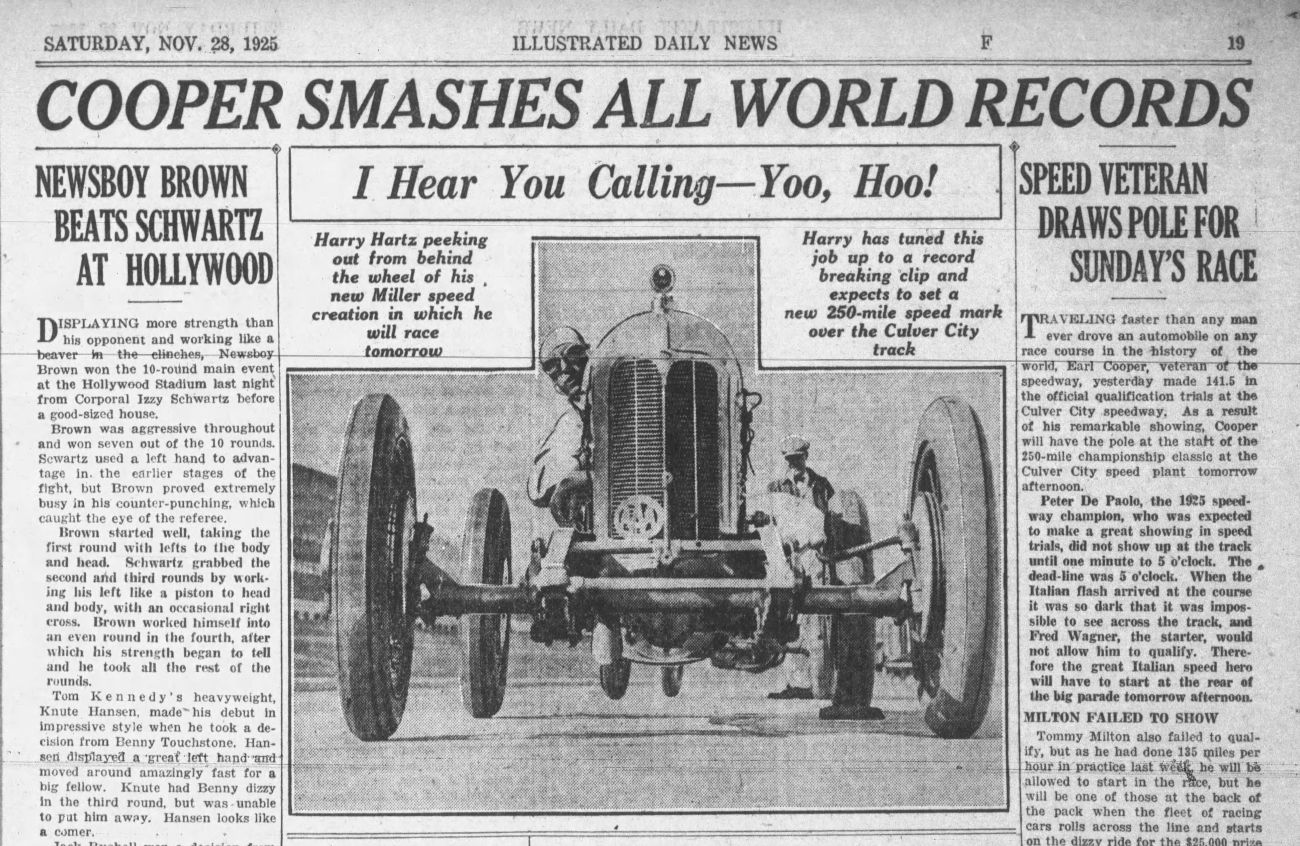
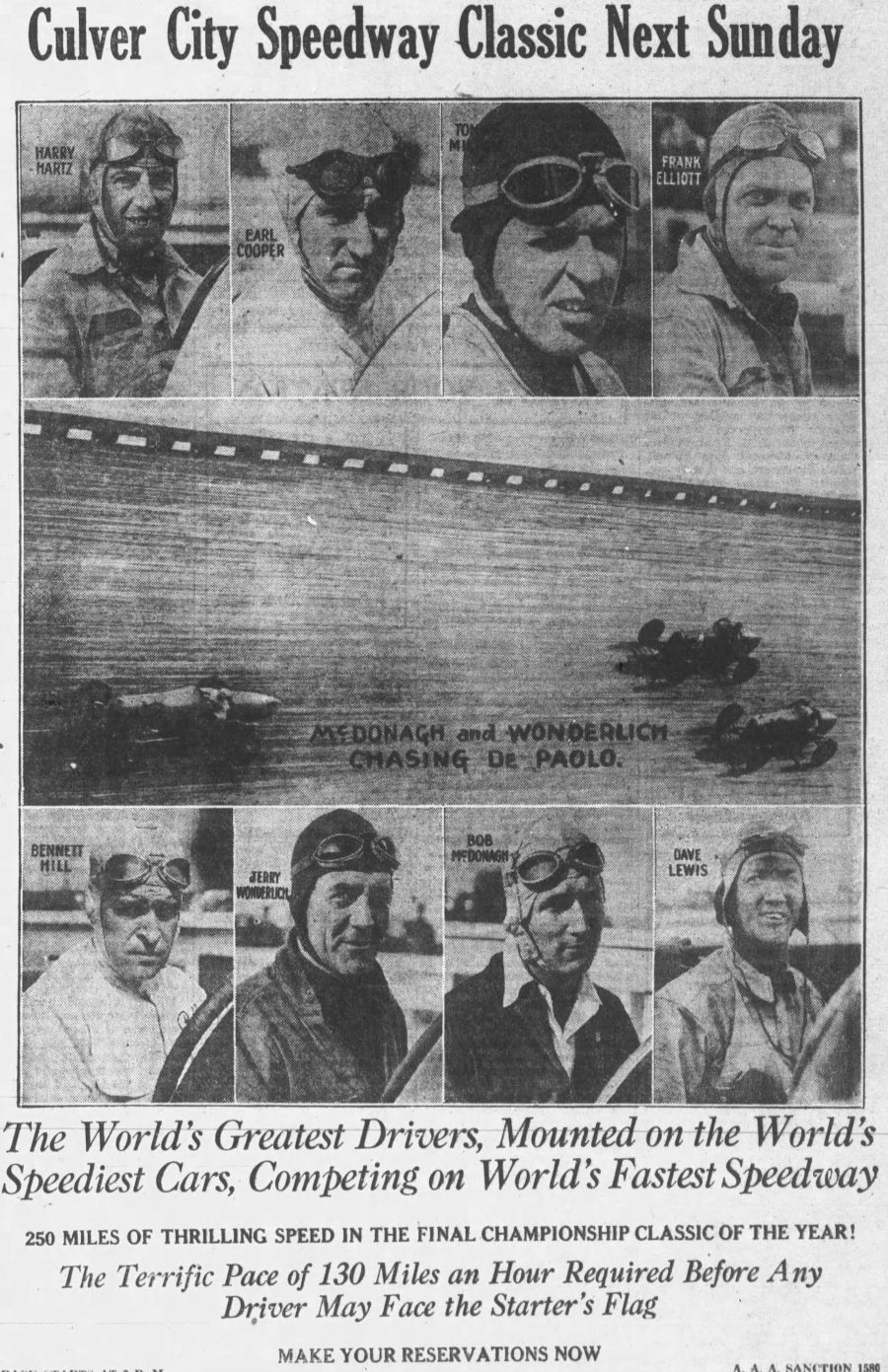
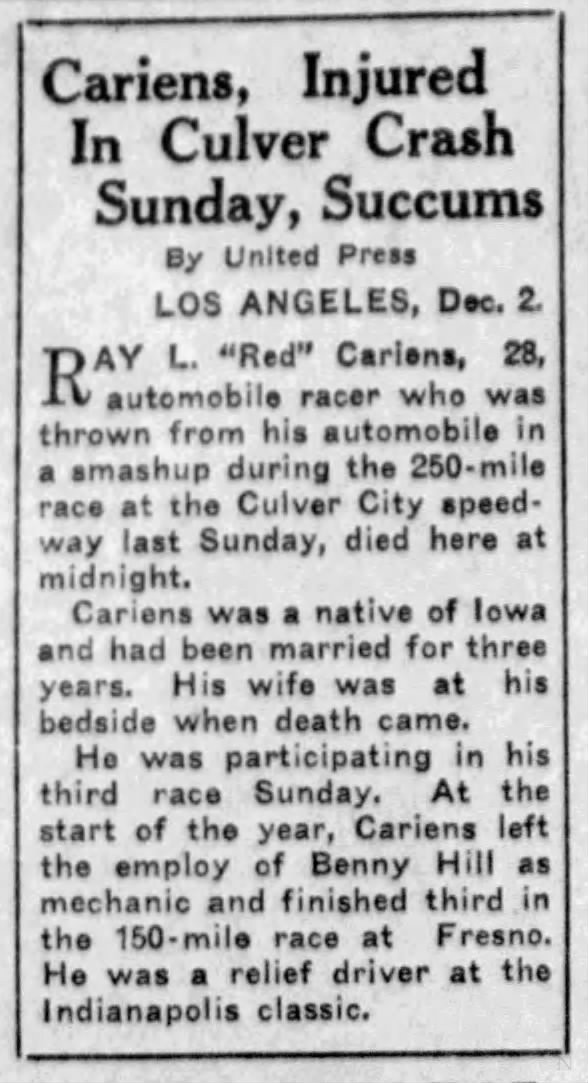
Frank Elliott, a 35-year-old board track veteran driving a Miller Special, claimed victory in the race, finishing ahead of Harry Hartz (also in a Miller) by a margin of 32 seconds and Fred Comer (Miller) in third. Elliott’s win came after setting a fast qualifying pace around 127.87 mph, though the event was marred by tragedy with a fatal accident involving driver Ray Cariens. The race drew crowds for its holiday timing and dramatic close to the season, where overall champion Peter DePaolo (who had dominated with five victories, including the Indianapolis 500) did not win but had already secured the national title with 3,260 points well ahead of Tommy Milton and Harry Hartz.
This November contest highlighted the Golden Age of American motorsport at Culver City Speedway, a premier venue that replaced Beverly Hills on the AAA calendar and hosted both the opener and closer in 1925. The steep 45-degree banking in the turns enabled record-breaking attempts and intense competition among Miller and Duesenberg-powered entries, but emerging safety concerns and maintenance issues foreshadowed the eventual decline of wooden board tracks in the late 1920s. Elliott’s triumph provided a fitting, if bittersweet, conclusion to a year defined by innovation, speed, and peril on the ovals.
November 28, 1925
November 27, 1925
November 28, 1925
November 27, 1925
November 30, 1925
November 20, 1925
December 2, 1925