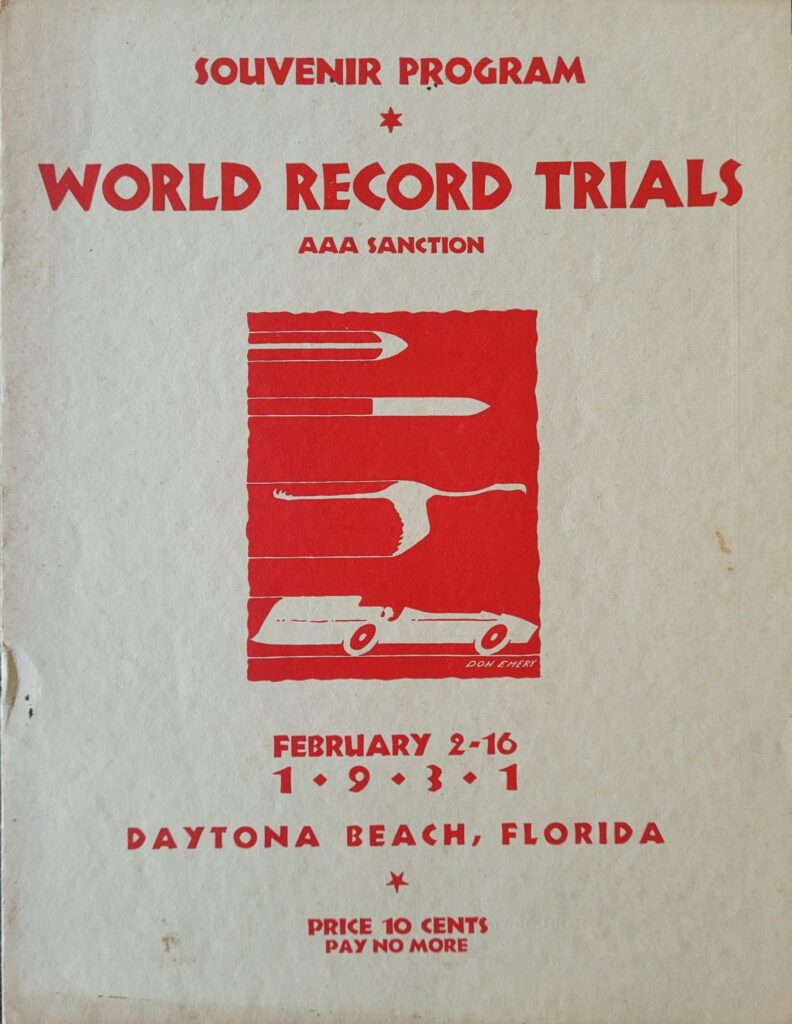
In 1931, while the Great Depression affected many forms of racing, several landmark events still captured global attention. The most dramatic highlight came in February on the sands of Daytona Beach, Florida, where British driver Malcolm Campbell set a sensational new world land speed record of 245.736 mph (flying mile) in his famous supercharged Napier-powered Blue Bird. He also set a new flying kilometer record of 246.086 mph. The achievement made Campbell the first driver to exceed 240 mph on land and earned him a knighthood later that year.
Endurance racing shone brightly in June when Lord Howe and Sir Henry “Tim” Birkin won the 24 Hours of Le Mans in an Alfa Romeo 8C 2300 — giving Italy its first victory in the classic French endurance race and covering over 1,875 miles. Elsewhere, hill climbs and beach speed trials (such as those at Pismo Beach, California) continued to draw enthusiasts, while various national and club-level events kept motorsport alive around the world during difficult economic times.