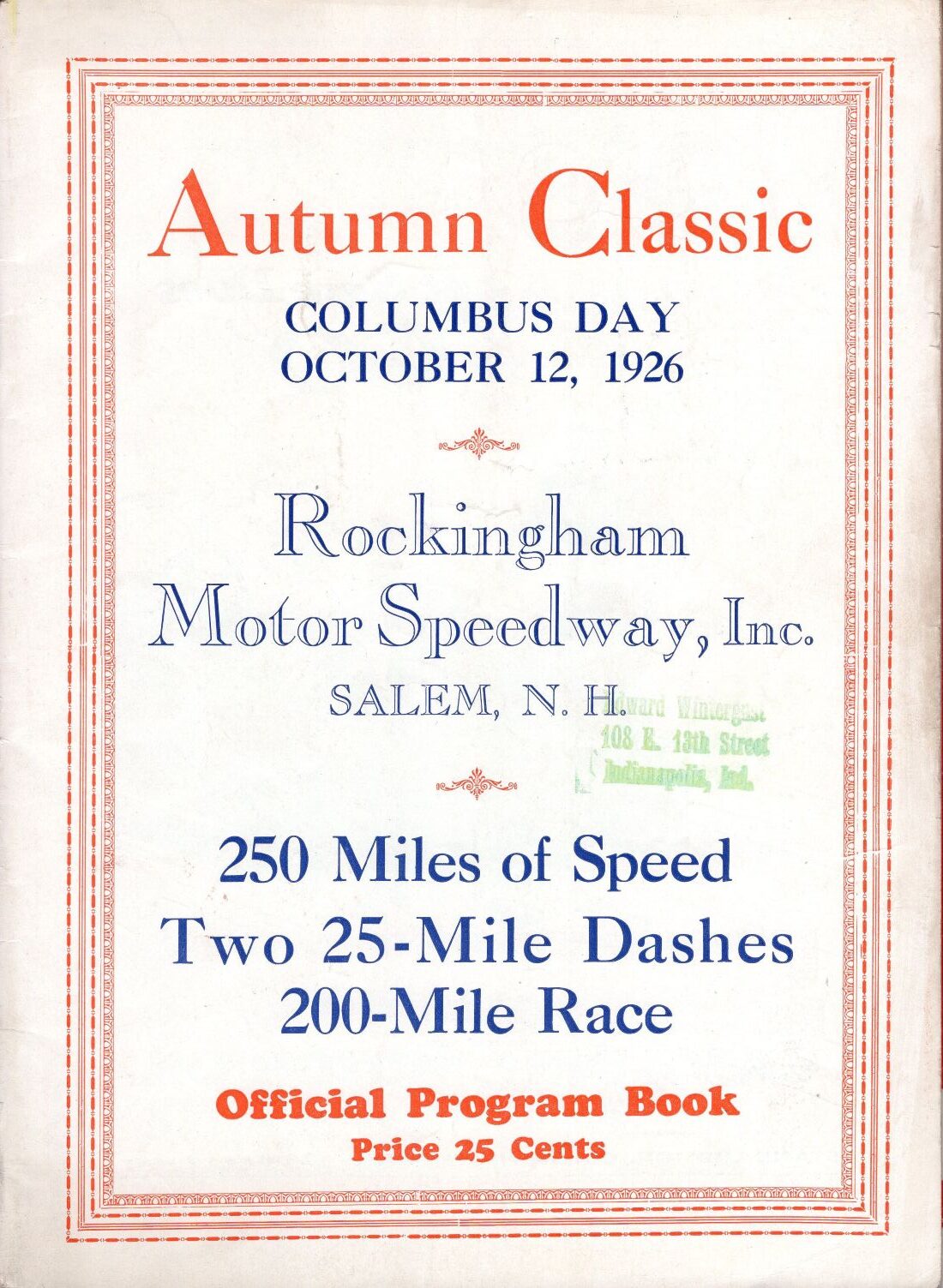
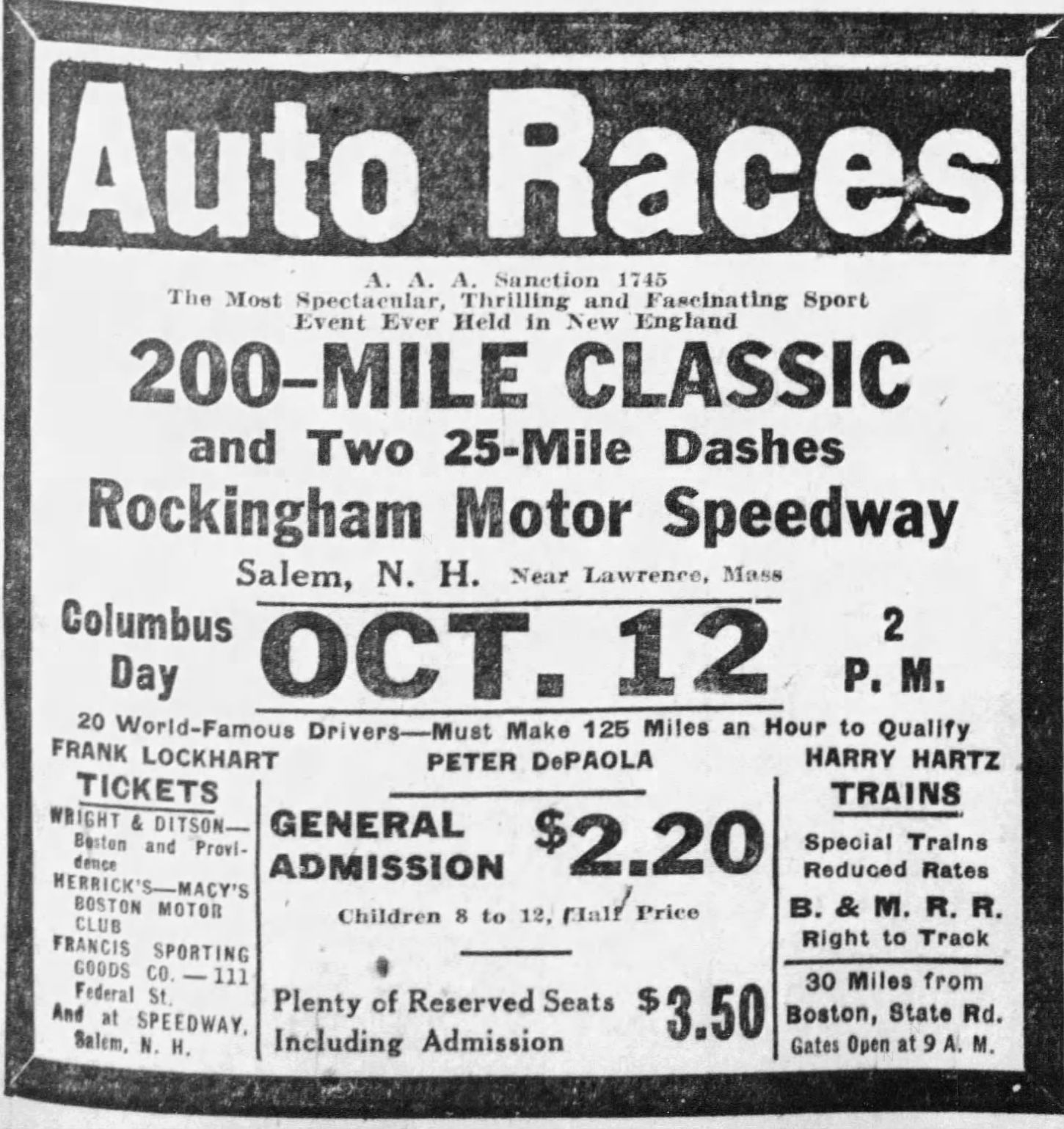
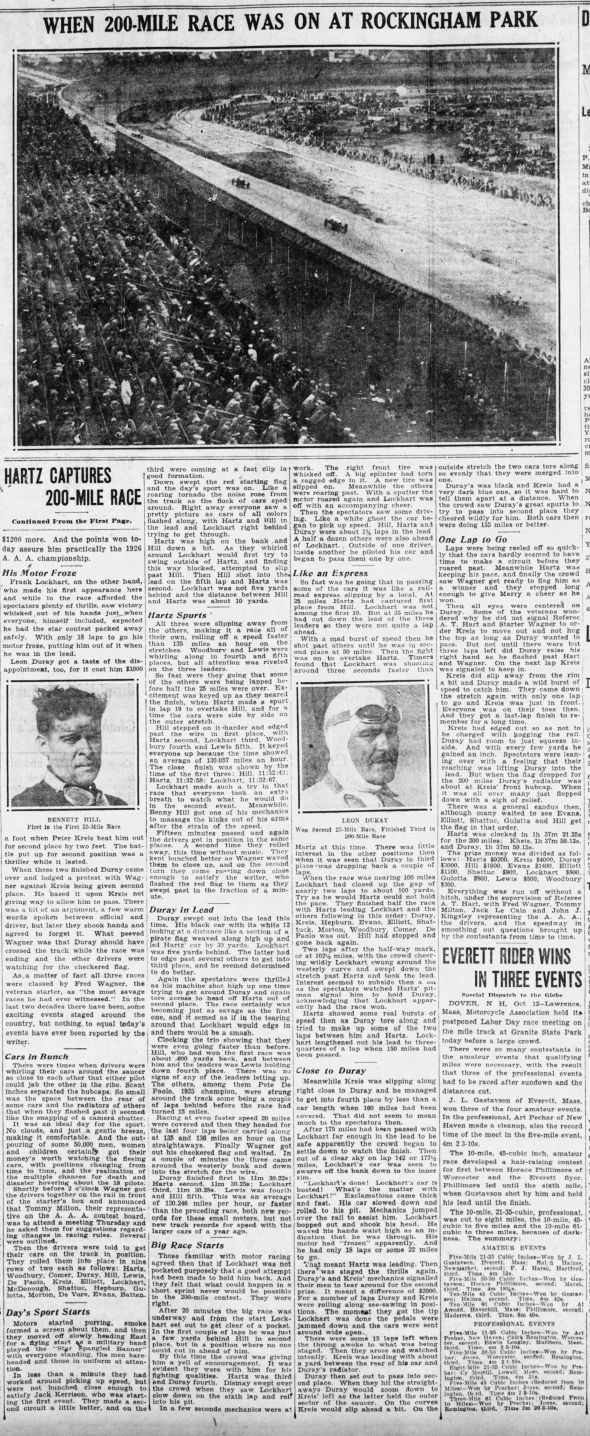
The October 12, 1926, events at Rockingham Speedway (also known as Rockingham Park, a 1.25-mile high-banked wooden board oval in Salem, New Hampshire) comprised multiple races that served as rounds in the 1926 AAA National Championship Trail. This late-season program followed the multi-heat format common at board tracks to build toward the main feature, contributing points to the championship standings where Harry Hartz ultimately claimed the title.
The day featured:
- Two 25-mile sprint/heat races (each 20 laps), both championship points events.
- A 200-mile main event (160 laps), the centerpiece of the program.
Key results:
- First 25-mile race: Won by Bennett Hill in a Miller Special (car #16) with an average speed of 130.057 mph (time: 11:32.43). Harry Hartz (Miller) finished second (just 0.15 seconds behind), followed closely by Frank Lockhart (Miller) in third. The race was extremely tight at the front, with top finishers including Cliff Woodbury (fourth), Dave Lewis (fifth), and Ralph Hepburn (sixth).
- Second 25-mile race: Won by Leon Duray in a Miller Front Drive Special (car #12), averaging 130.393 mph (time: 11:20.22). Harry Hartz took second, Frank Lockhart third, and Dave Lewis fourth. Duray led all laps in this one, showcasing the innovative front-wheel-drive Miller’s speed.
- 200-mile feature: Won by Harry Hartz in his Miller Special (car #3), averaging 123.261 mph (time: 1:37:21.24). This victory was crucial for Hartz’s championship push. Peter Kreis (Miller) finished second (3.67 seconds back), Leon Duray third, Dave Evans (Duesenberg) fourth, and Frank Elliott fifth. High attrition plagued the longer race and knocked out drivers like Frank Lockhart, Dave Lewis, and Peter DePaolo.
The races highlighted the dominance of Miller-powered entries (conventional and front-drive variants) under the 91.5-cubic-inch engine formula, with speeds often exceeding 130 mph in the sprints on the steeply banked (up to 49.5 degrees in places) wooden surface. Qualifying was fast—Peter DePaolo reportedly set a lap around 138.2 mph in practice or trials. The program drew typical crowds for late-1920s board racing but reflected declining interest in wooden ovals due to high maintenance and safety concerns.
These results added valuable points to Harry Hartz (who had strong showings across all events) and reinforced the competitive edge of front-drive Millers (wins for Duray and others). Rockingham hosted multiple AAA rounds in 1926 (including July’s Independence Day Classic), but the track fell out of favor and was largely abandoned after the 1920s.
October 11, 1926
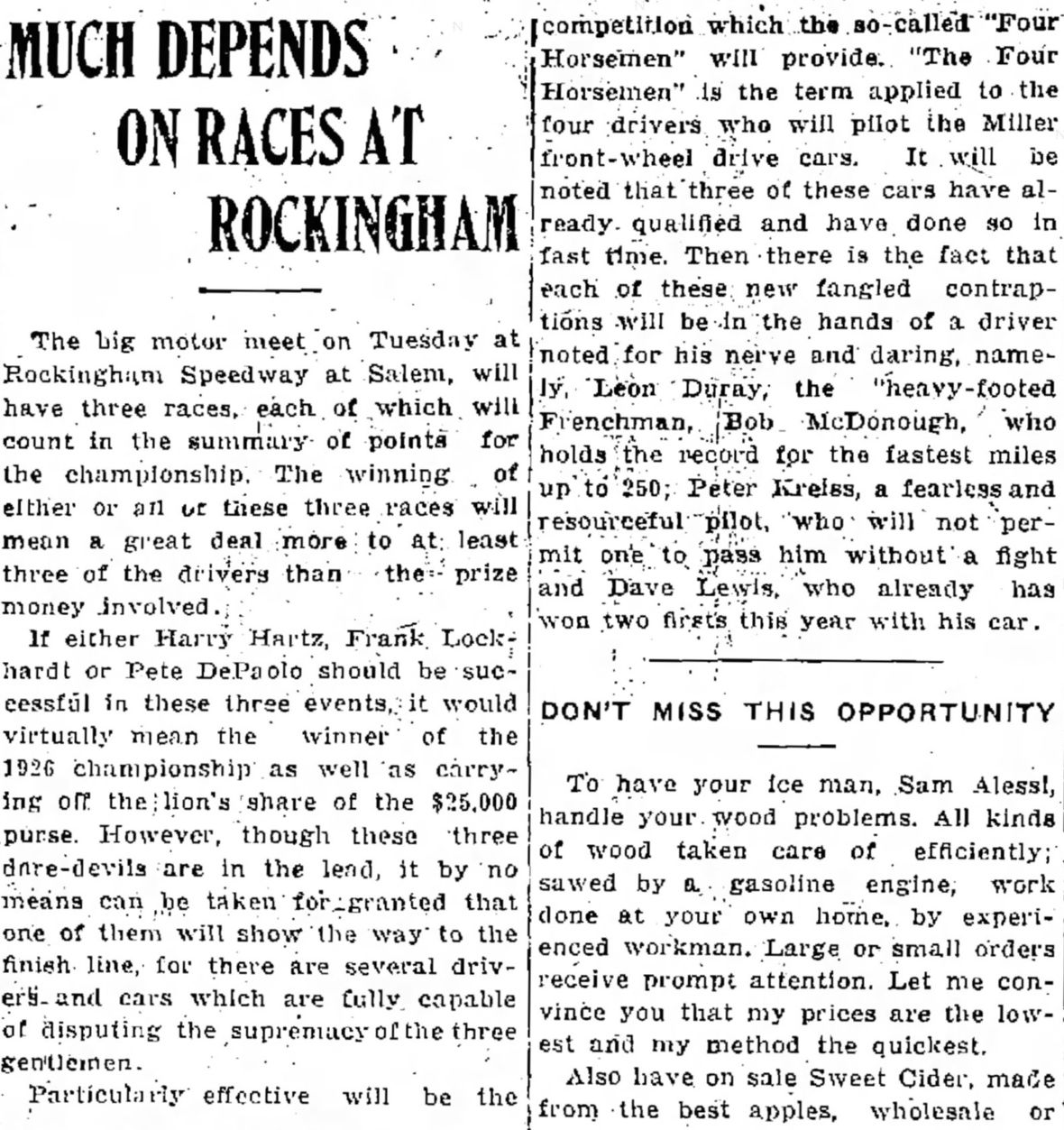
October 11, 1926
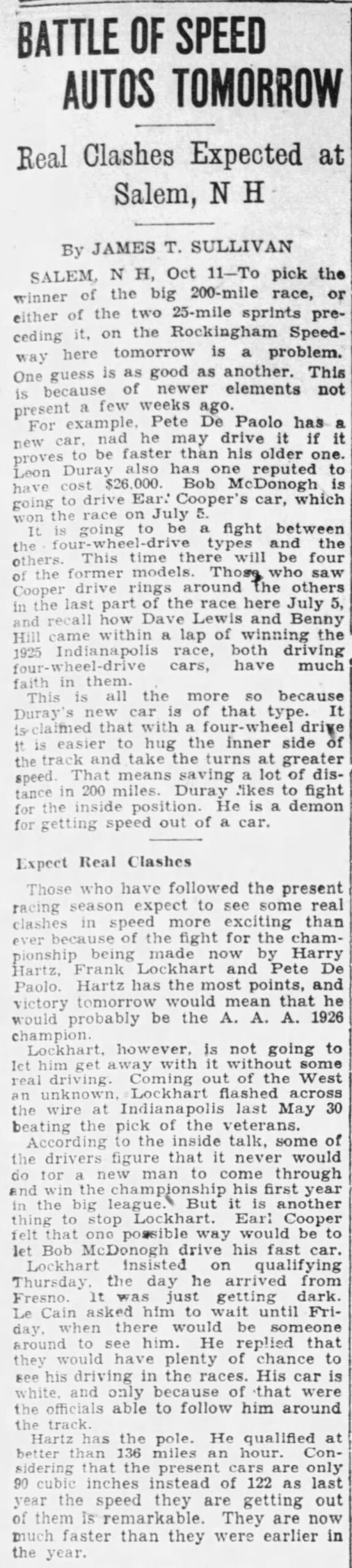
October 11, 1926
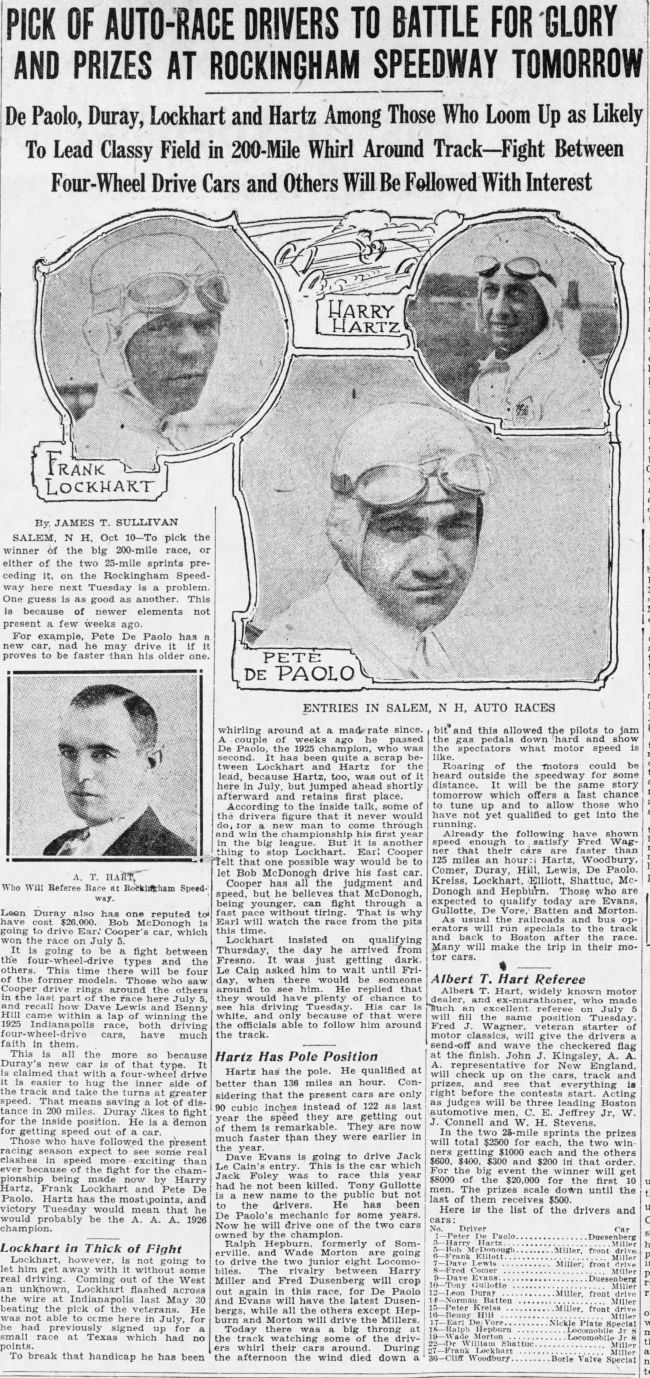
October 11, 1926
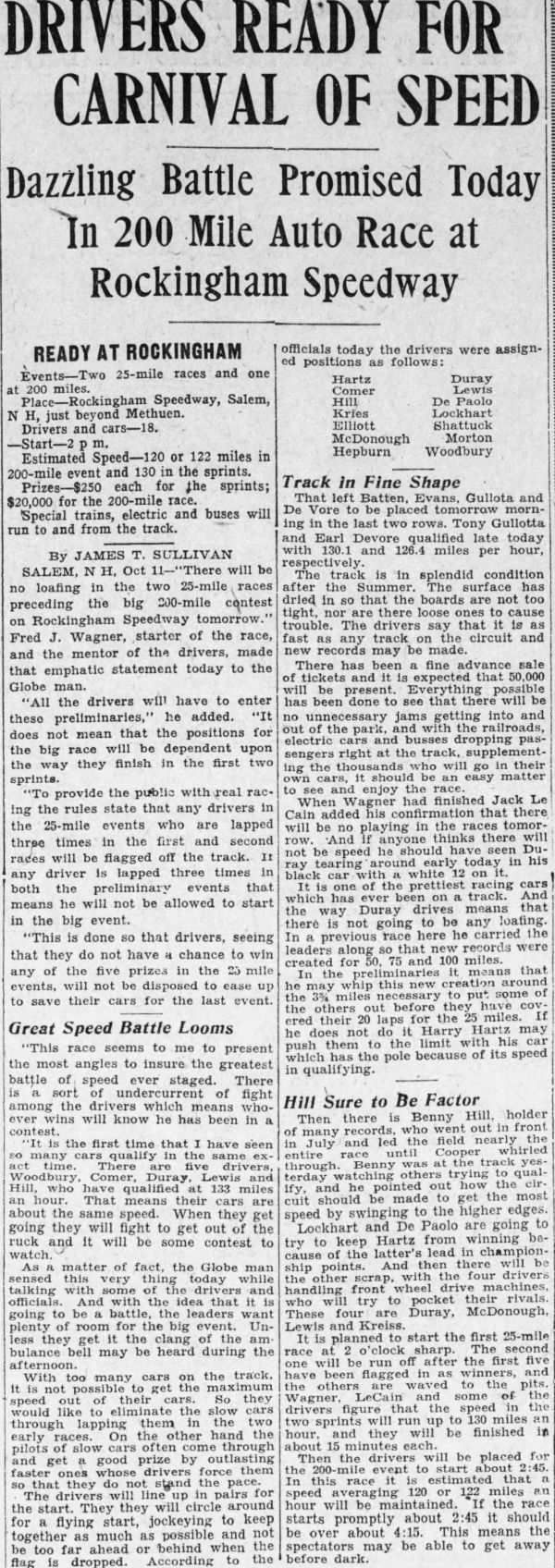
October 12, 1926
October 13, 1926