
The 1914 Indianapolis 500, officially the 4th International 500-Mile Sweepstakes, took place on Saturday, May 30, 1914, at the Indianapolis Motor Speedway. It marked a strong European invasion of the event, with foreign entries dominating the results for the second straight year following Jules Goux’s 1913 win.
French driver René Thomas, starting from 15th position in a Delage (entered by L. Delage & Cie. and powered by a 6.2L inline-4 engine), took the lead on lap 116 after early frontrunners faltered. He led 102 of the 200 laps and won the race with an average speed of 82.47 mph (132.72 km/h), setting a new record for the event. His riding mechanic was Robert Laly. Thomas’s victory made it back-to-back wins for French drivers and the first time consecutive rookies won the Indy 500.
The race featured intense competition among European marques like Delage, Peugeot (driven by Georges Boillot, who retired with engine trouble), and Sunbeam. Belgian driver Arthur Duray finished second in a Sunbeam, followed by other Europeans in the top spots. The highest-finishing American car was a Stutz driven by the legendary Barney Oldfield in 5th place—his Indy debut after years of fame on shorter tracks. Other notables included early Duesenberg entries and future stars like Eddie Rickenbacker (who finished 10th in a Duesenberg).
With 30 starters, the event highlighted the growing international appeal of the “500” and the technological edge of European engineering at the time, though American cars showed promise. No major fatalities occurred, but mechanical failures thinned the field significantly. This race remains a key chapter in Indy 500 history for its European dominance and Thomas’s breakthrough triumph.
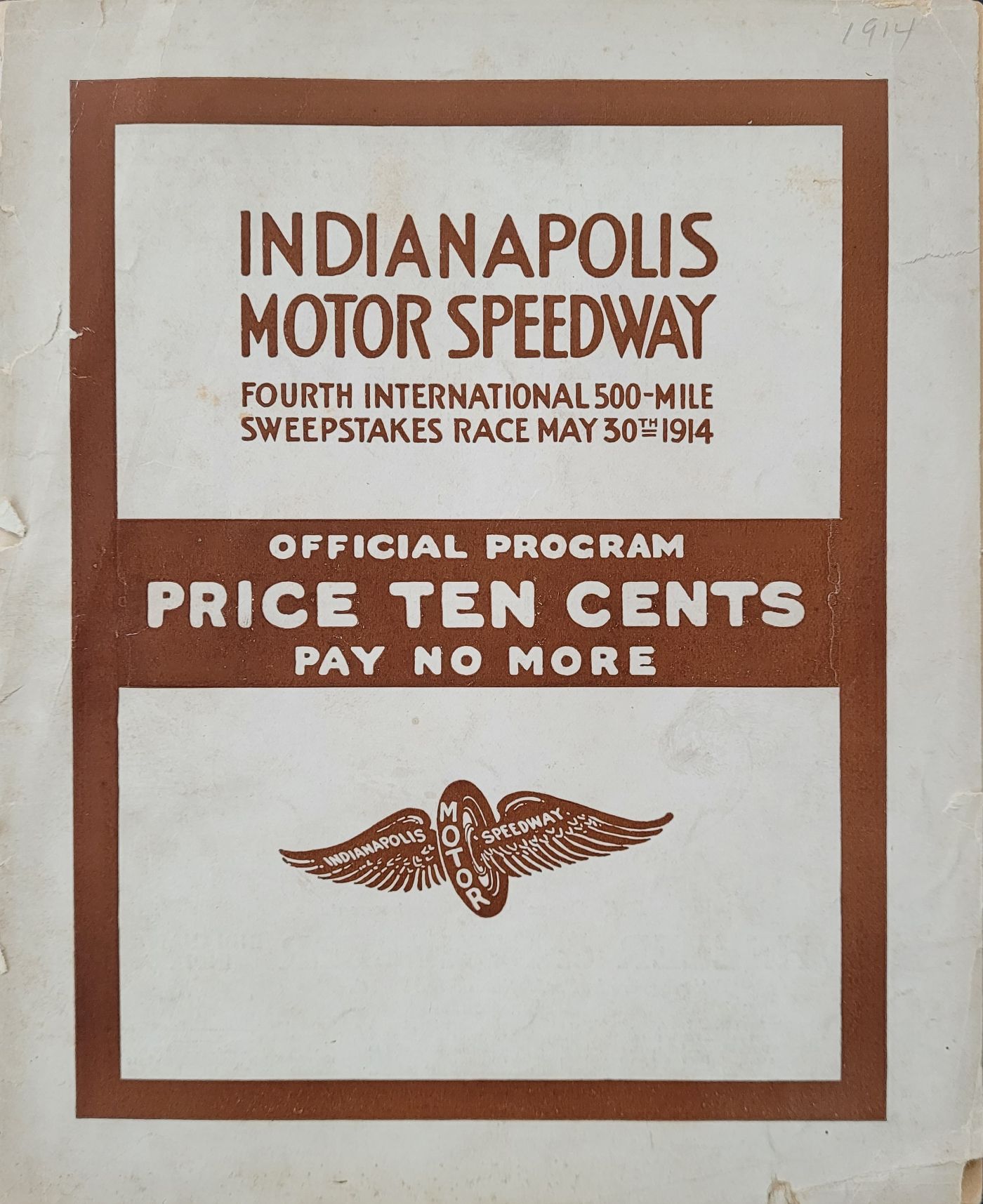
Front Cover
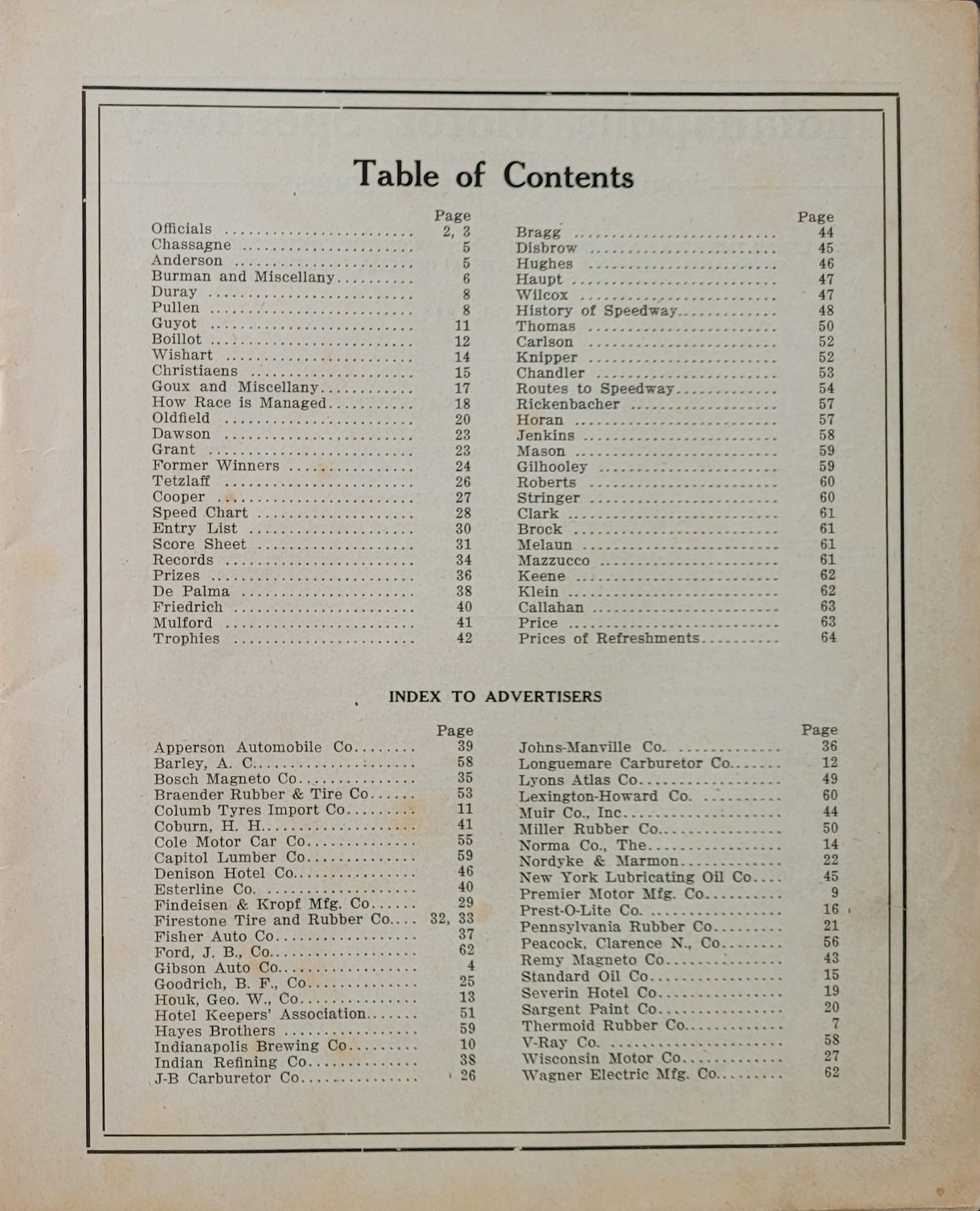
Table of Contents
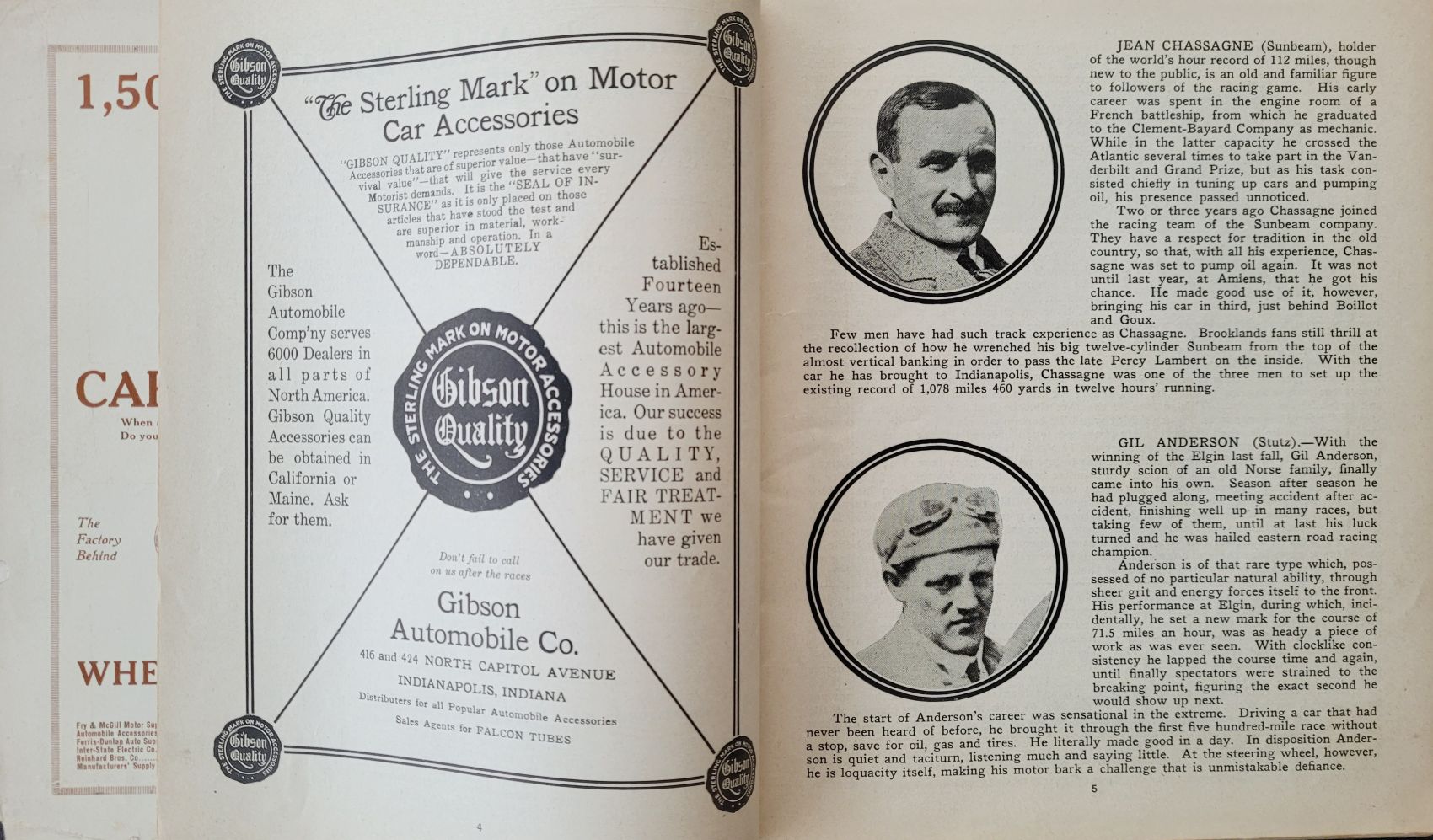
Pages 4-5
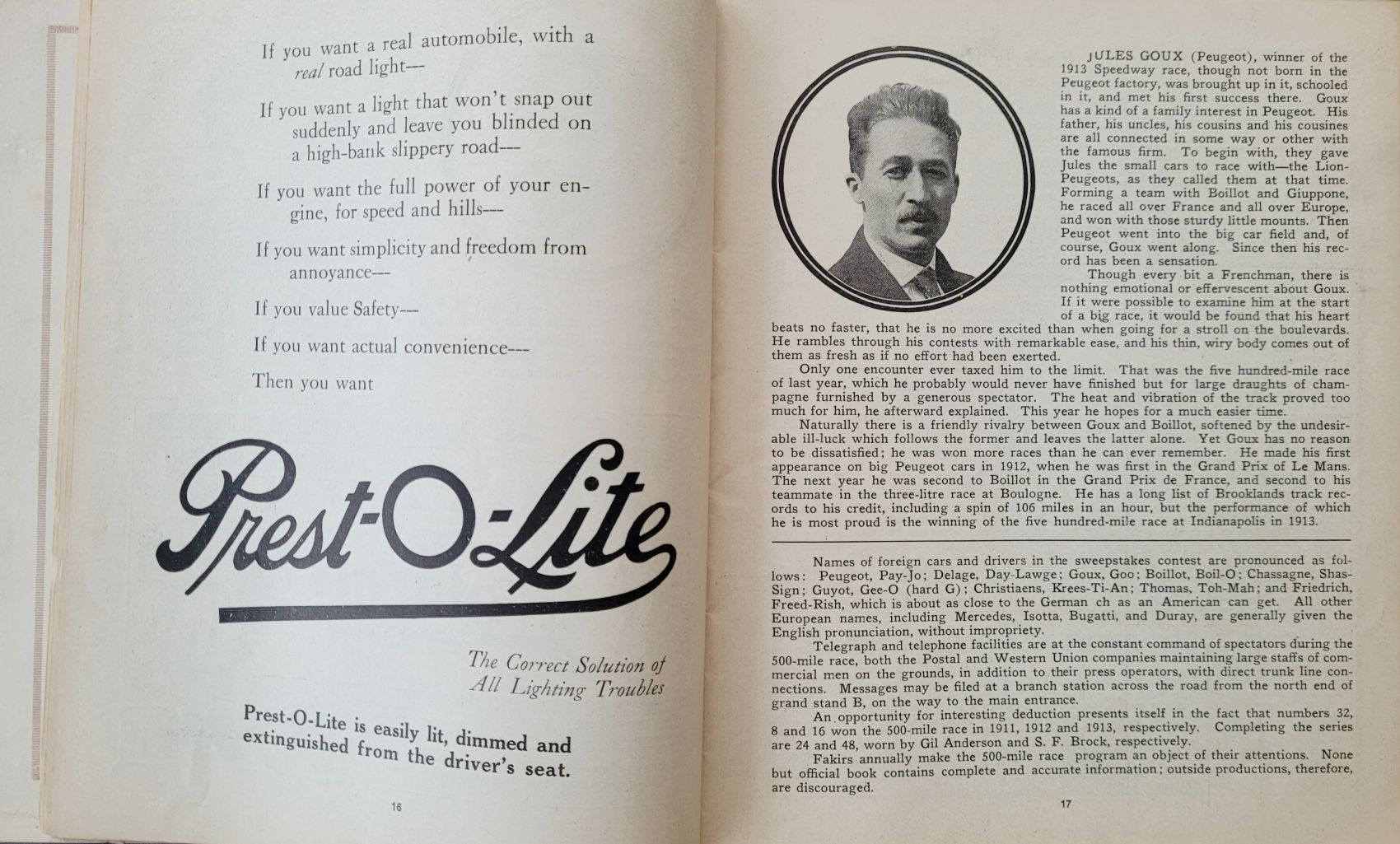
Pages 16-17
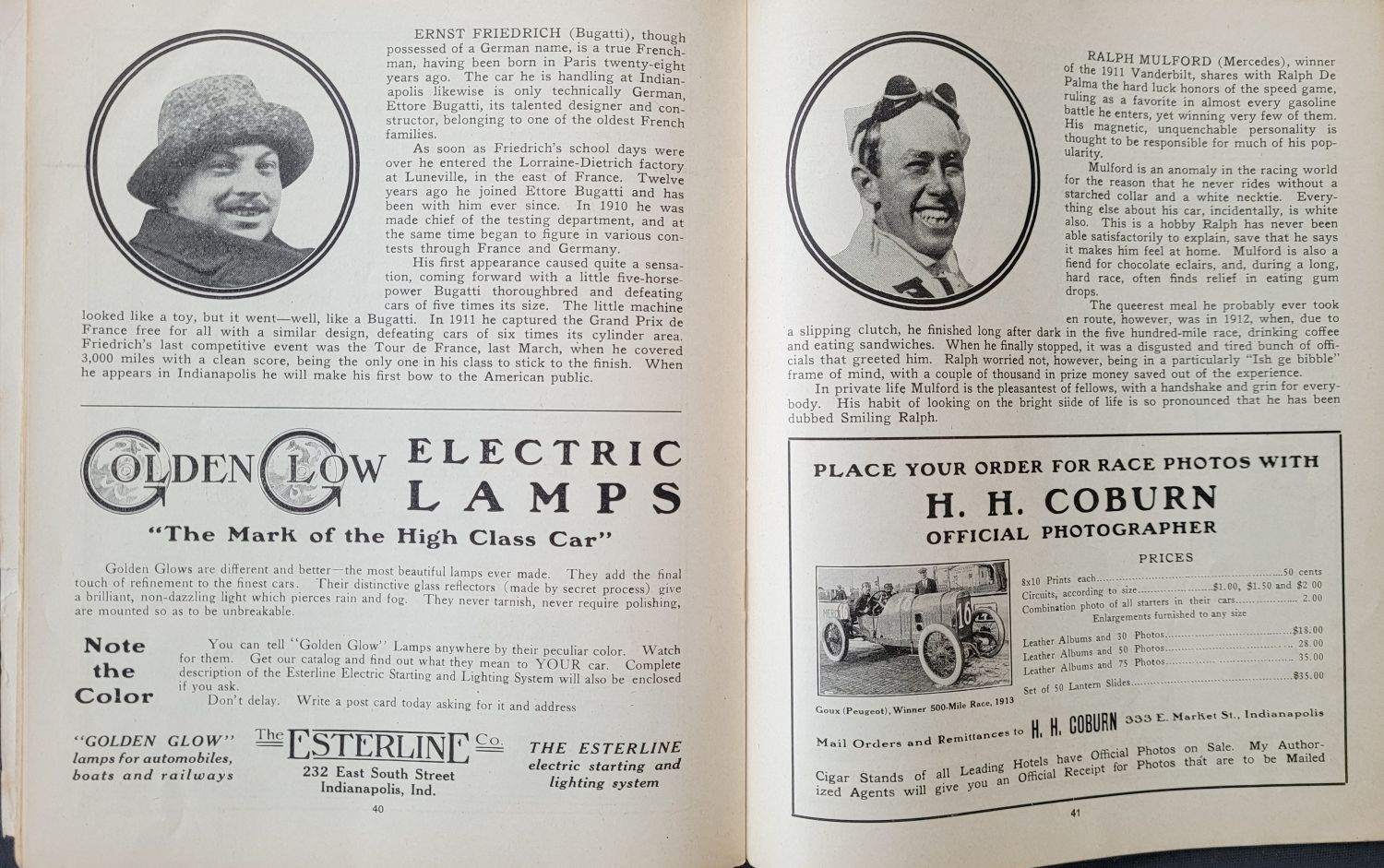
Pages 40-41
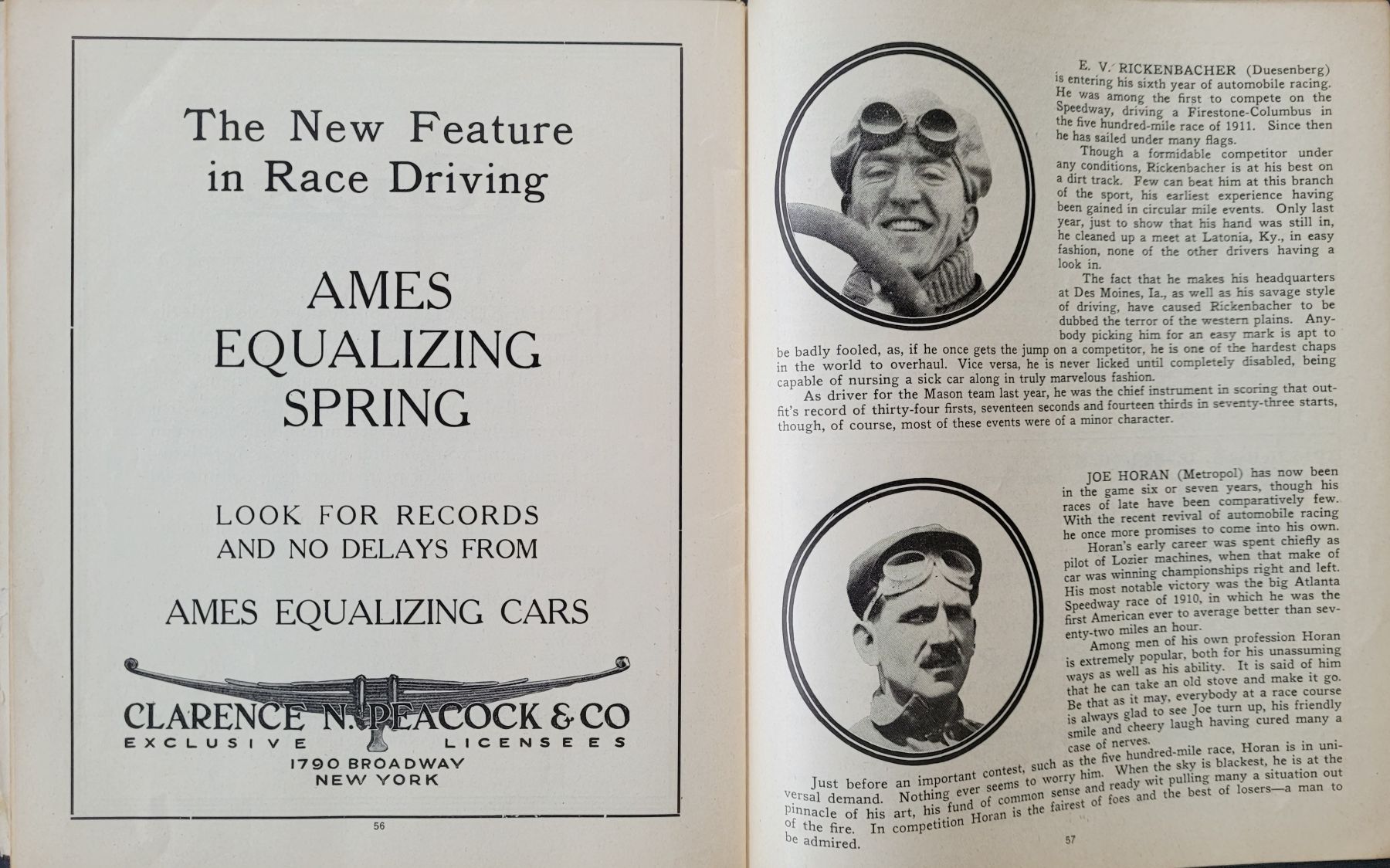
Pages 56-57
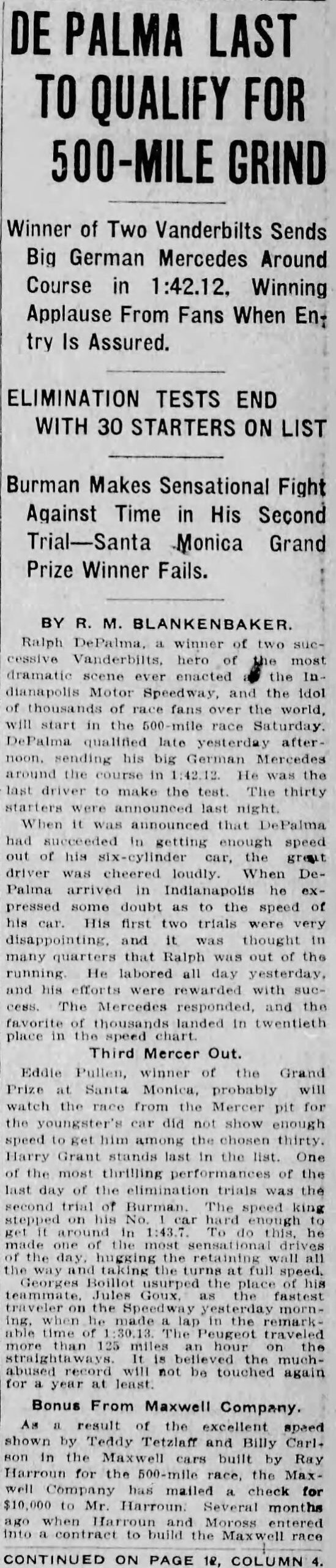
May 28, 1914
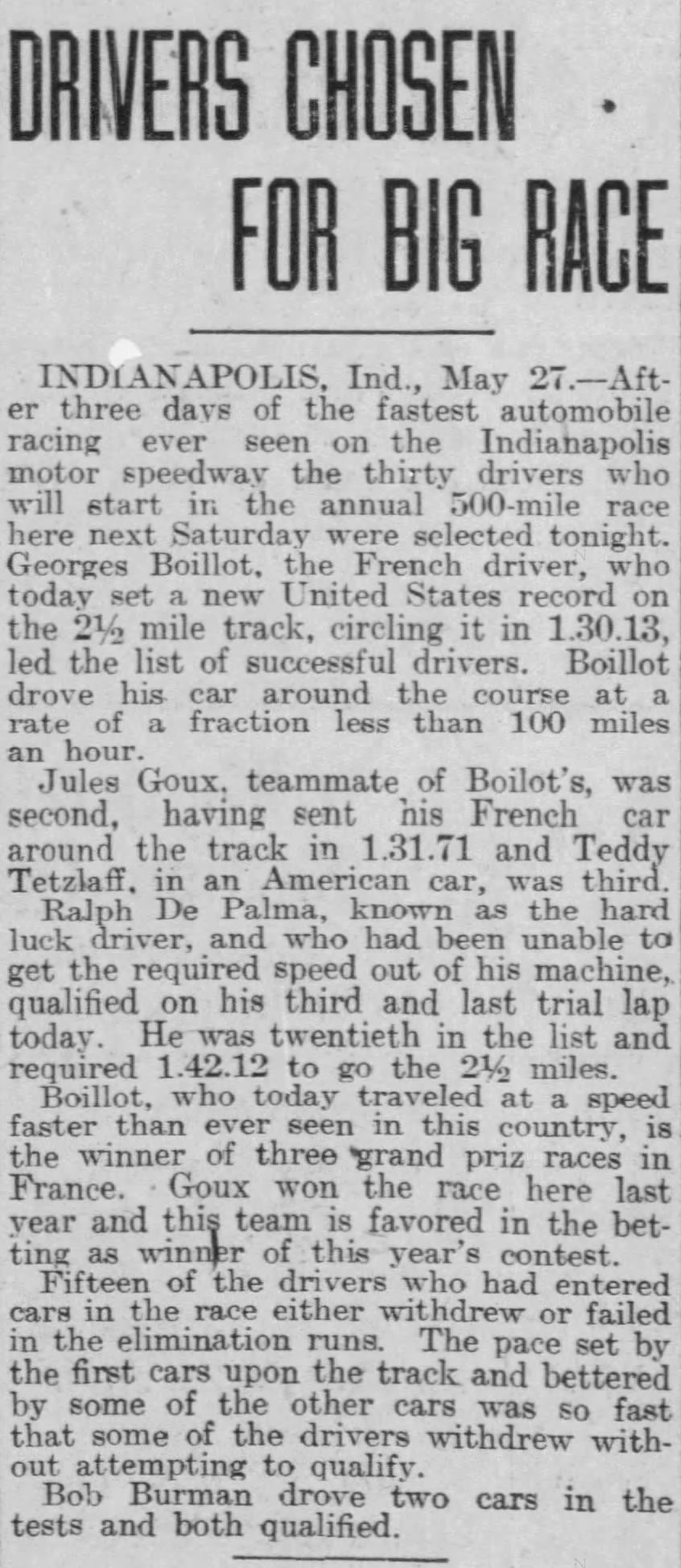
May 28, 1914
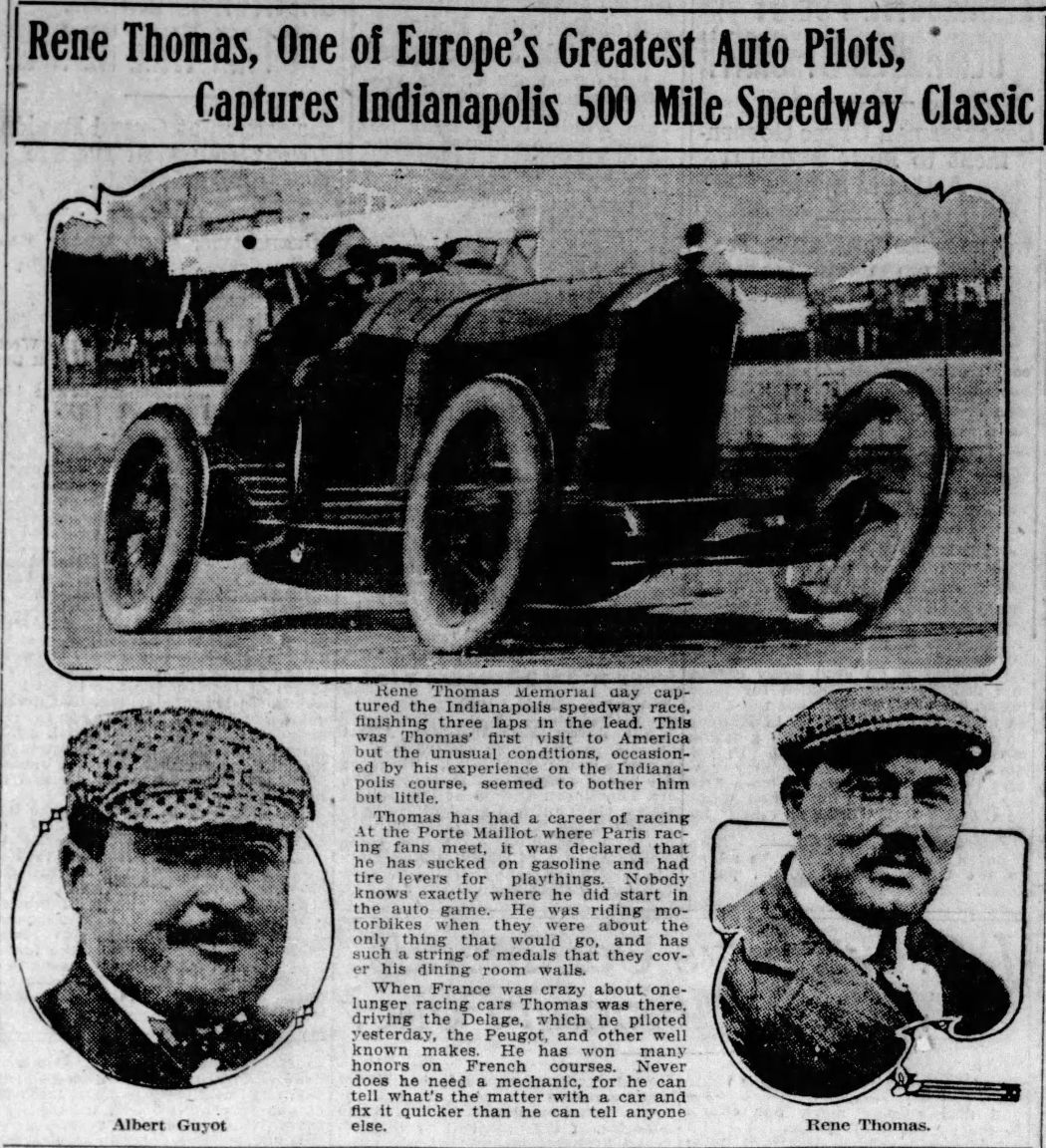
May 31, 1914
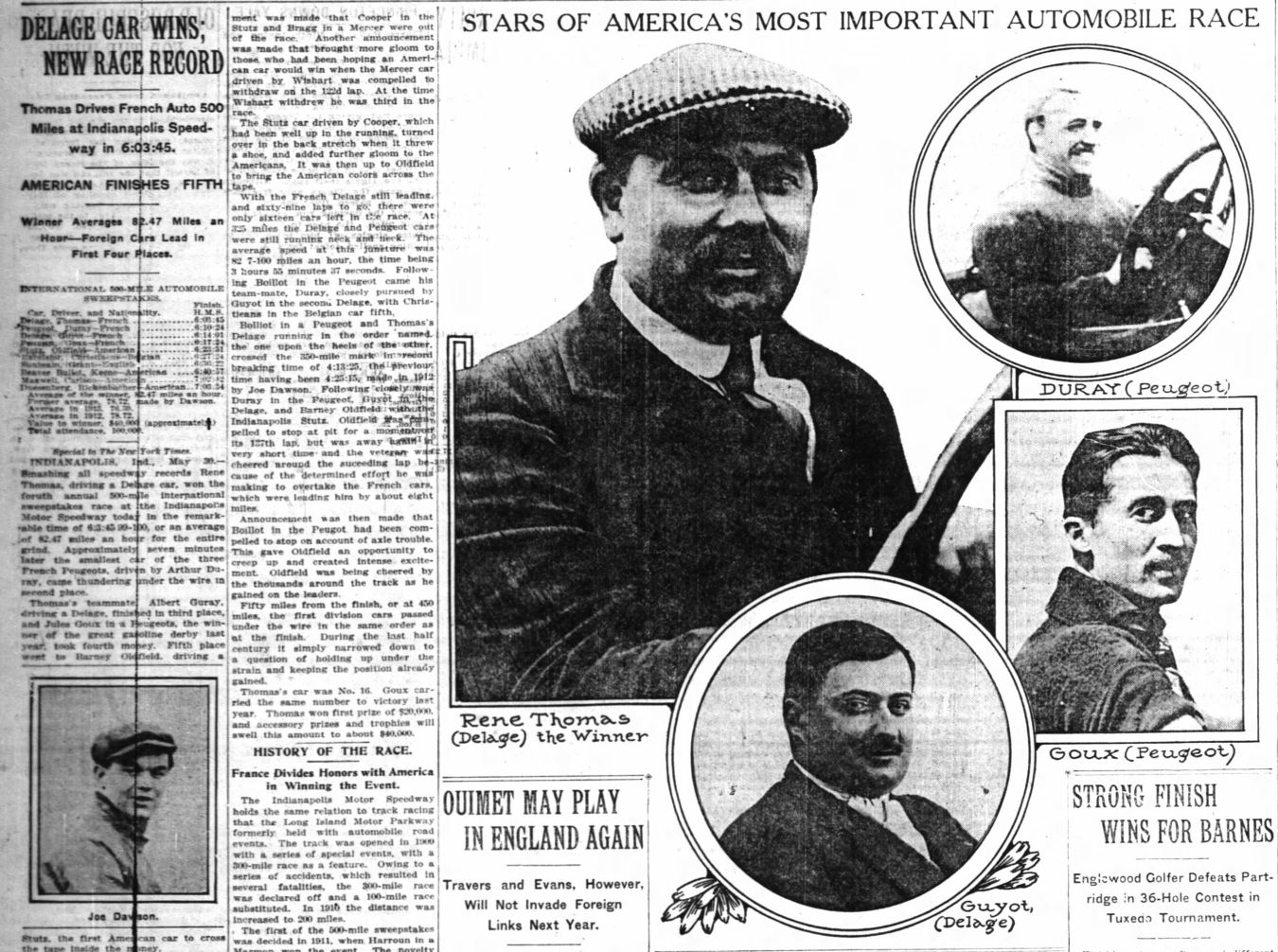
May 31, 1914