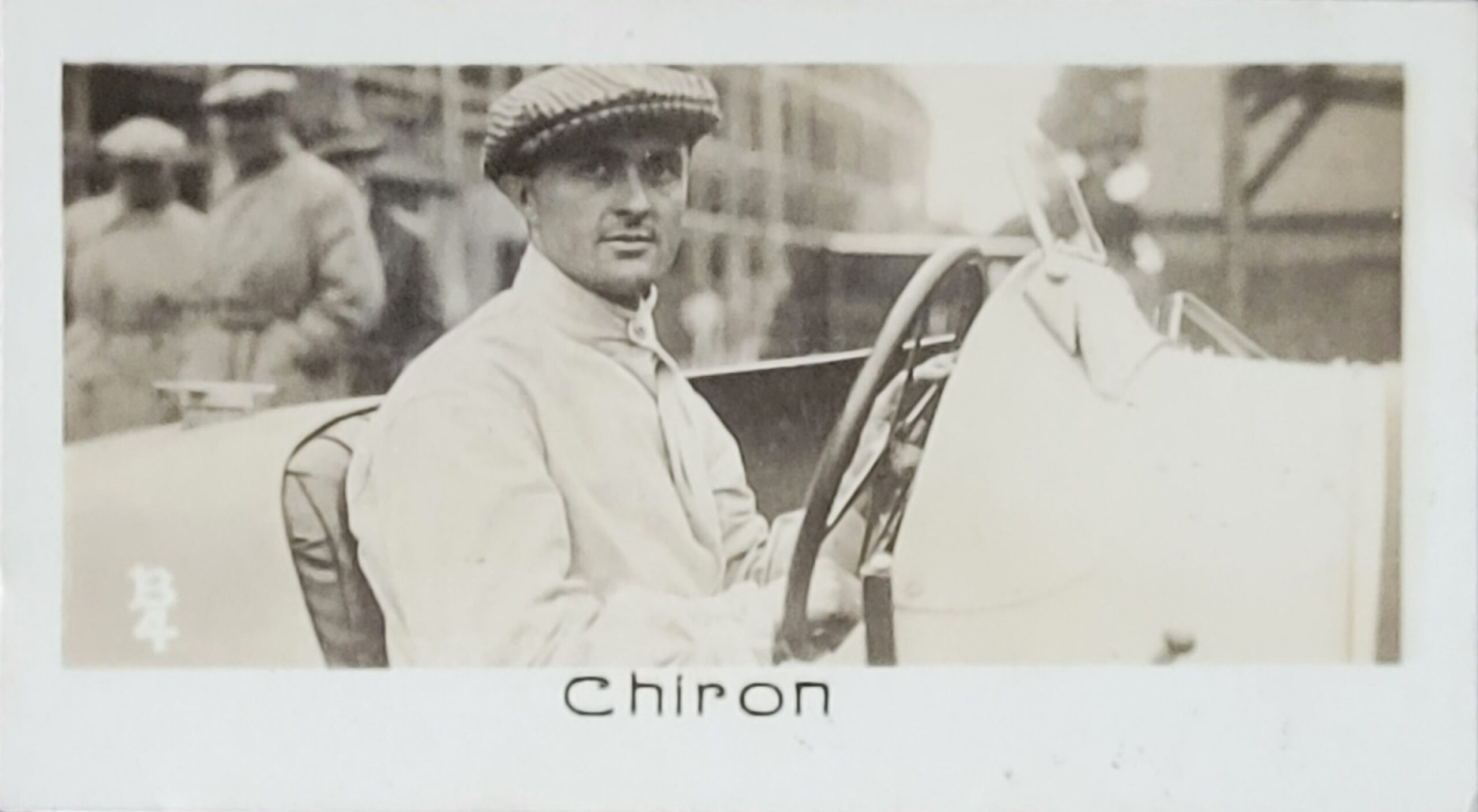
Category: Vintage Racing Cards

Explore the fascinating world of vintage racing cards, featuring rare collectibles, classic sets, and detailed histories of drivers and cars that shaped motorsport memorabilia.

  • Roaring Twenties Racing Royalty in the 1926 Spalding Champions Set

    Roaring Twenties Racing Royalty in the 1926 Spalding Champions Set

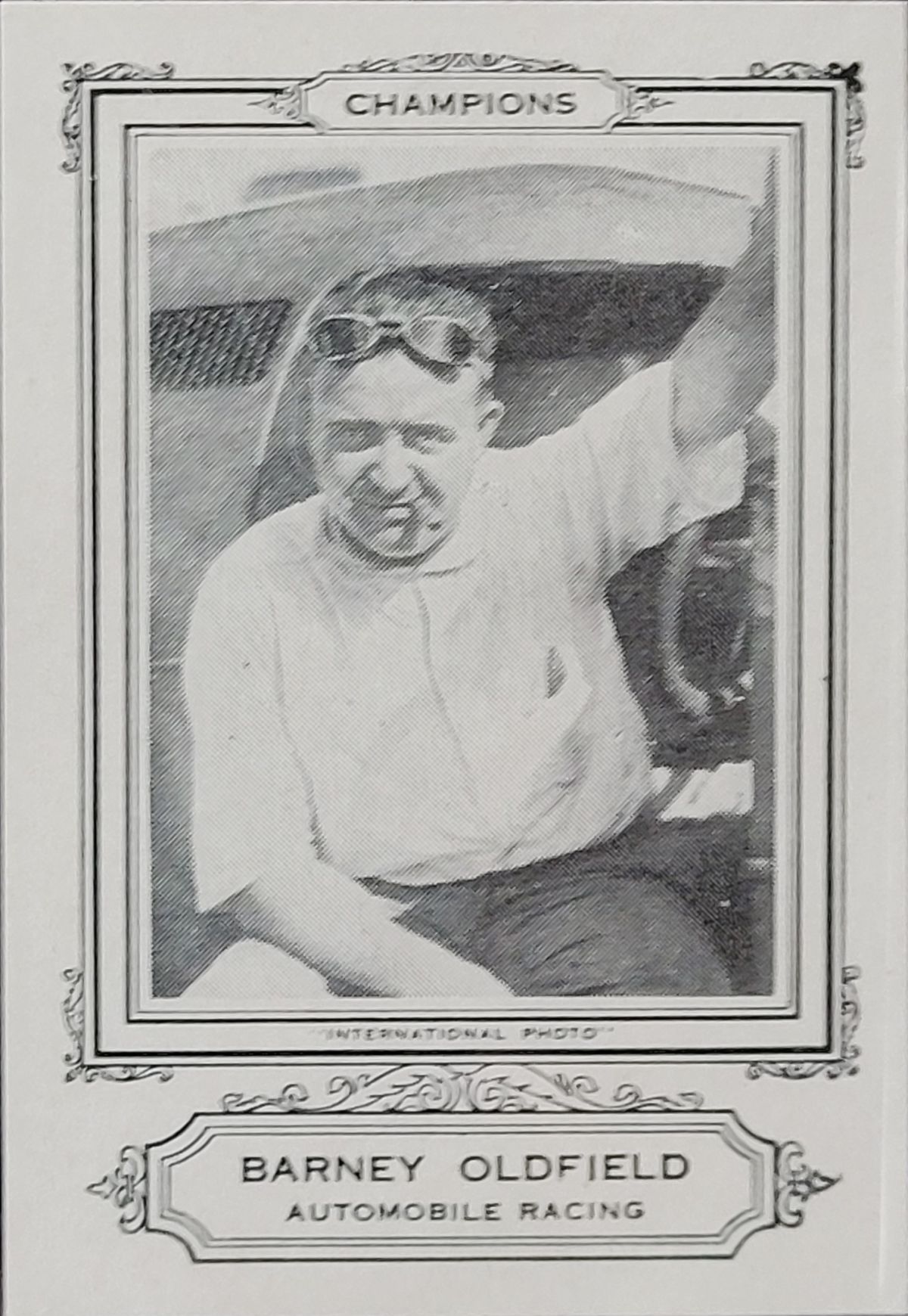
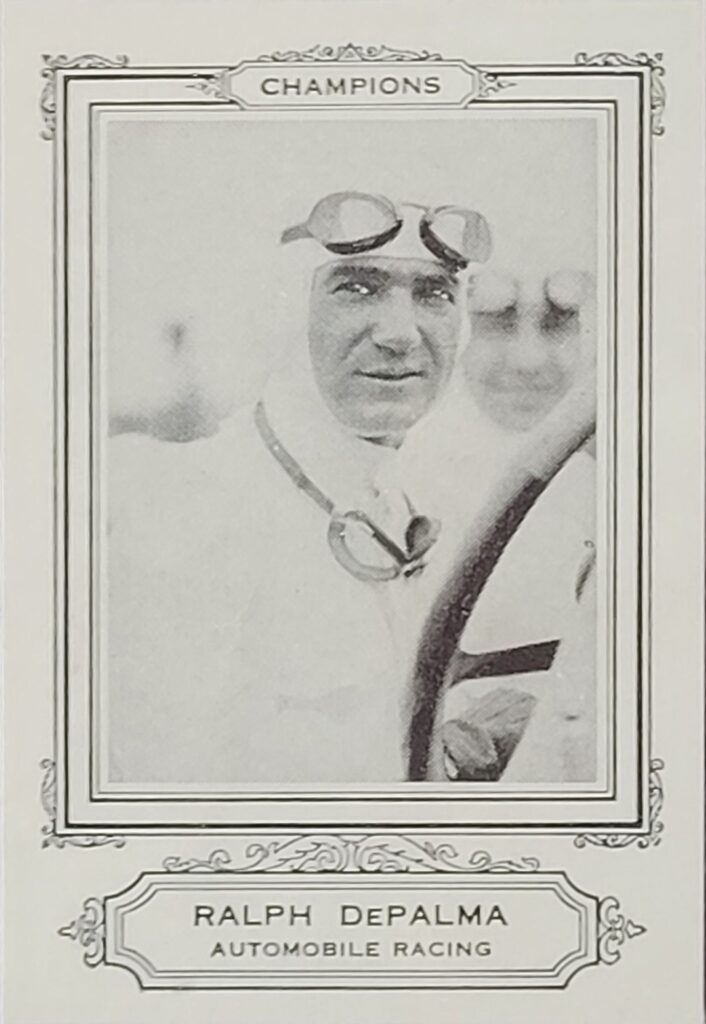
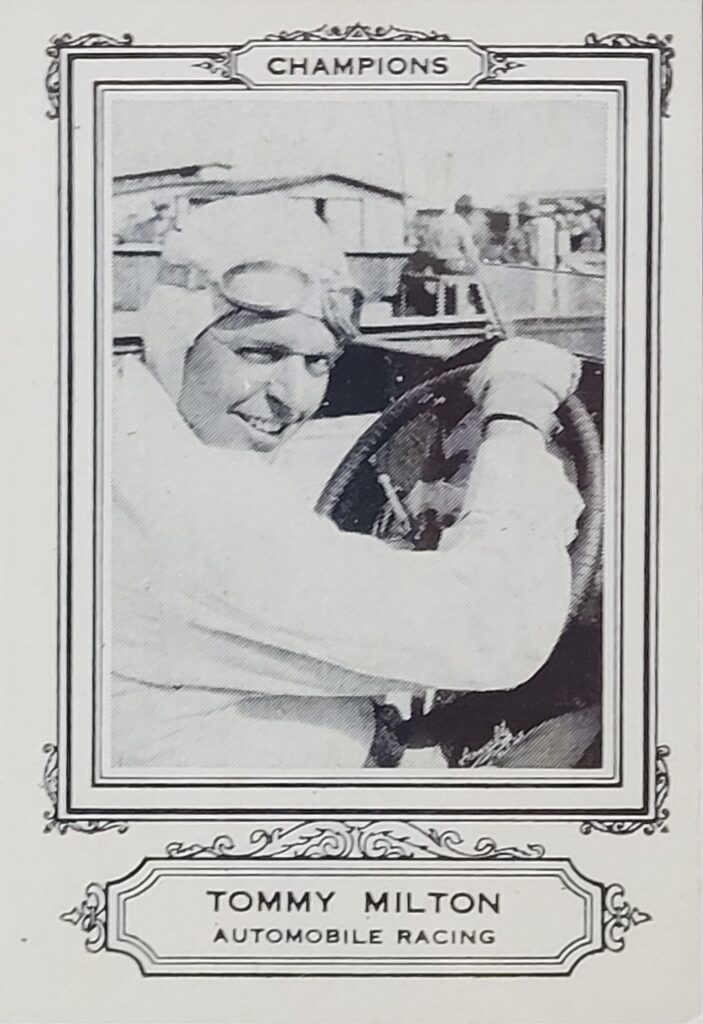
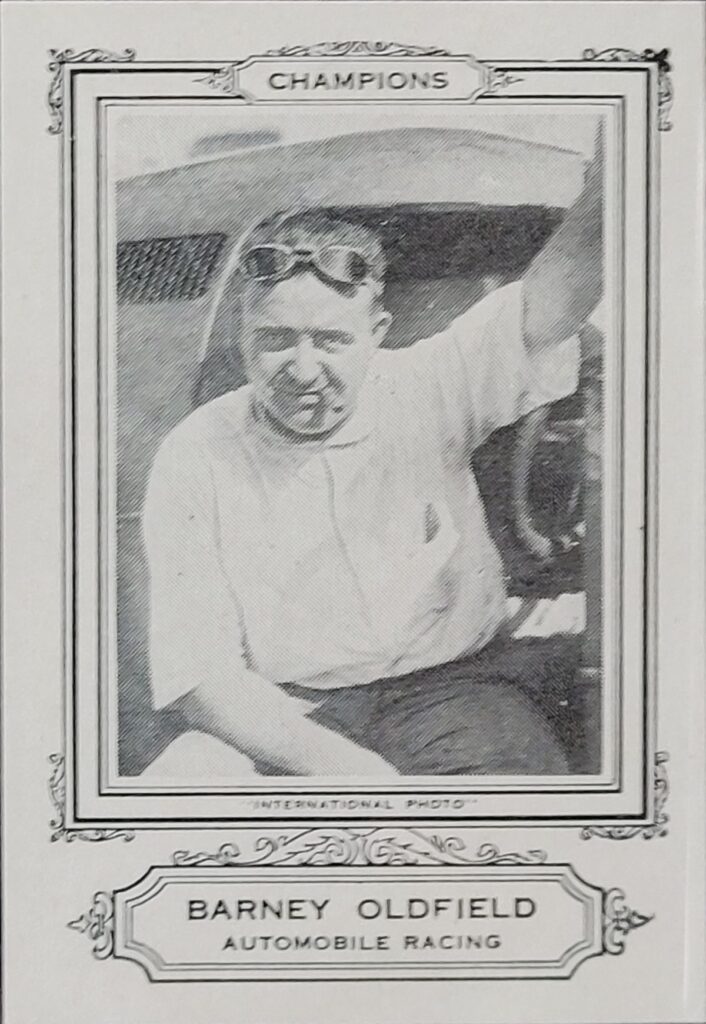
    The 1926 Spalding Champions set (also known as the Sports Company of America issue) remains one of the most ambitious and visually captivating multi-sport card releases from the pre-war era. Produced by the San Francisco-based Sports Company of America—with connections to the A.G. Spalding & Bros. sporting goods powerhouse—this set includes around 210 known cards celebrating athletes from an impressive range of disciplines from baseball to billiards. The 1926 Spalding Champions set includes eight dedicated cards highlighting the era’s top automobile racing stars who dominated the Indianapolis 500, board tracks, and AAA circuits during the Roaring Twenties.


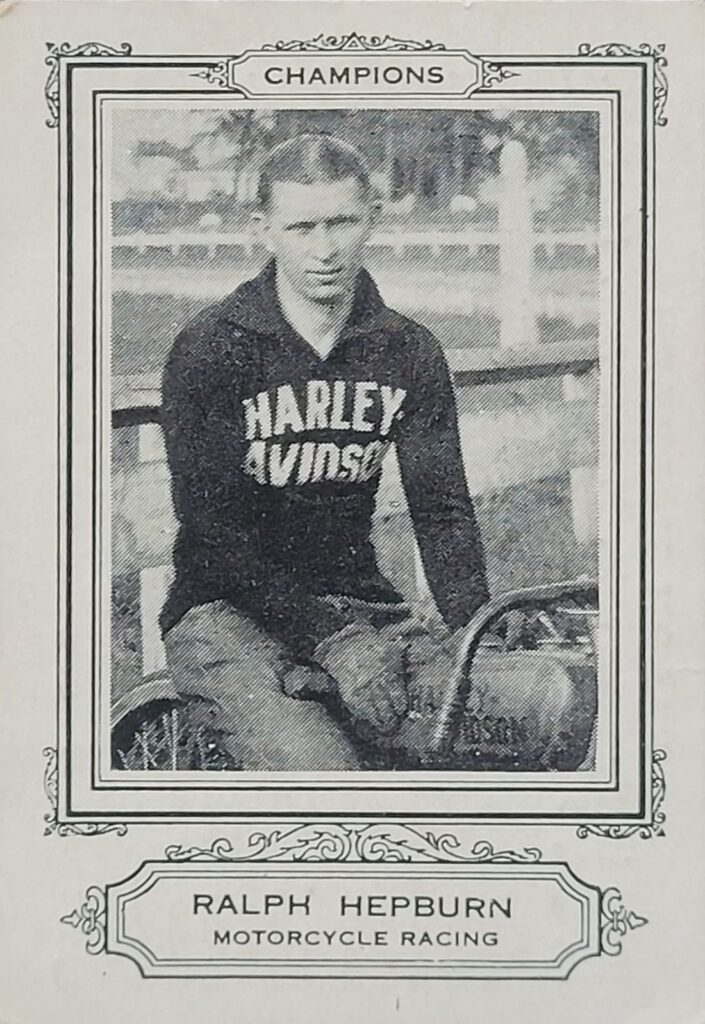
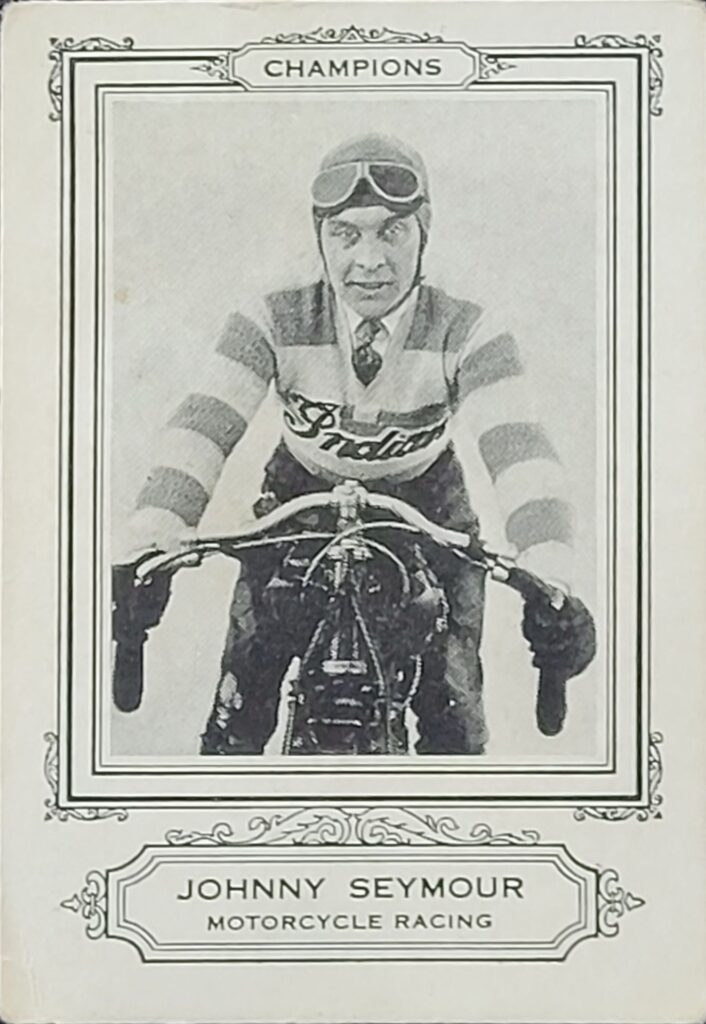
    The cards measure approximately 38 mm by 56 mm (1-1/2″ by 2-3/16″), featuring thin, translucent stock printed via halftone process. The fronts showcase elegant black-and-white posed photos of the athletes, framed in ornate Art Deco borders. “CHAMPION” crowns the top, with the subject’s name and sport in a decorative rectangle below—giving the cards a sophisticated, almost artistic collectible appeal that stands out from typical 1920s issues.

    Distribution and the Album Promotion

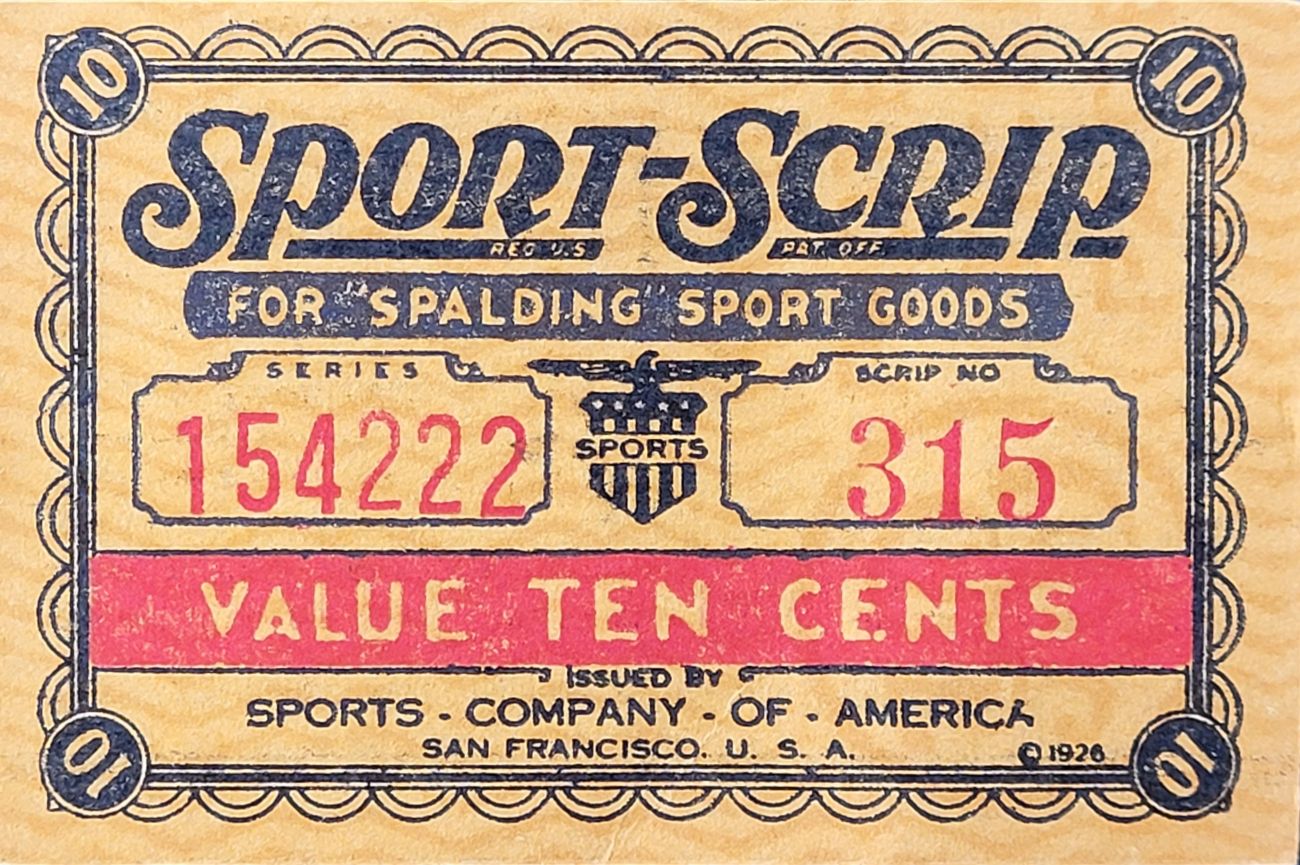
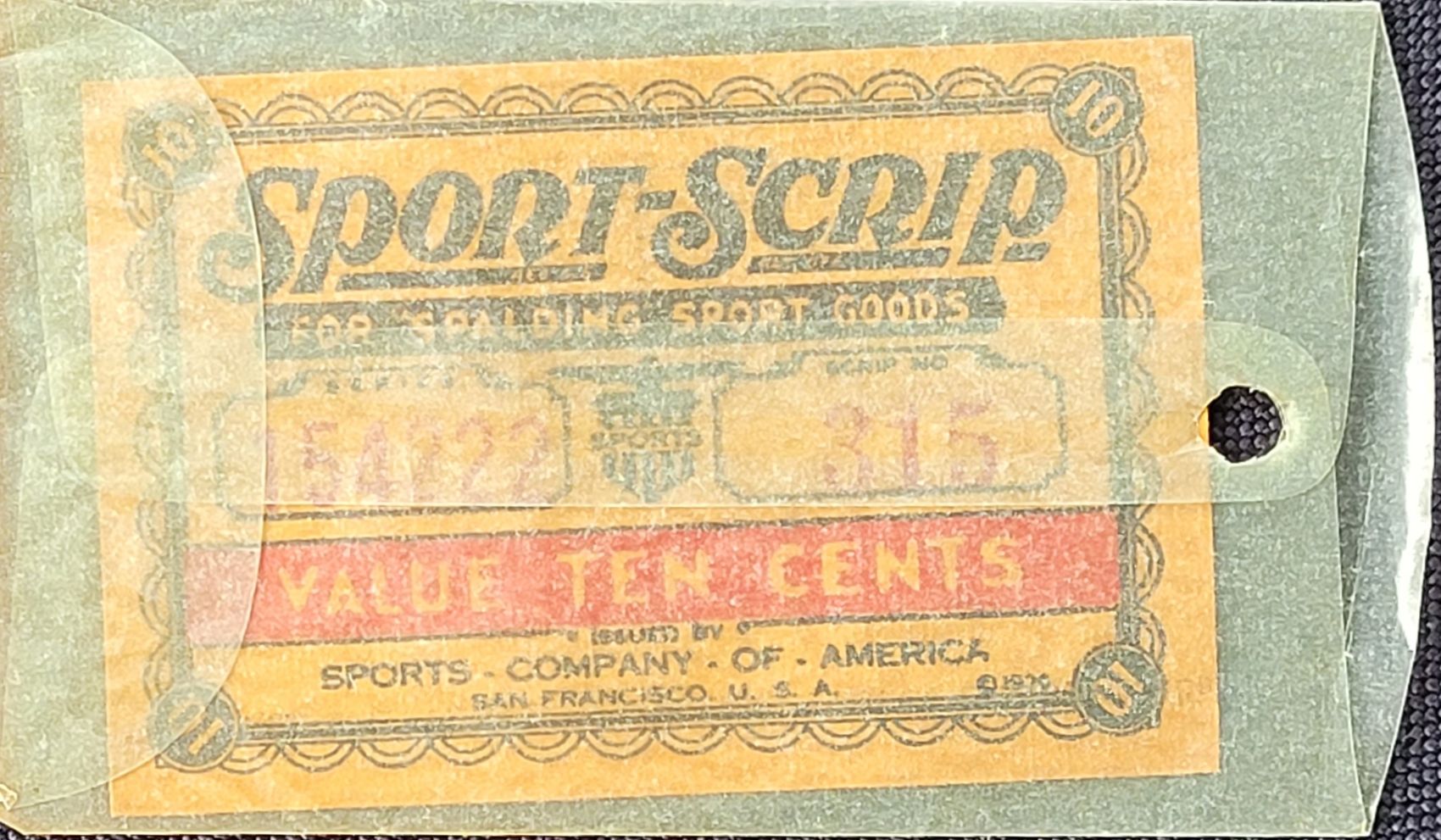
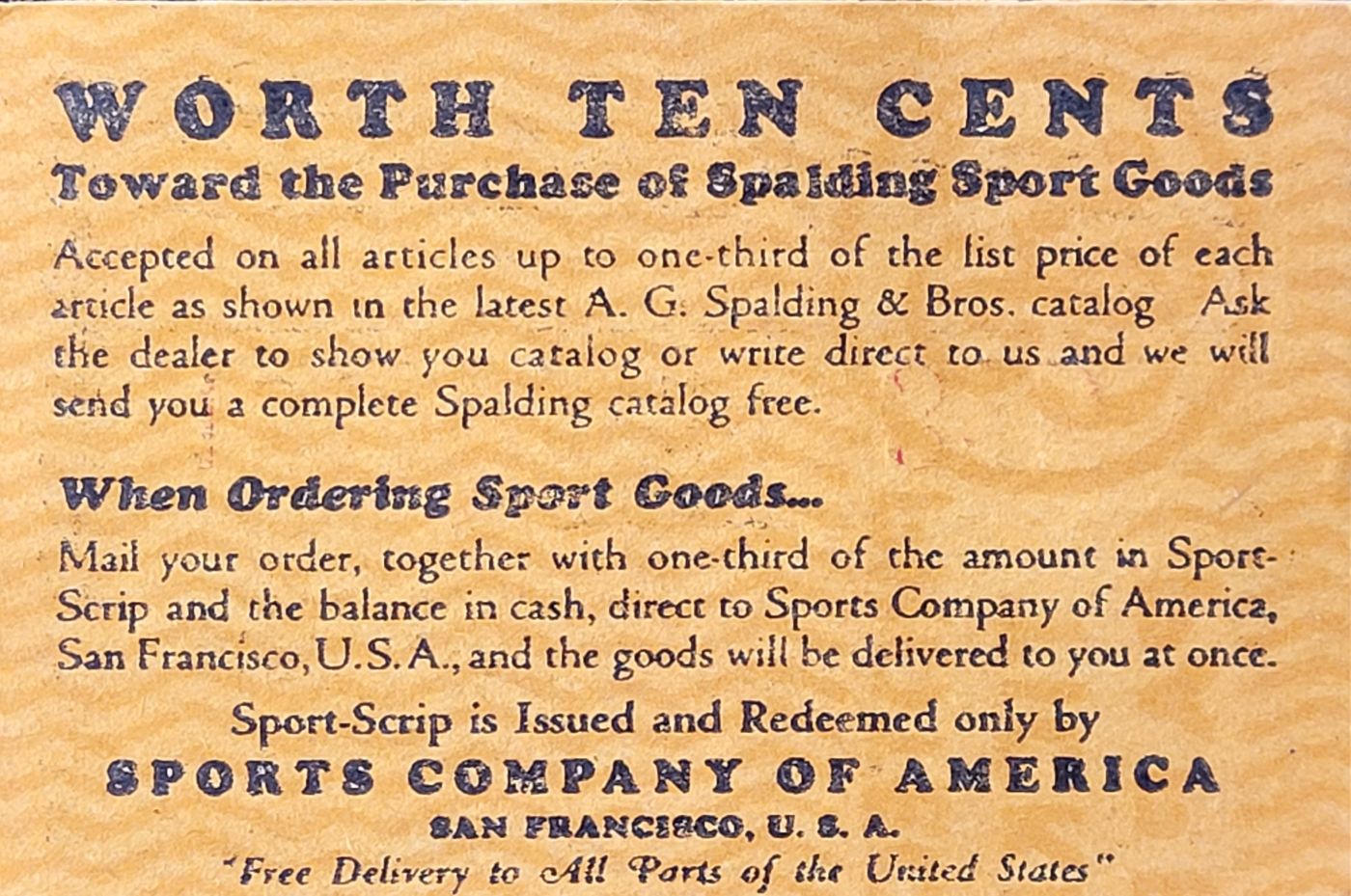
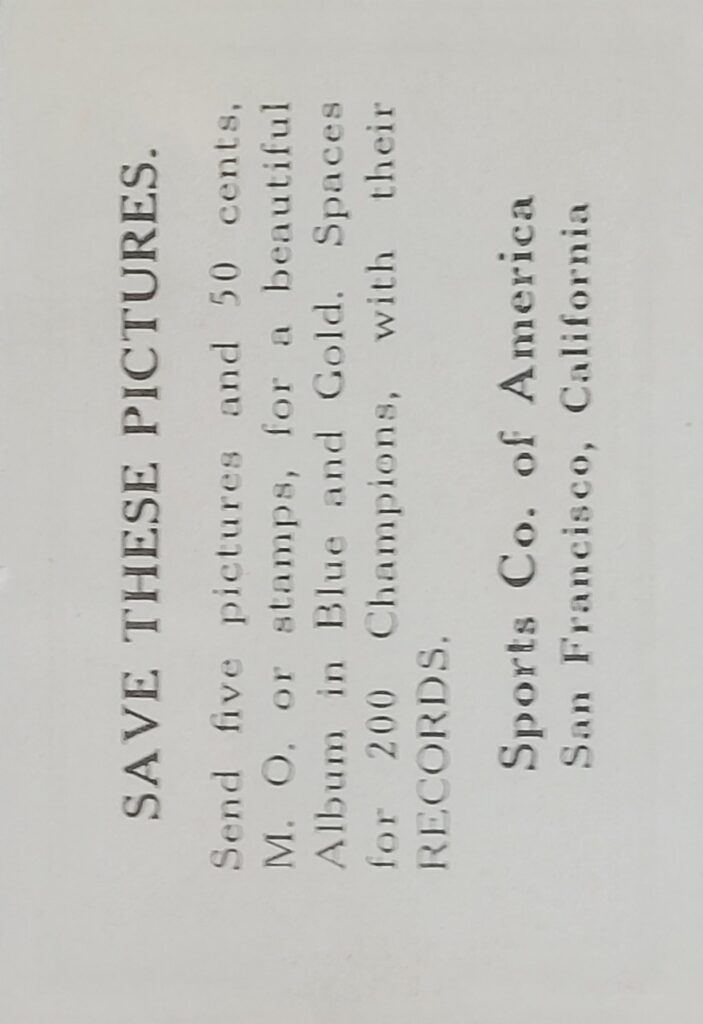
    Cards came in small glassine envelopes, each including a “Sport-Scrip” coupon redeemable for 10 cents off Spalding sporting goods. A special offer on certain backs allowed collectors to mail in five cards plus 50 cents (via money order or stamps) to receive a handsome blue-and-gold album designed to house all 200 cards (though roughly 210 are now cataloged). No original albums have appeared at major auctions, heightening the set’s allure.


    The Different Backs: Rarity Variations

    The backs are a major draw for collectors, with four primary types:

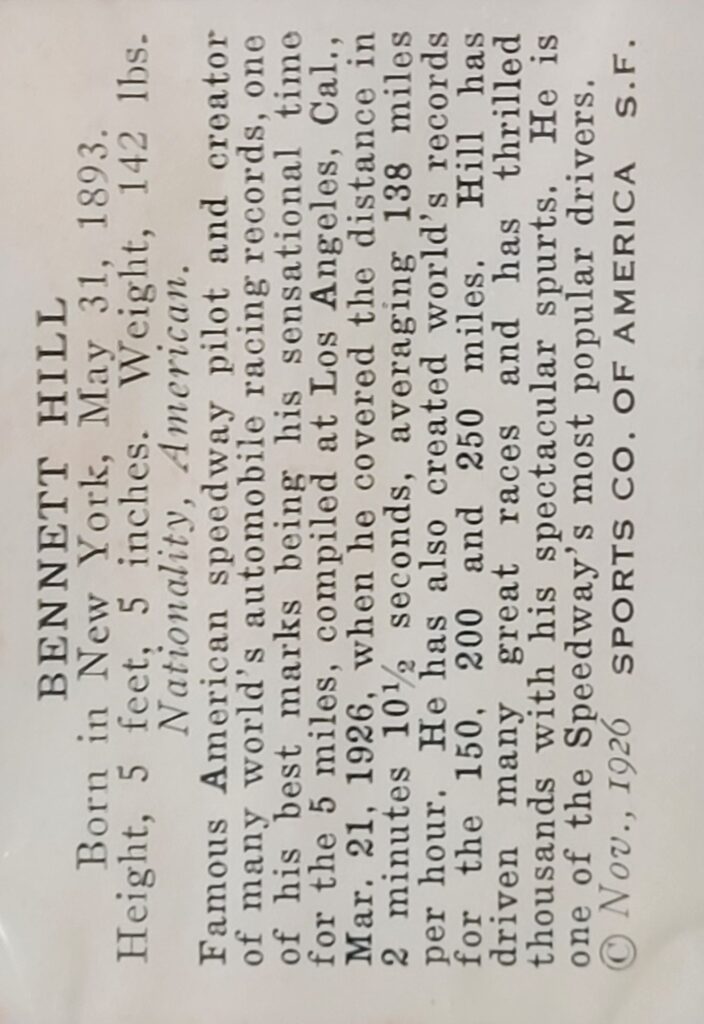
    • Biography (Text/Stat) Backs — The most common, featuring a short bio or stats of the athlete. A notable detail: some carry a 1926 copyright date at the bottom, while others are dated 1927. The 1927 versions are scarcer and likely represent later print runs or set expansions. For example, key cards like Babe Ruth appear with both dates.
    • Advertising Backs — Scarce promotional reverses touting the “Sports Co. of America” and album-order instructions.
    • Blank Backs — The rarest, possibly hand-cut proofs or test prints.


    These back variations—especially the dual 1926/1927 copyrights on bio backs—make assembling a master set a serious pursuit.

    Subjects and Auto Racing Connections

    The set’s diversity shines through its baseball cards (including stars like Babe Ruth, Ty Cobb, and Rogers Hornsby), football cards (with pre-rookie Hall of Famers Bennie Friedman and Ernie Nevers), boxing icons Jack Dempsey and Gene Tunney, golfers Walter Hagen and Gene Sarazen, tennis great Bill Tilden, and swimmer Johnny Weissmuller.

    The eight automobile racing cards in the 1926 Spalding Champions set feature the following drivers:

    • Earl Cooper — A pioneering American racer who won three AAA National Championships (1913, 1915, 1917) and achieved a best finish of second at the 1924 Indianapolis 500, earning the nickname “the Clutch King” for his reliability in early dirt-track and board-track eras.
    • Ralph DePalma — An Italian-American legend who dominated early American racing with the 1915 Indianapolis 500 victory (after famously pushing his car across the line in 1912), multiple Vanderbilt Cup wins, AAA National Championships in 1912 and 1914, and over 2,500 career victories claimed across various events.
    • Pete DePaolo — Nephew of Ralph DePalma, he won the 1925 Indianapolis 500 at a record average speed, captured AAA National Championships in 1925 and 1927, and was a top Duesenberg and Miller team driver in the 1920s.
    • Harry Hartz — A versatile racer who finished second in the 1922, 1923, and 1926 Indianapolis 500s, won the 1926 AAA National Championship with seven board-track victories throughout his career, and later became a successful car owner and race promoter after a 1927 crash ended his driving days.
    • Benny Hill — An American board-track and dirt-track specialist (full name Bennett Hill) who secured six AAA-sanctioned victories in the 1920s (including Culver City in 1924), competed in eight Indianapolis 500s with a best finish of third in 1925, and broke multiple speed records during his active years from the early 1920s to 1934.
    • Bob McDonogh — A prominent 1920s board-track era driver who competed in over 40 AAA Championship races from 1924 to 1932 (including six Indianapolis 500 starts with a best of seventh in 1926), secured three wins in 1925, and notched multiple podiums and poles before his career ended.
    • Tommy Milton — The first two-time Indianapolis 500 winner (1921 and 1923), he captured the 1921 AAA National Championship, amassed 23 AAA championship race wins from 1917–1925 (dominating board tracks and dirt events in the early 1920s), and retired from driving after his final race, the Fulford 300 in February 1926, partly due to vision issues from a prior crash.
    • Barney Oldfield — A pioneering speed king famous for setting early land speed records, being the first to exceed 100 mph on a track (1910), and popularizing auto racing through barnstorming exhibitions after his competitive peak in the 1900s and early 1910s.

    Additionally, the set highlights two motorcycle racing stars—Johnny Seymour and Ralph Hepburn—who later crossed over to prominent auto racing careers: Seymour became a six-time Indianapolis 500 starter (1928–1936) with success on dirt tracks, while Hepburn emerged as a respected Indy 500 competitor and board-track specialist in the late 1920s and 1930s. These cards capture a transitional era when top motorcycle talents crossed over to the growing world of automobile speedways—making them especially relevant for auto racing enthusiasts exploring the roots of the sport.


    Rarity and Modern Collecting

    The set stayed obscure until major high-grade finds in 1990 and 1996. PSA has graded about 1,200–1,300 examples, many EX-MT or better thanks to the high-grade finds. Ad and blank backs are tough; high-grade Ruth ad backs are near-mythical. Values span hundreds to tens of thousands, depending on subject, back type, and condition.

    For auto racing fans, the 1926 Spalding Champions set offers more than just vintage cardstock—these cards capture the thrilling early days of American auto racing, from the Indianapolis 500 to board tracks and dirt ovals, providing a direct window into the Roaring Twenties motorsports scene. The elegant 1926 Spalding Champions remain a scarce and highly prized cornerstone, blending historical significance with timeless Art Deco design.

    The front and back of the 1926 Spalding Champions auto racing cards can be viewed at the link below.

    1926 Spalding Champions

  • STP Red, Petty Blue, and Rare: The 1972 STP Cards That Started It All

    STP Red, Petty Blue, and Rare: The 1972 STP Cards That Started It All

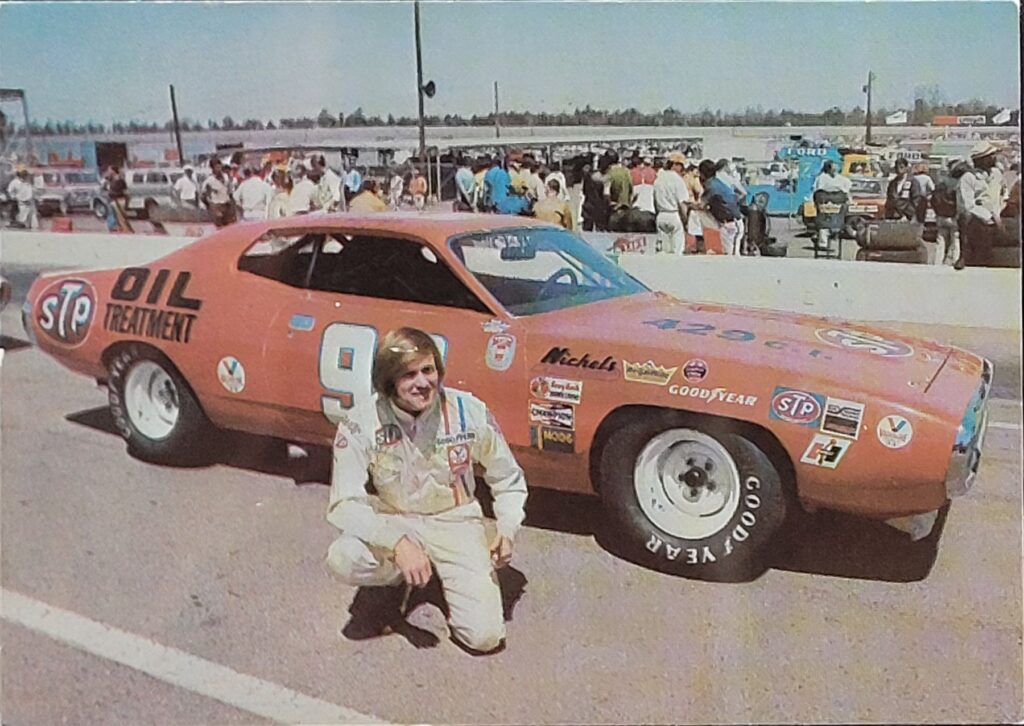
    The 1972 STP NASCAR card set is widely recognized as the first standard 2½″ × 3½″ trading card issue devoted entirely to NASCAR drivers. Distributed as a promotional giveaway by STP during the 1972 season — most notably during Daytona Speedweeks — the set represents a true starting point for modern NASCAR card collecting and captures a pivotal moment in the sport’s commercial evolution.

    Unlike earlier oversized postcards or regional premiums, the STP cards adopted the now‑familiar trading card dimensions. That choice allowed NASCAR drivers to fit seamlessly alongside mainstream baseball and football cards in collectors’ albums. For hobbyists, this release marks the moment stock car racing fully entered the traditional trading card marketplace.

    The cards were printed on relatively thin stock, typical of promotional issues rather than retail-packaged products. They were handed out as part of STP’s trackside marketing efforts — primarily during Speedweeks at Daytona International Speedway — and while Daytona appears to have been the main distribution point, limited numbers may also have been distributed at other races later in the season. Because these cards were given away rather than sold, many examples show handling wear, soft corners, or light surface flaws, and high-grade specimens remain difficult to assemble decades later.

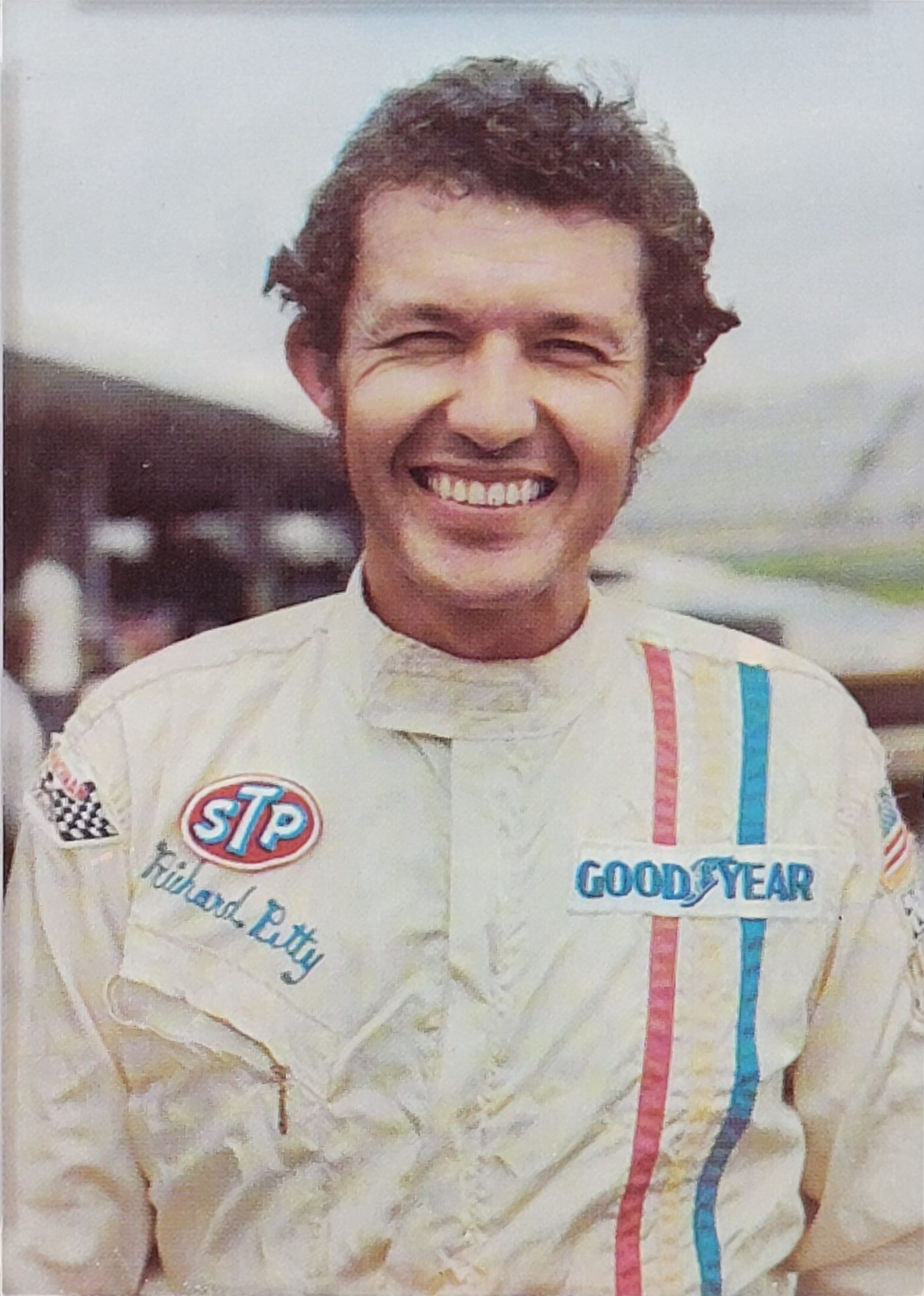
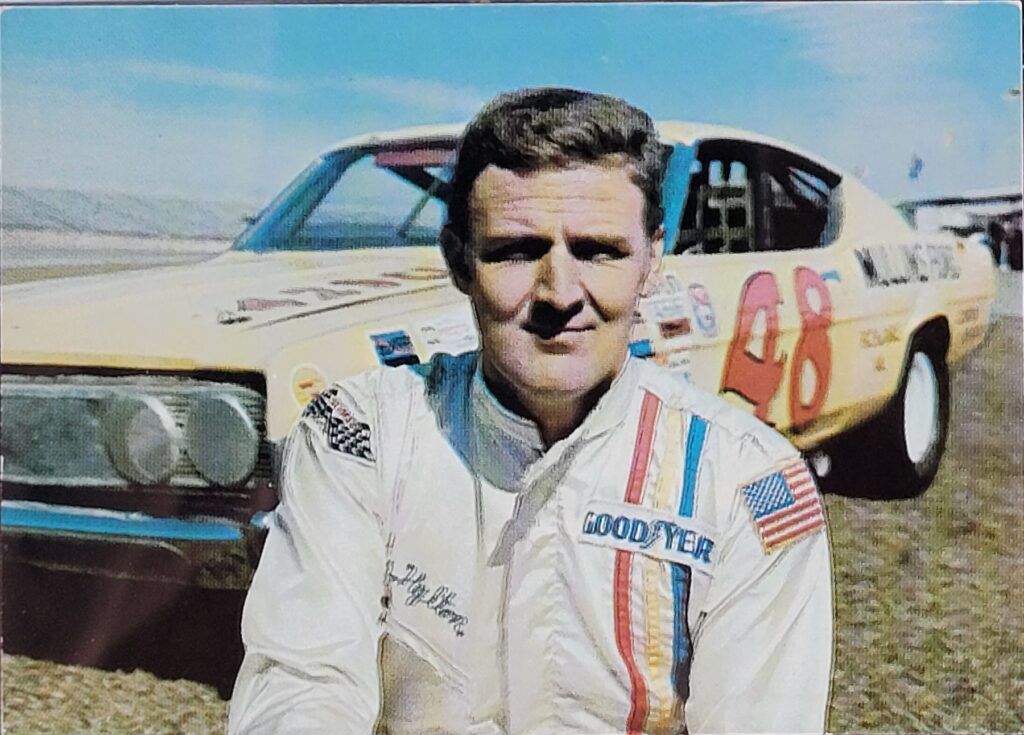
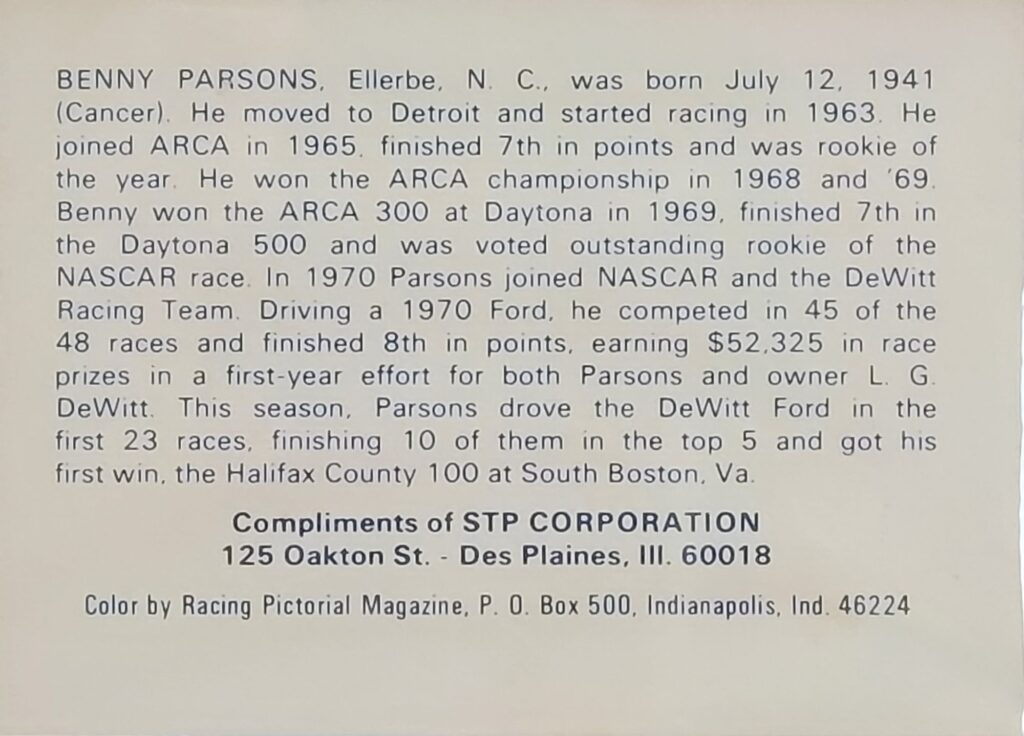
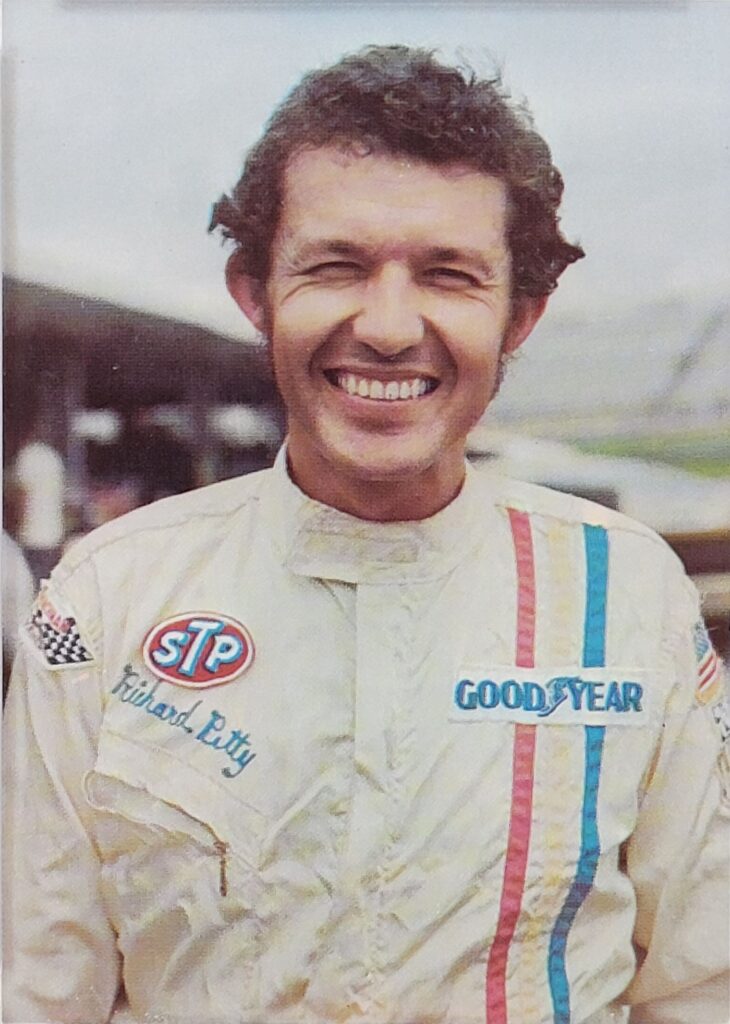
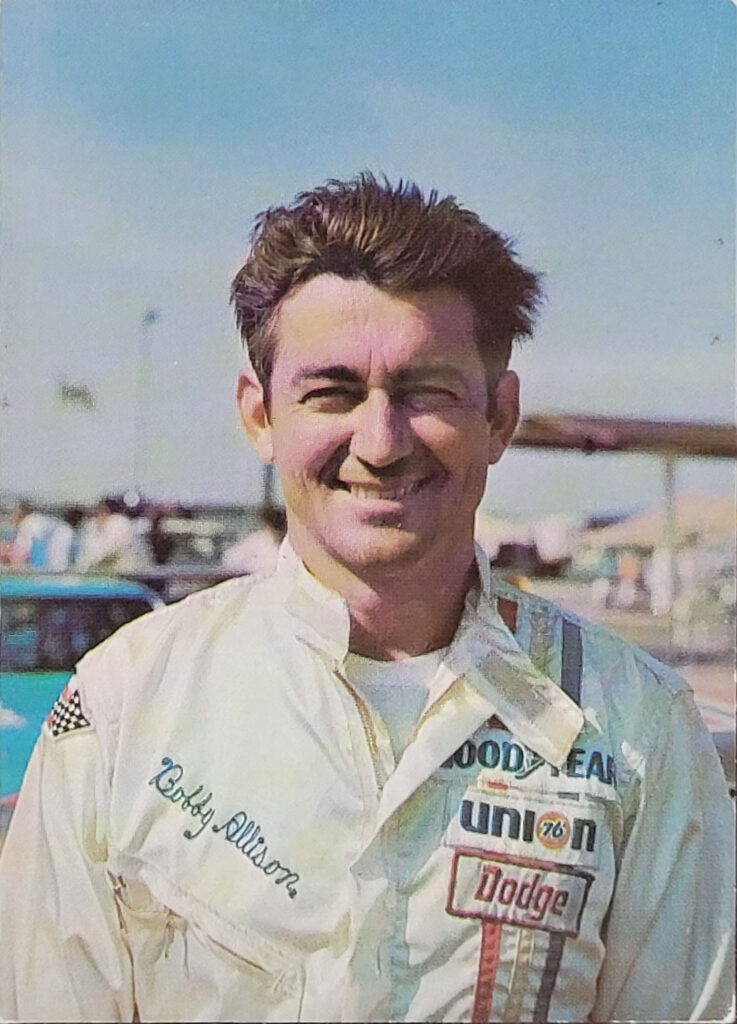
    Visually, the design is clean and direct. Each front features a full-color, full-bleed photograph with no borders or numbering. The focus is entirely on the driver image — typically posed portraits in uniform or standing next to their cars. The photography reflects a professional polish thanks to Racing Pictorial Magazine, credited on the reverse with “Color by Racing Pictorial Magazine….” At the time, Racing Pictorial was widely respected for vivid, high-quality racing coverage, and that standard is evident throughout the set. The backs are printed in blue ink and include the driver’s name, hometown, birthdate, Zodiac sign, and a concise career biography summarizing accomplishments through the early portion of the 1971 season. The reverse also reads, “Compliments of STP Corporation – 125 Oakton St. – Des Plaines, Ill. 60018.” The cards are unnumbered, emphasizing their identity as a promotional issue rather than a structured retail set.

    The complete run consists of 11 cards representing 10 drivers, with one variation. The checklist includes:

    • Bobby Allison
    • Buddy Baker
    • Dick Brooks
    • Charlie Glotzbach
    • James Hylton
    • Elmo Langley
    • Fred Lorenzen (Portrait)
    • Fred Lorenzen (With Car)
    • Dave Marcis
    • Benny Parsons
    • Richard Petty

    The driver selection reflects a deliberate marketing approach. Established stars such as Richard Petty and Bobby Allison provided headline appeal. Contenders like Buddy Baker and Benny Parsons represented emerging championship threats, while veterans such as James Hylton and Elmo Langley reflected the independent spirit still central to NASCAR at the time. Fred Lorenzen, one of the sport’s most recognizable figures of the 1960s, added national recognition and crossover popularity.

    The Significance of Richard Petty and STP Sponsorship

    1972 was a landmark year for NASCAR’s corporate marketing. STP officially began sponsoring Richard Petty, creating a high-profile partnership that tied the driver, the team, and the brand to a national promotion of stock car racing. This sponsorship coincided with Winston’s title sponsorship and NASCAR’s modernization: the sanctioning body condensed the schedule, emphasized higher-profile events, and sought to attract more television coverage. Petty’s presence on the STP card, combined with the company’s active marketing effort, mirrored NASCAR’s evolution into a professionally branded, nationally recognized sport. For collectors, the Petty card not only serves as the centerpiece of the set but also symbolizes the commercial and cultural shift in NASCAR during the early 1970s.

    Scarce Cards: Lorenzen and Allison

    Two distinct Fred Lorenzen cards exist: a standard portrait and a second version showing him with his car. The “with car” variation is one of the rarest pieces in racing card collecting — PSA has graded only four examples. Its scarcity is often attributed to Lorenzen’s absence from the 1972 Daytona 500 and his limited racing schedule that year, which likely meant fewer cards were distributed at Speedweeks and other promotional appearances.


    The Bobby Allison card is also exceptionally scarce in graded form, with only eight examples graded by PSA. Many other cards from the issue have similarly low populations, with none exceeding 23 PSA-graded examples, underscoring the set’s rarity and collectible appeal.

    More than fifty years later, the 1972 STP NASCAR set remains historically significant. Its standard size, professional photography from Racing Pictorial, concise biographical backs, selective checklist, and identifiable scarce variations combine to capture a snapshot of NASCAR at the dawn of its modern era. For collectors of vintage motorsports memorabilia, it is not merely a promotional giveaway — it is a cornerstone of NASCAR card collecting and a tangible reflection of the sport’s emerging national profile, amplified by Petty’s new STP sponsorship and the sport’s evolving schedule of higher-profile, nationally promoted events.

    1972 STP NASCAR Trading Cards

  • From Cigarette Packs to the Race Track: The Racing Heart of the 1910 T37 Turkey Red Set

    From Cigarette Packs to the Race Track: The Racing Heart of the 1910 T37 Turkey Red Set

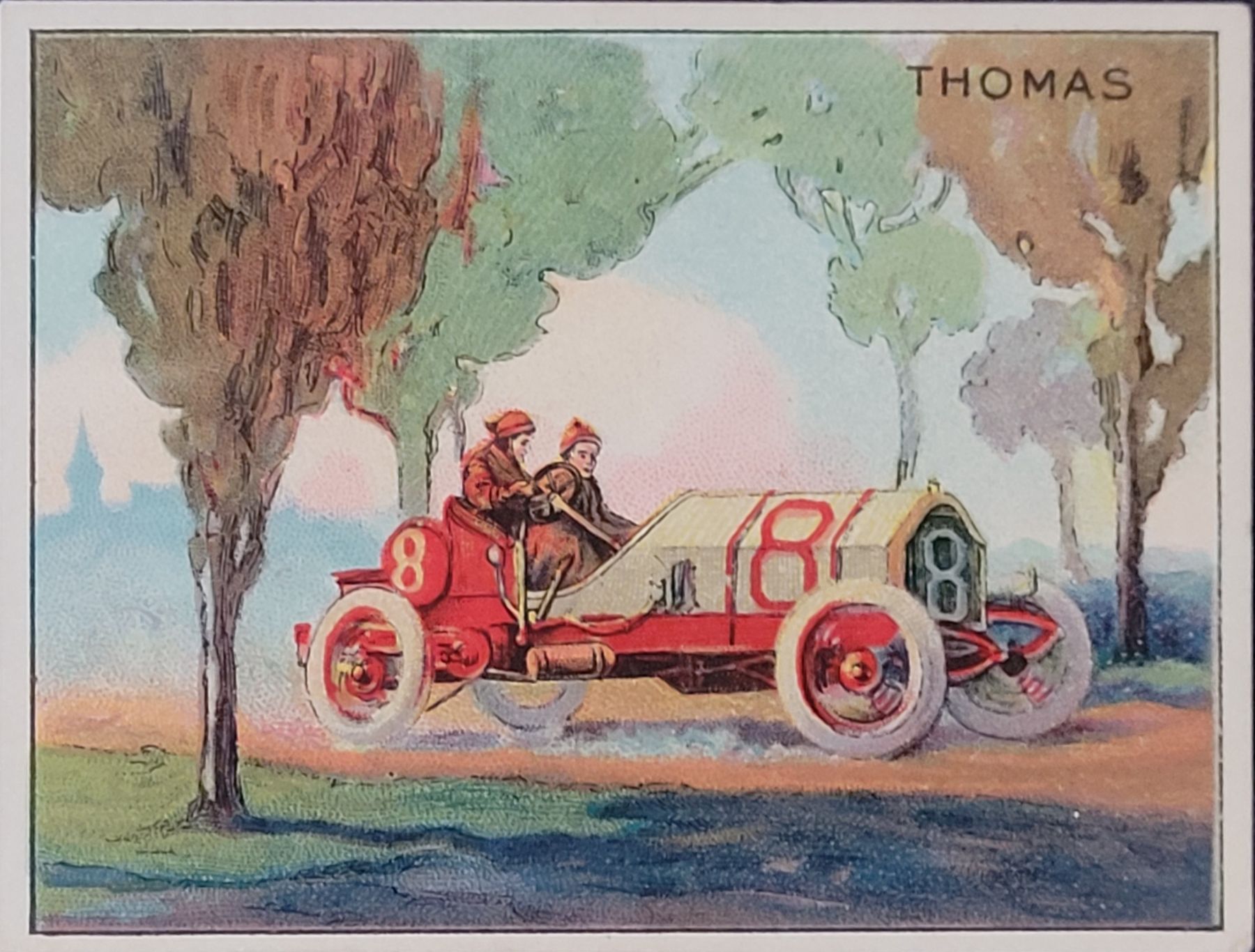
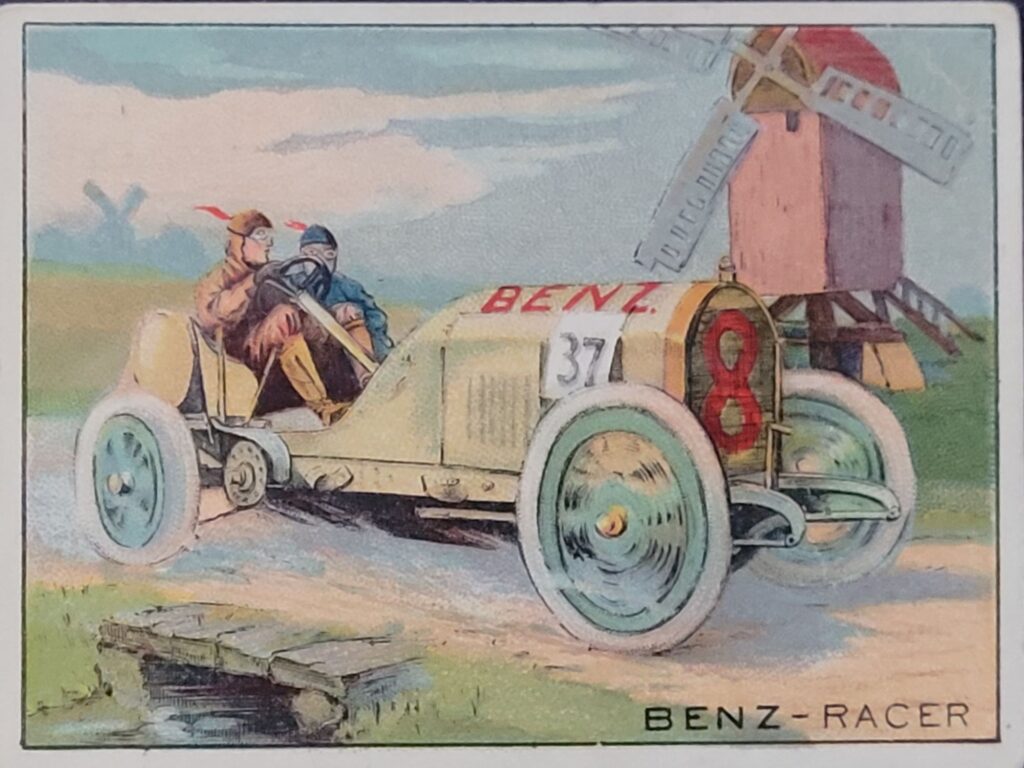
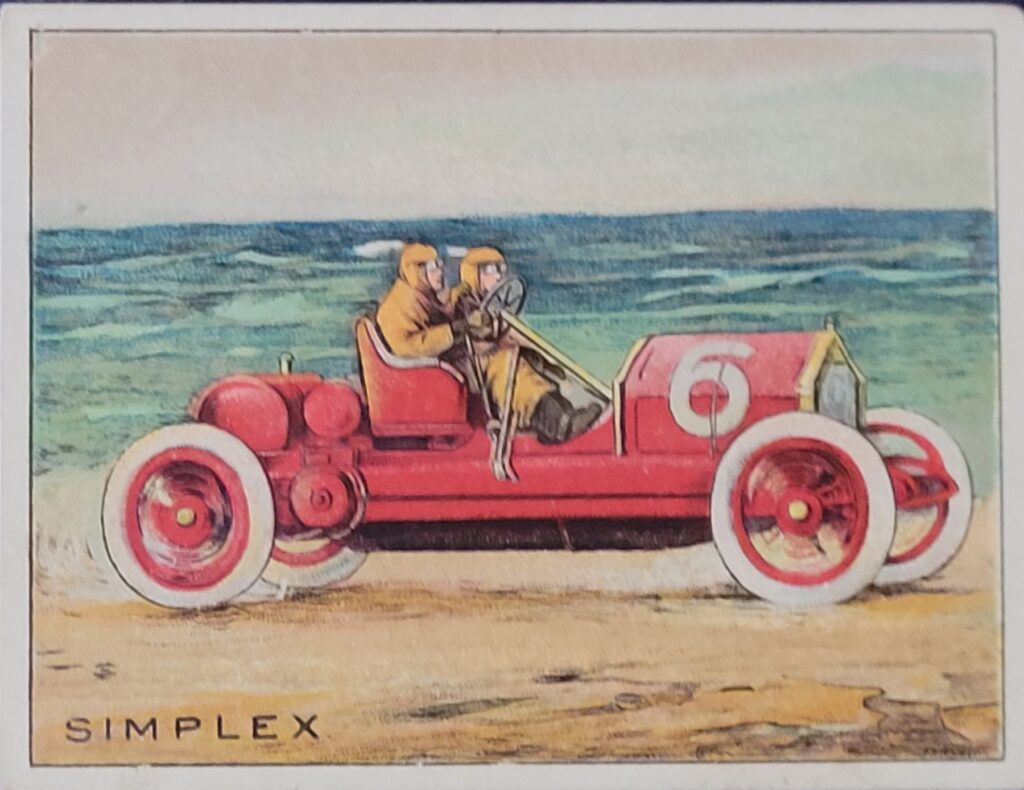
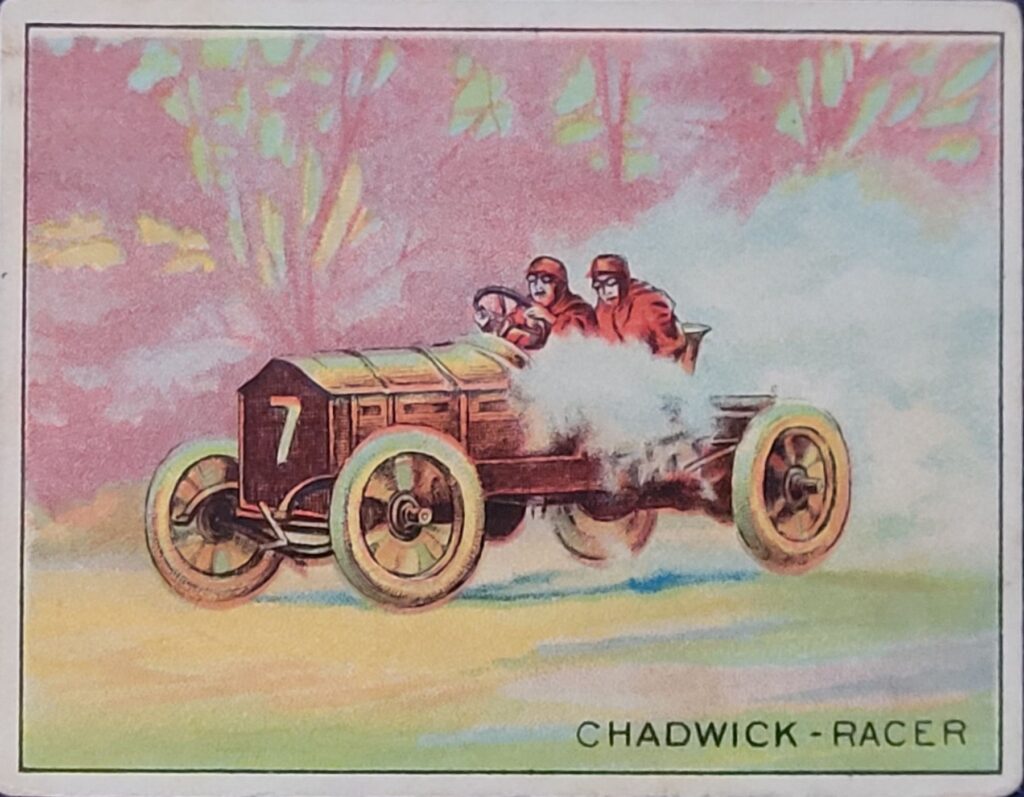
    The T37 Automobile Series was issued around 1910–1911 by the American Tobacco Company with Turkey Red Turkish Cigarettes. The set stands as one of the earliest and most iconic dedicated automobile trading card sets, capturing the automobile’s rapid rise from novelty to cultural phenomenon. With 50 small, unnumbered cards (about 67mm x 51mm), the fronts deliver vivid, hand-colored illustrations of early cars in dynamic outdoor scenes—often speeding along dusty roads or scenic paths—with the bold red “Turkey Red” branding and a full set checklist on the backs. Distributed one card per ten-cigarette pack, these became everyday pocket treasures for smokers and now rank among the most sought-after pre-war non-sport issues.

    While many cards show production touring cars, family runabouts, electrics, and luxury models (think Ford, Cadillac, Renault, and Maxwell), the set’s true thrill for racing enthusiasts lies in its celebration of early motorsport. About a dozen cards explicitly label their subjects as Racer—including the Acme Racer, Benz-Racer (depicting the famed Blitzen Benz land-speed record holder), and Fiat-Racer. These portray stripped-down, high-performance machines built for speed, often with aggressive, low profiles that scream competition.

    The artwork remains a highlight: artists rendered these cars with dramatic flair—scarves flying, goggles glinting—evoking the daredevil spirit that made headlines worldwide. By blending American contenders with European powerhouses, cards from the T37 set gave collectors an international snapshot of racing’s infancy, right as the sport was exploding in popularity.

    The set’s legacy endures. In 1953, Bowman reused much of the artwork (slightly enlarged) for its “Antique Autos” issue, reintroducing these pioneering racers to a new generation. Today, T37 cards—especially the racer-themed ones—are prized rarities, with graded examples commanding strong prices. For any auto racing historian or collector, these tiny tobacco inserts remain a colorful, direct portal to the birth of speed: proof that even in 1910, the thrill of the race was already etched in card stock.

  • 1960 Peter-Austin Magnajector Picture Cards

    1960 Peter-Austin Magnajector Picture Cards

    The 1960 Peter-Austin Magnajector picture cards occupy a small but interesting niche in the history of auto racing collectibles. The double-sided six card set is closely connected to the legacy of the Indianapolis 500 through its subject matter. Every card in the series features drivers whose reputations were built, in whole or in large part, at Indianapolis. This issue is especially appealing to collectors focused on Indy 500 history.

    The cards were produced by Peter-Austin, a Canadian company associated with the distribution of the Magnajector. The Magnajector was a mid-century image projection toy allowing users to project printed images onto a wall or screen. The racing picture cards were designed as visual supplements for that system. The cards are generally considered a promotional or novelty issue rather than a traditional trading card release.

    Tony Bettenhausen makes a pit stop at the Indianapolis 500

    What gives the set its lasting appeal is the selection of drivers. Rather than focusing on contemporary stars of just 1960, the cards look back at legendary figures from the golden era of American championship racing. Names such as Bill Vukovich, Mauri Rose, Bob Sweikert, Tommy Milton, Floyd Roberts, and Lee Wallard are inseparable from Indianapolis 500 history. Several drivers featured were race winners, others perennial contenders, and all were well-known to fans of the Speedway.

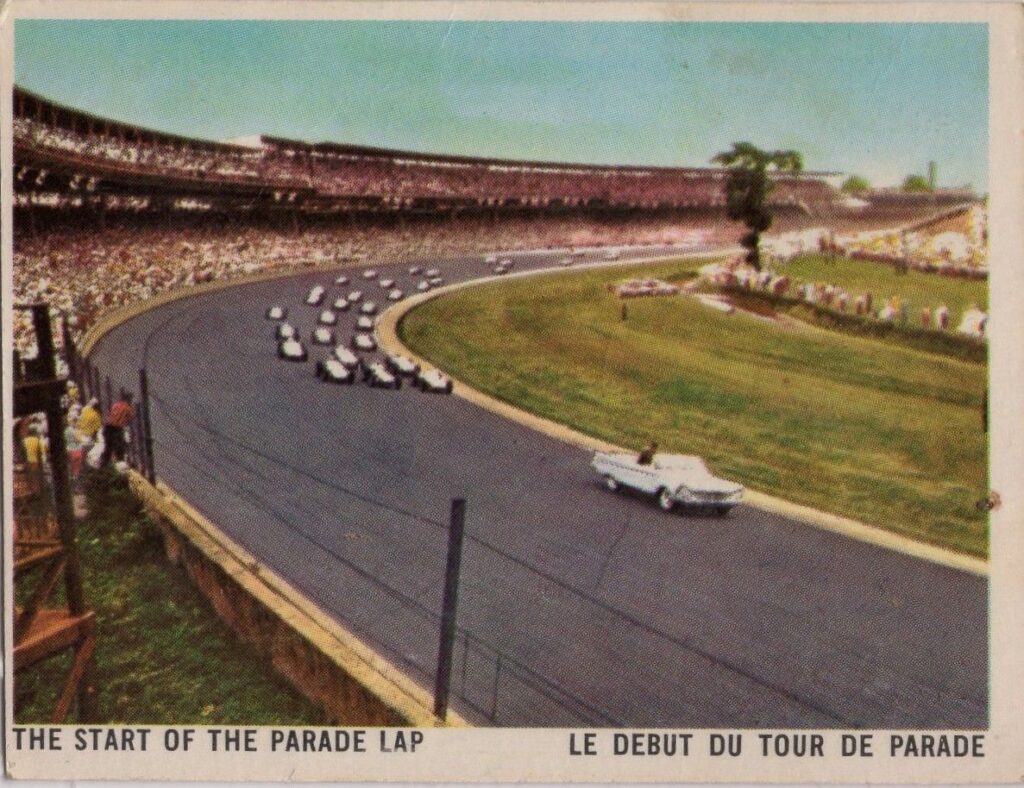
    Bill Vukovich Leads the Indianapolis 500 Pace Lap

    Physically, the Magnajector cards are oversized compared to standard sports cards of the period. Surviving examples measure approximately 76 × 101 millimeters, or about 3 × 4 inches. This larger format suggests they were meant to be viewed or displayed rather than shuffled or traded extensively. Most examples are found without any packaging, and condition varies widely, with corner wear and surface scuffing being common due to their size and paper stock.

    From a collecting standpoint, the set is appealing because of its small size, its exclusive focus on Indianapolis-related drivers, and its unusual origin. While values are generally modest compared to mainstream racing cards, complete sets are far less common than individual cards. As a result, assembling a full checklist can be a satisfying challenge for collectors of Indy 500 memorabilia or vintage auto racing ephemera.

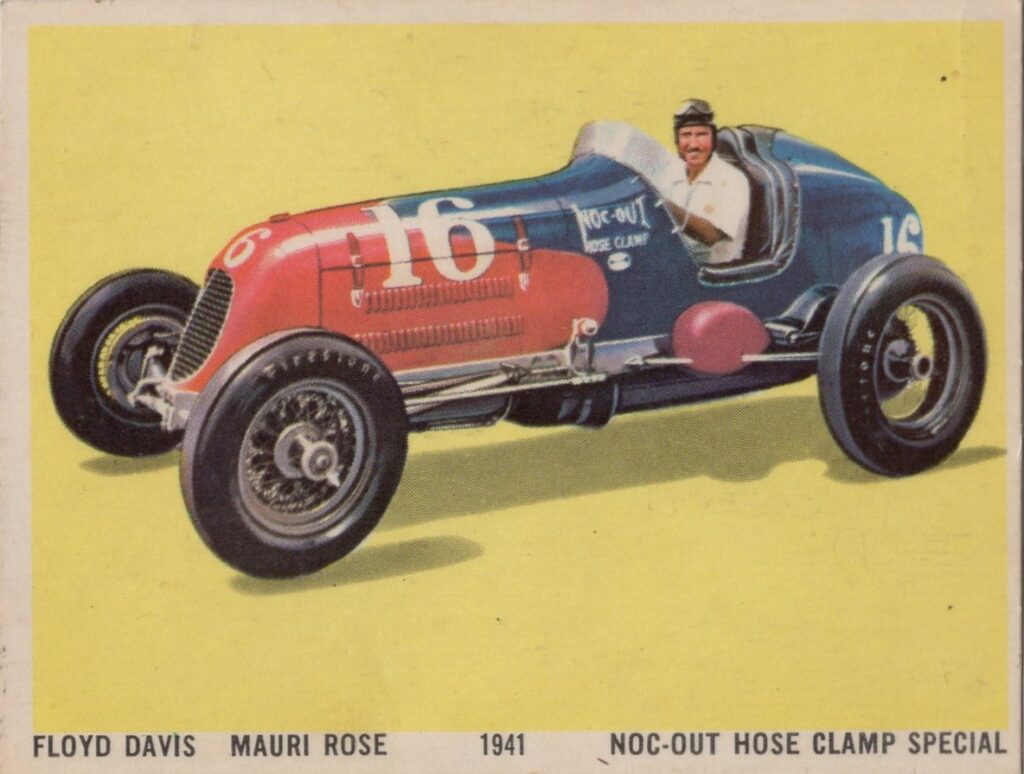
    Winners of the 1941 Indianapolis 500, Floyd Davis & Mauri Rose

    Checklist: 1960 Peter-Austin Magnajector Picture Cards

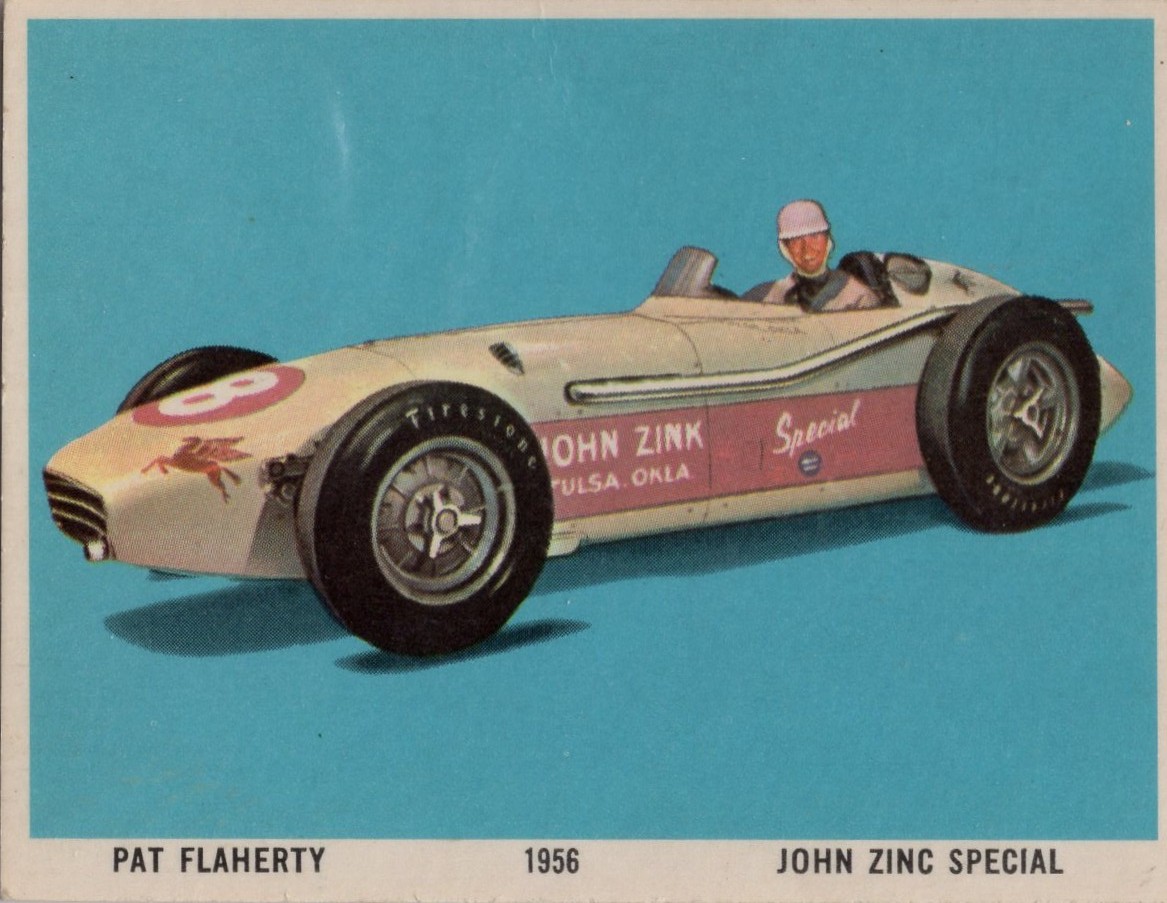
    1. Pat Flaherty and Lee Wallard
    2. Bill Holland and Floyd Roberts
    3. Tommy Milton and Mauri Rose
    4. Floyd Davis/Mauri Rose, and Rodger Ward
    5. Bob Sweikert and Tony Bettenhausen
    6. Bill Vukovich – Start of the Parade Lap

    Today, the 1960 Peter-Austin Magnajector cards are best appreciated as historical picture cards rather than conventional trading cards. They reflect a period when racing heroes were celebrated through a wide range of novelty items, and when the Indianapolis 500 was the center of American racing culture. For collectors, they offer a compact and visually engaging way to connect with the legends of the Speedway.

  • The 1961 Marhoefer (Indy Car Drivers) Card Set

    The 1961 Marhoefer (Indy Car Drivers) Card Set

    The Marhoefer Packing Company was a regional meat packing business based in Muncie, Indiana, active in mid‑20th century food production including hot dogs, sausages, and other processed meats.

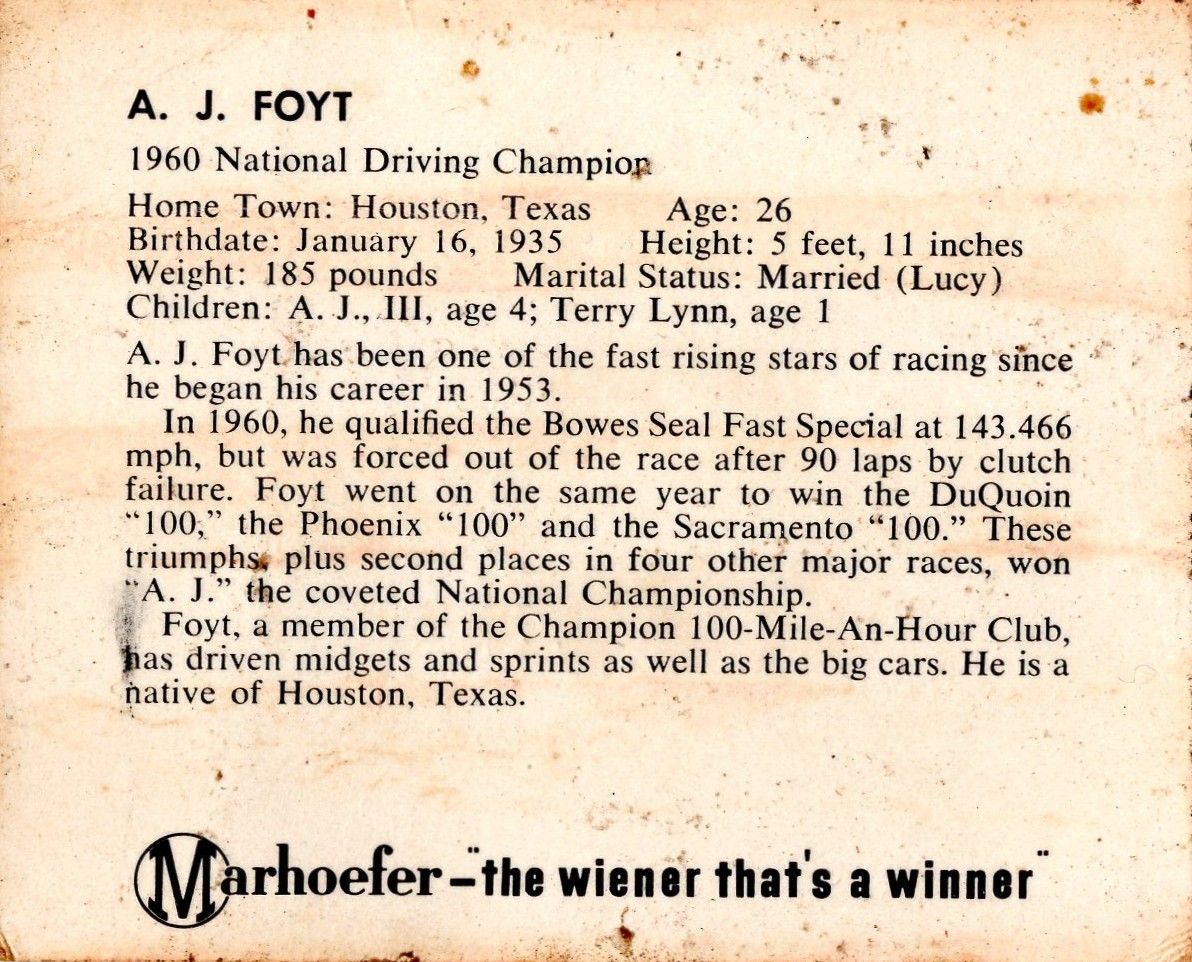
    In its advertising efforts, Marhoefer combined product promotion with popular cultural themes. In 1960 the company issued a promotional card series featuring airplanes, rockets, and space‑related imagery. Building on that promotion, Marhoefer issued a dedicated racing set of 10 cards in 1961 centered on Indianapolis Championship drivers — a move that tied its brand to the region’s most celebrated motorsport event, the Indy 500.


    Marhoefer Meats

    What Makes the 1961 Cards Unique

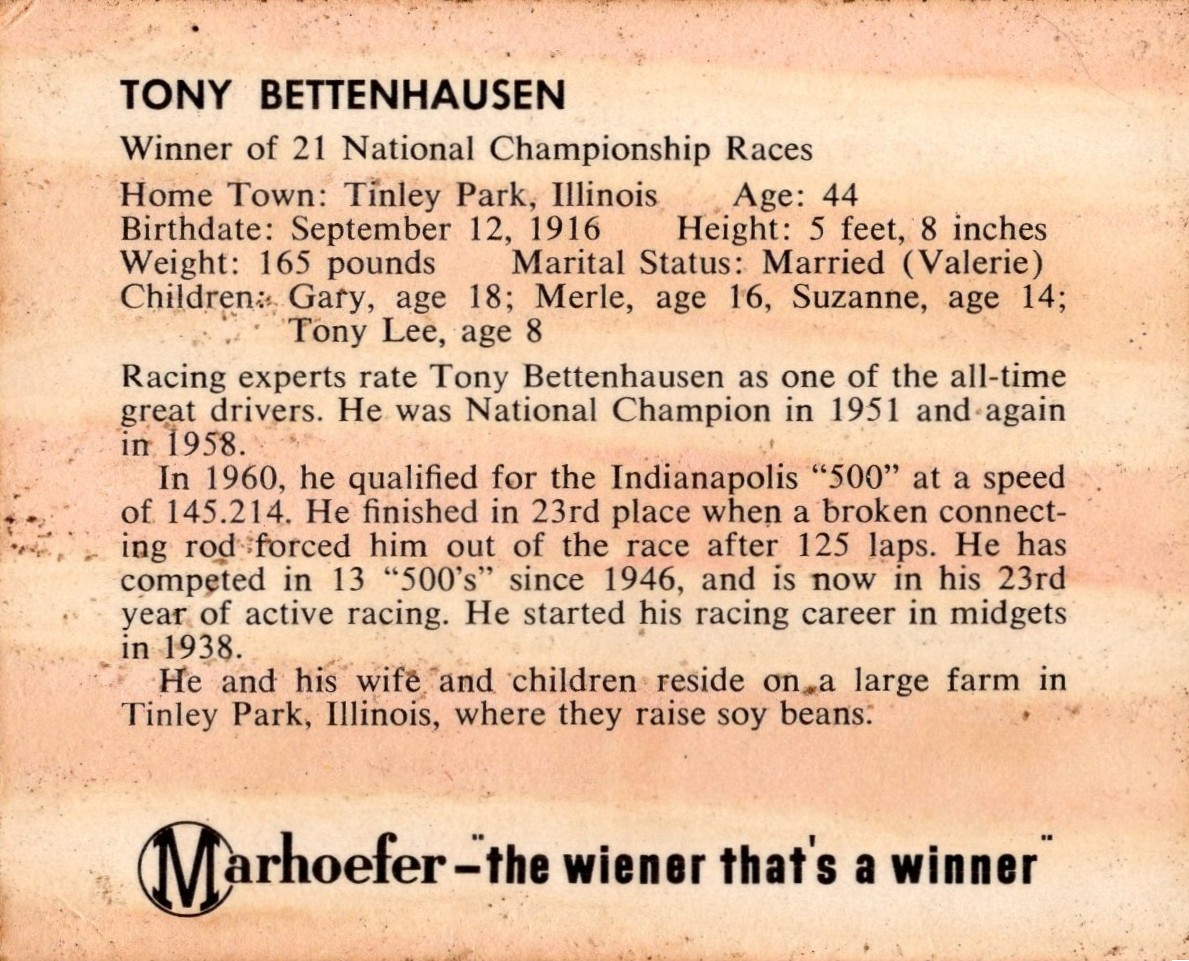
    The 1961 Marhoefer Meats cards consist of black‑and‑white photographic portraits of active Indy car drivers. The unnumbered cards measure 105mm x 84mm and are larger than the standard card issue. Unlike commercial trading card issues intended for hobby distribution, these were produced as promotional backing boards for meat products. Marhoefer’s advertising cards were included in packaging or as backing cards beneath meat items, which explains the frequent presence of stains and smudges on the backs of surviving examples — physical signs of original handling as product inserts.

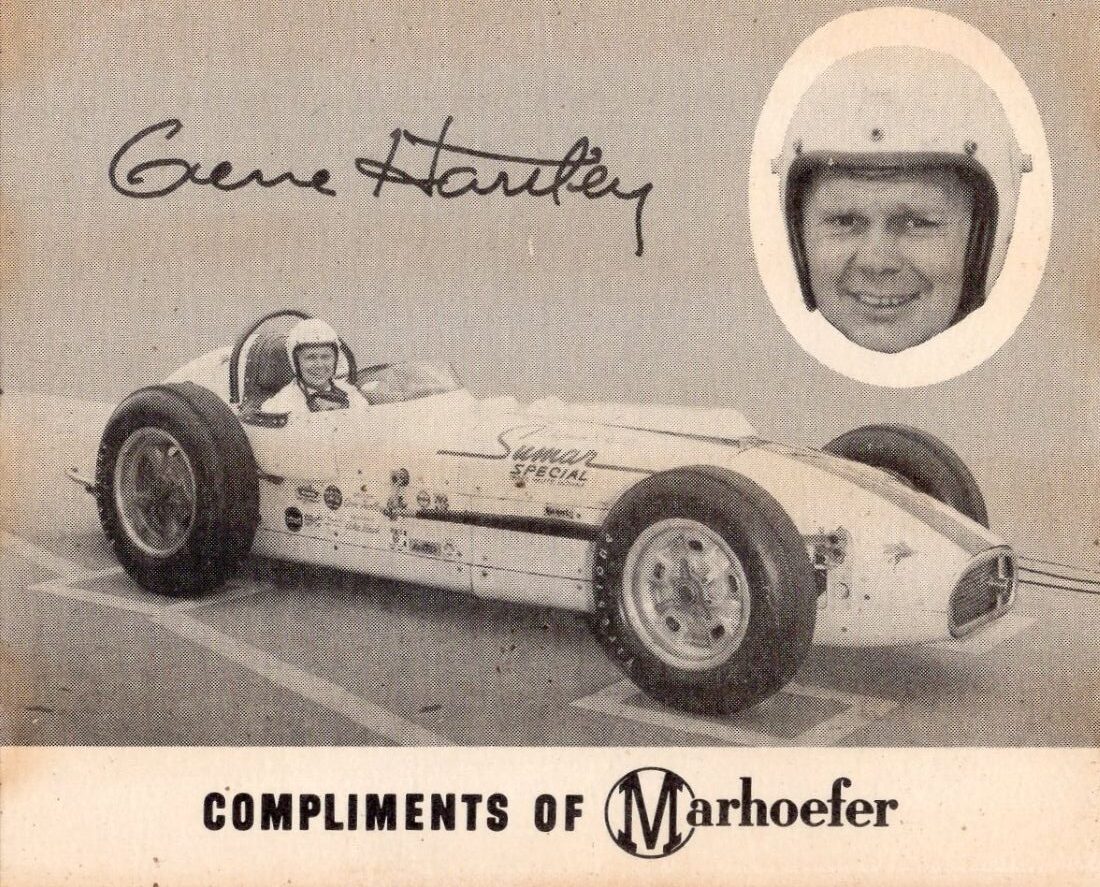
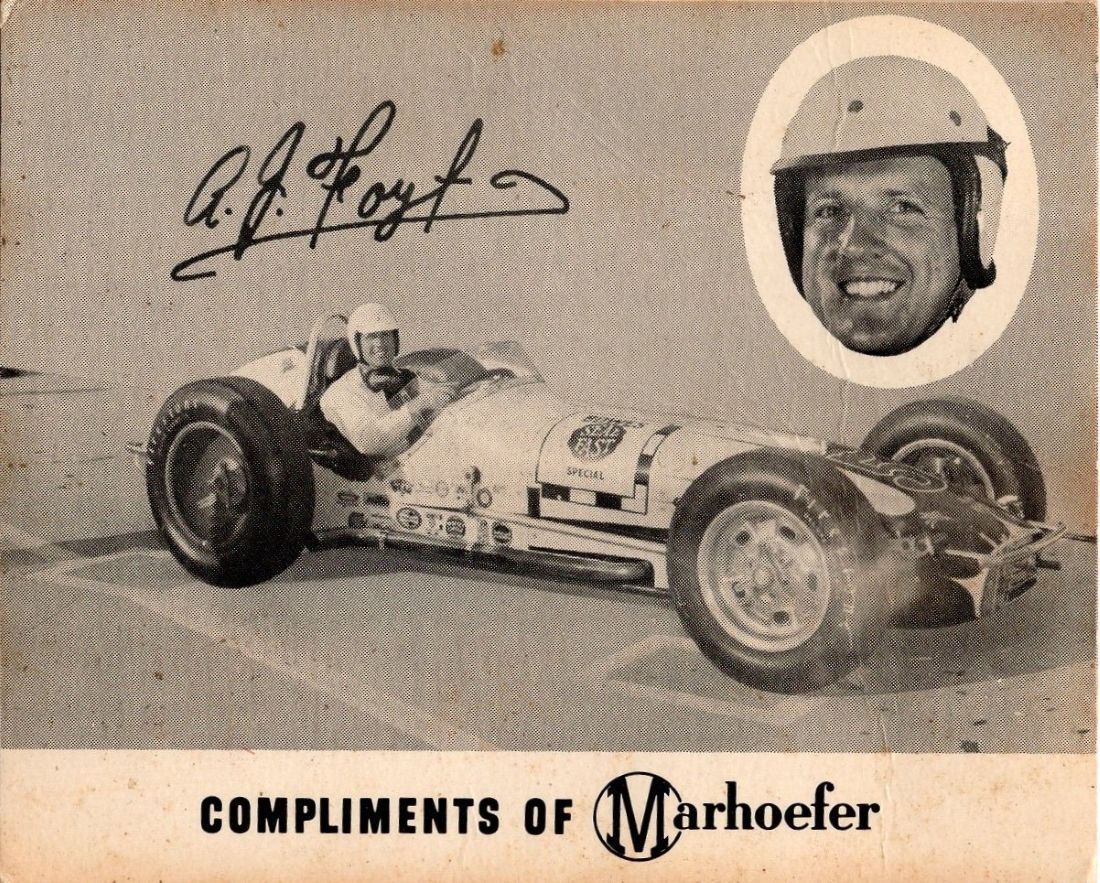
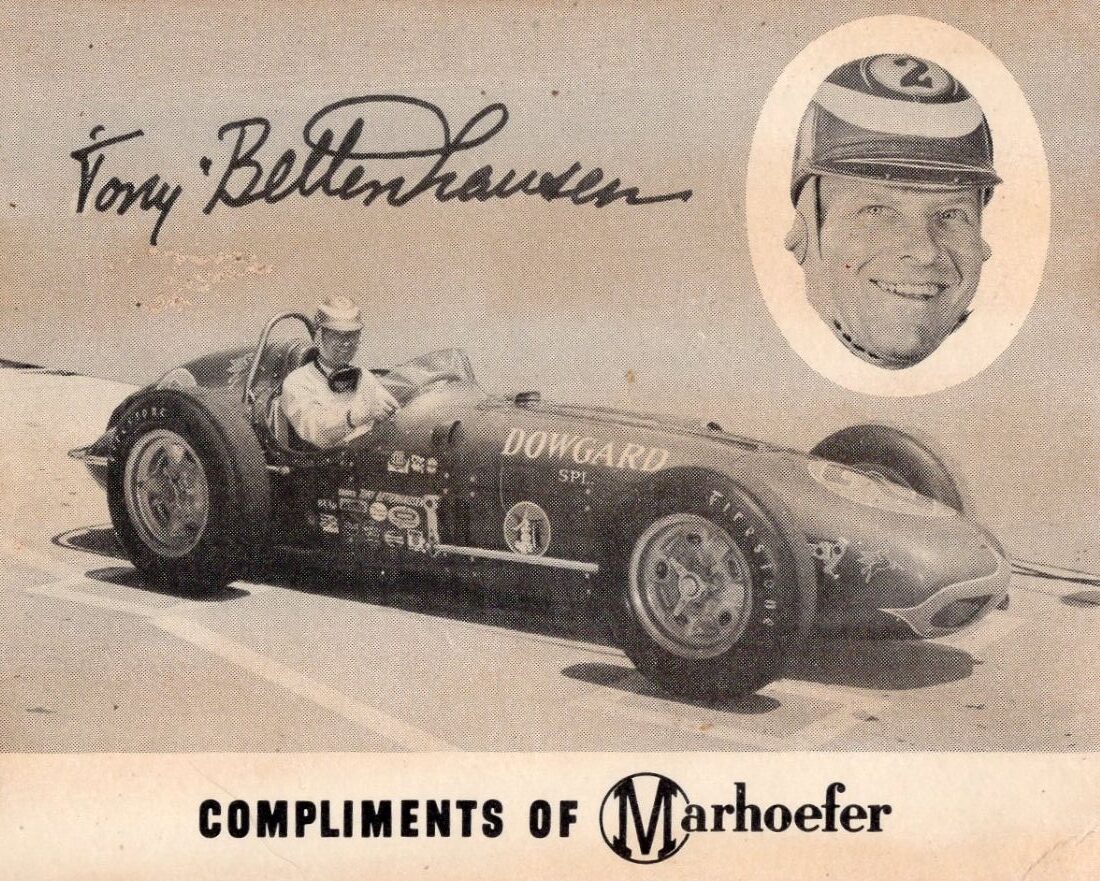
    The front of each card features the driver’s photo in a circle, the car, and the driver’s signature while the reverse side offers biographical information of the driver. Marhoefer is identified on both sides of the card. Because the set was not officially numbered and was locally distributed, many collectors today regard it as both a motorsport keepsake and a historical artifact of regional advertising.

    This set is best known for being the first card set featuring A.J. Foyt. Foyt made his first Indianapolis 500 start in 1958 and had a best finish of 10th in his first three years. This 1961 set was issued the year that Foyt won his first of four Indianapolis 500s.


    Another card in the set features Tony Bettenhausen, one of the most respected drivers in American open‑wheel racing. While these cards were being issued, Bettenhausen was killed in a practice crash at the Indianapolis Motor Speedway on May 12, 1961. He was testing a car for fellow driver Paul Russo when a mechanical failure occurred. Bettenhausen was expected to start his 15th Indianapolis 500 and was considered a contender for speed records during qualifying.


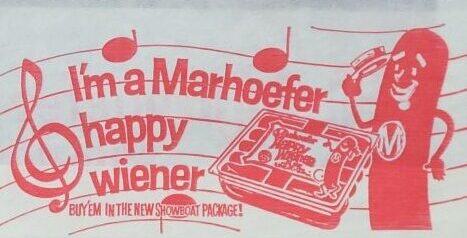
    ** Please note the wiener marks on the back of the card **


    Collector Notes

    Distribution & Handling:
    The wax coated cards were originally included inside meat product packaging which contributes to the variety of back markings and the occasional stains seen today. This usage is consistent with other regional meat product promotions of the era.

    Condition Variability:
    Because the cards were treated as promotional materials rather than premium collectibles, many examples show significant handling. It is not unusual to see driver cards with significant staining and creasing. There are existing cards without the stains, but they are very rare.

    Regional Context:
    The Marhoefer Meats Drivers series was not widely known outside of central Indiana, making surviving examples especially valuable to local history enthusiasts and motorsport memorabilia collectors alike.


    1961 Marhoefer Meats Racing Cards — Checklist

    • Chuck Arnold
    • Tony Bettenhausen
    • Duane Carter
    • A.J. Foyt
    • Elmer George
    • Gene Hartley
    • Len Sutton
    • Johnnie Tolan
    • Roger Ward
    • Wayne Weiler