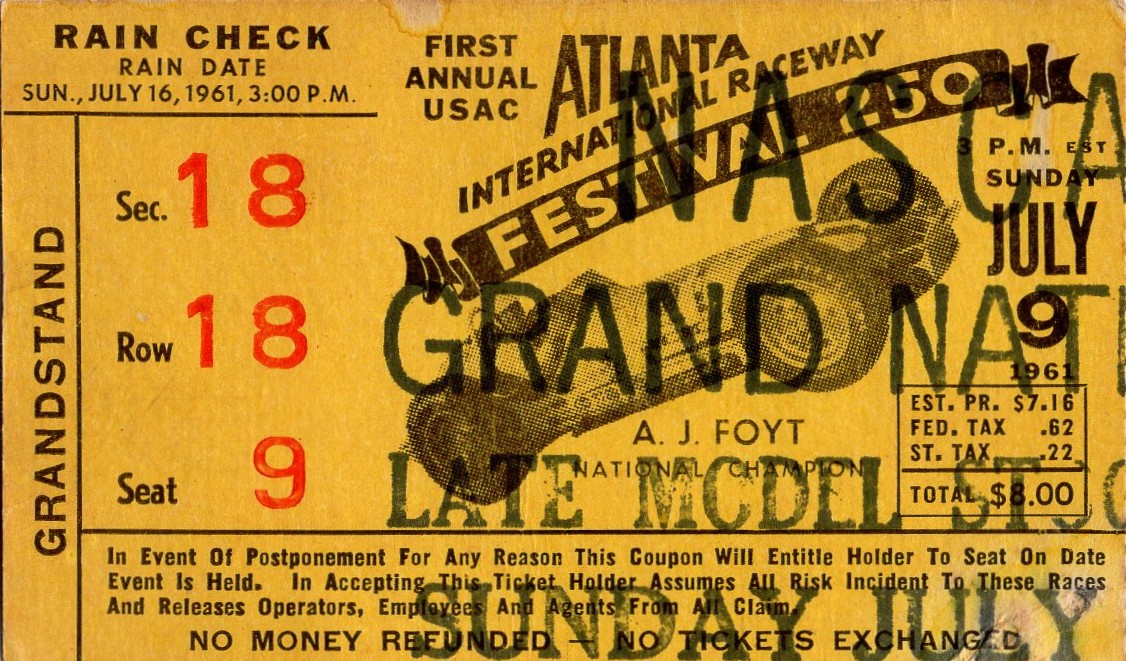
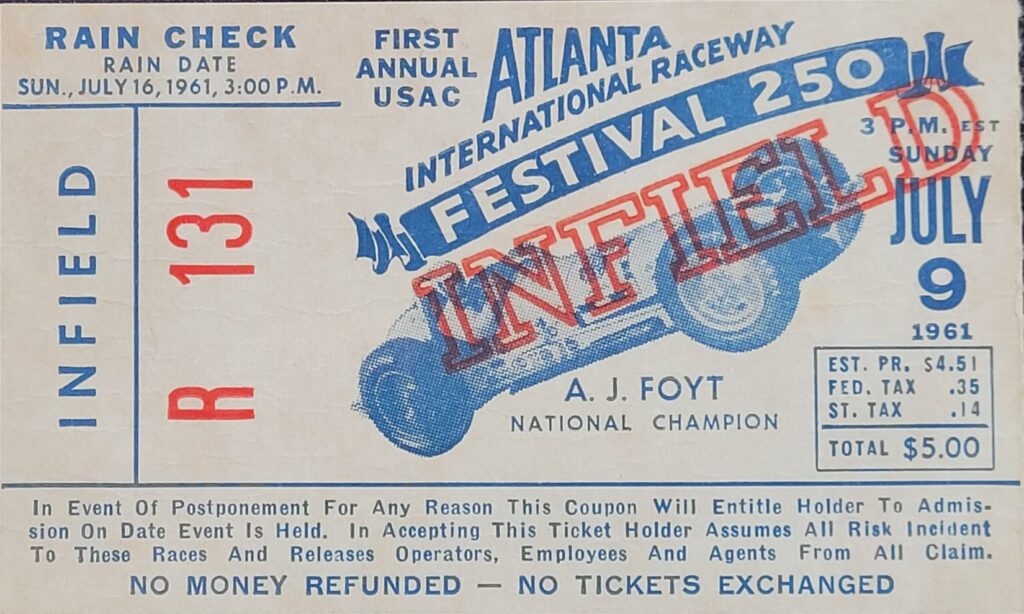
The 1961 Festival 250 at Atlanta International Raceway exists largely because of a sudden and controversial withdrawal by the United States Auto Club (USAC) just days before the event was scheduled to run. Originally planned as a USAC-sanctioned race, the event unraveled approximately 36 hours before practice, when USAC officials abruptly pulled their approval. Contemporary newspaper accounts indicate that the decision stemmed from serious safety concerns, particularly regarding the high sustained speeds expected on Atlanta’s fast 1.5-mile oval and doubts about tire durability under race conditions. USAC driver Eddie Sachs voiced public reservations, warning that the pace would leave drivers physically exhausted and questioning whether Firestone tires supplied for USAC competition would withstand the demands of the track. The late timing of the decision left promoters scrambling and threatened to cancel the event entirely.
The reaction from stock car racers was swift and angry. Fireball Roberts, one of the sport’s most respected veterans, criticized USAC’s handling of the situation, saying the last-minute withdrawal was “terrible” for Southern promoters and should “eliminate USAC from the South forever.” Joe Weatherly was even more blunt, stating that organizers “should have known better than to be doing business with USAC,” adding that the organization “had never done right by anybody.” These comments reflected a broader cultural divide at the time, as many NASCAR competitors believed USAC neither understood nor respected stock car racing, particularly in NASCAR’s Southeastern stronghold.
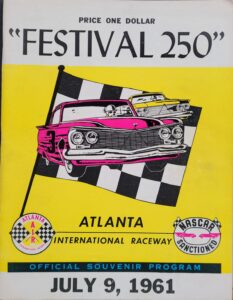
With the event on the brink of collapse, NASCAR president Bill France Sr. moved quickly to preserve the race, stepping in to sanction the Festival 250 as a NASCAR Grand National points event. The decision not only saved the weekend for fans and teams but also underscored NASCAR’s growing dominance in American stock car racing. What had begun as a USAC experiment ultimately became a uniquely NASCAR affair, remembered less for its original intent than for the circumstances that forced its transformation. The Festival 250 remains a rare example of a race reshaped by sanctioning politics, illustrating both the fragility of motorsports promotion in the early 1960s and NASCAR’s ability to capitalize when opportunity — and controversy — presented itself.
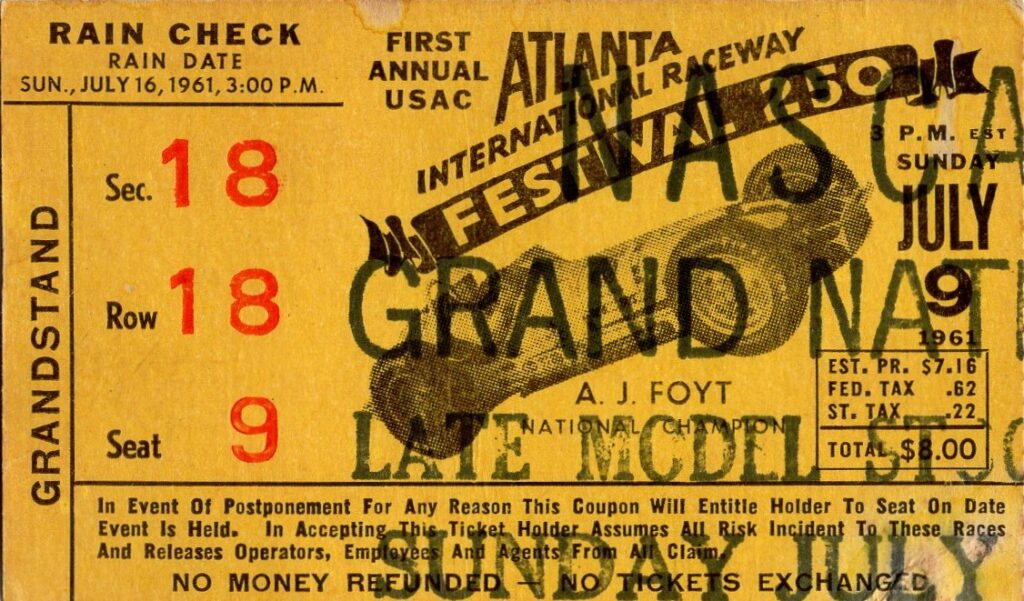
With USAC’s abrupt withdrawal and NASCAR’s quick intervention still fresh in everyone’s minds, the 1961 Festival 250 finally took the green flag on Sunday, July 9, 1961, at Atlanta International Raceway. Originally conceived as a showcase event, the race drew an enthusiastic crowd — reports from memorabilia and race programs suggest around 18,000 spectators packed the grandstands to see how the newly sanctioned NASCAR Grand National event would unfold in the Georgia heat.
Once underway, the 167-lap, 250-mile contest proved to be all NASCAR from start to finish. Fred Lorenzen, driving the No. 28 Ford for Holman-Moody, delivered a commanding performance. Starting fifth on the grid, Lorenzen led 52 laps and ultimately lapped the entire field, crossing the finish line with a full circuit advantage over his nearest rival.
Bob Welborn, piloting a Pontiac, was credited with second place, finishing one lap down, while Richard Petty brought his Plymouth home third, further cementing the race’s place on NASCAR’s Grand National map.
In this way, what began as a sanctioning controversy and logistical scramble became a memorable chapter in early 1960s stock car racing — a race that rewarded adaptability and speed, seized by NASCAR’s rising momentum and defined by one of the era’s most dominant drivers.
Leave a Reply