
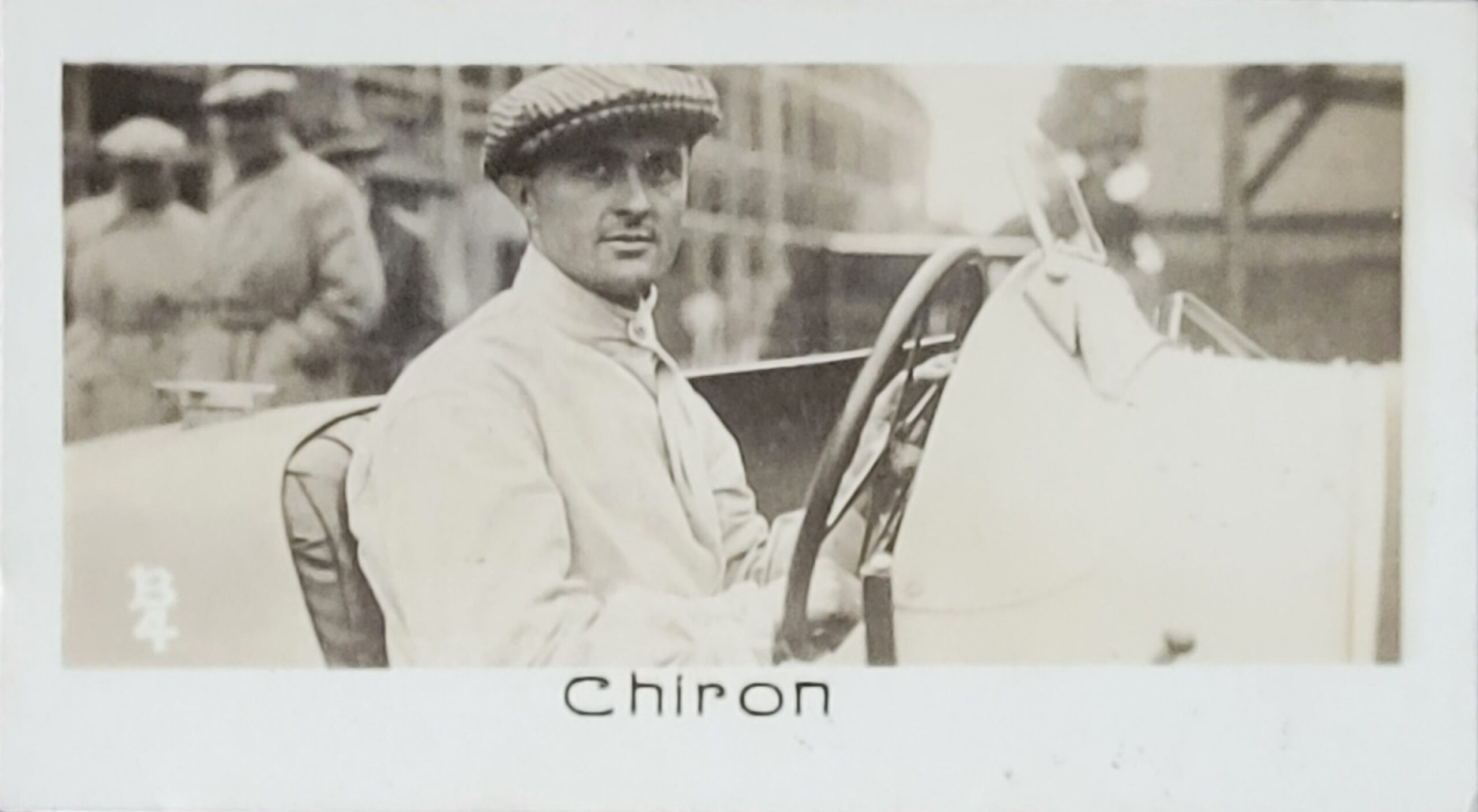
In the early 1930s, as Europe was captivated by the daring exploits of Grand Prix drivers and land speed record breakers, a French biscuit and confectionery company created one of the most charming motorsport collectibles of the era. The La Pie Qui Chante (“The Singing Magpie”) card set, released in 1932 as part of their third series, offered young collectors a miniature window into the world of speed and danger.
Produced as promotional premiums to be found inside packets of biscuits and candies, the set consists of 90 cards across multiple sports. Each card is delightfully small, measuring just 29mm x 49mm (roughly 1 1/8″ x 1 15/16″), making them among the tiniest vintage trading cards ever issued. The fronts feature crisp black-and-white photographic portraits with the subject’s name printed below, while the reverses contain short biographies written in French.
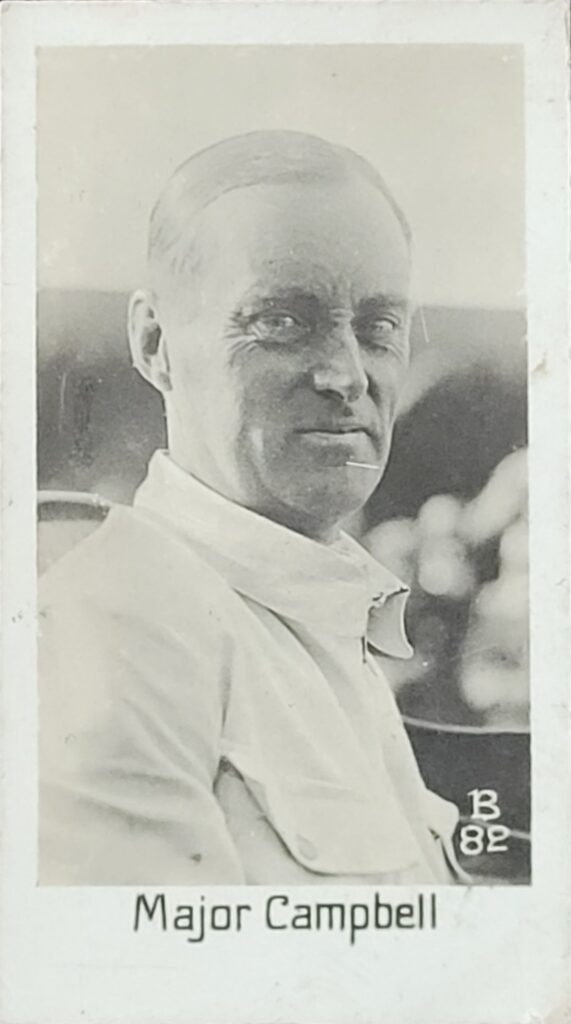
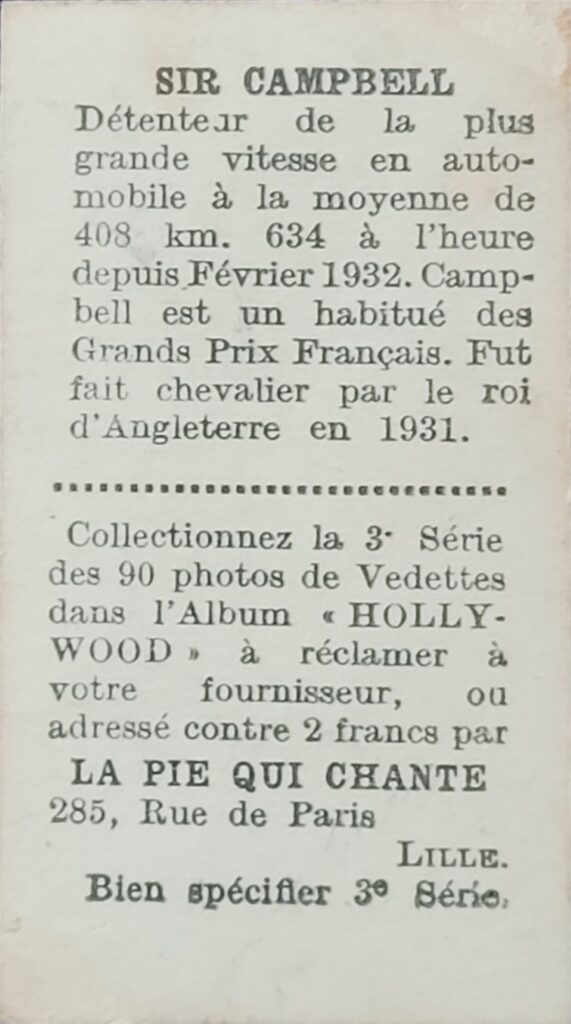
While the set covers boxing, cycling, soccer, and other popular sports of the day, it is the nine automobile racing cards that have become prized by collectors. These cards immortalize some of the greatest names in pre-war motorsport during one of its most glamorous and hazardous periods.
The racing subset includes legendary figures such as:
- Louis Chiron, the elegant Monegasque driver widely regarded as one of the finest talents of his generation.
- Malcolm Campbell, the British speed king famous for his Blue Bird land speed record attempts.
- Sir Henry Segrave, the pioneering Anglo-American driver and land speed record holder.
- Albert Divo, a French racing hero and multiple winner of the Targa Florio.
- Kaye Don, the Irish-born speed record challenger and Grand Prix competitor.
- Other notable inclusions are drivers like Robert Benoist, Jules Goux, Louis Rigal, and Charles Dodson.
These cards perfectly capture the romance and excitement of the era — an age when drivers wore leather helmets and goggles, raced without seatbelts, and regularly pushed both their cars and themselves to the absolute limit. The 1930s were a golden time for European motor racing, with intense national rivalries between French Bugattis, Italian Alfa Romeos, and the emerging German Silver Arrows just on the horizon.
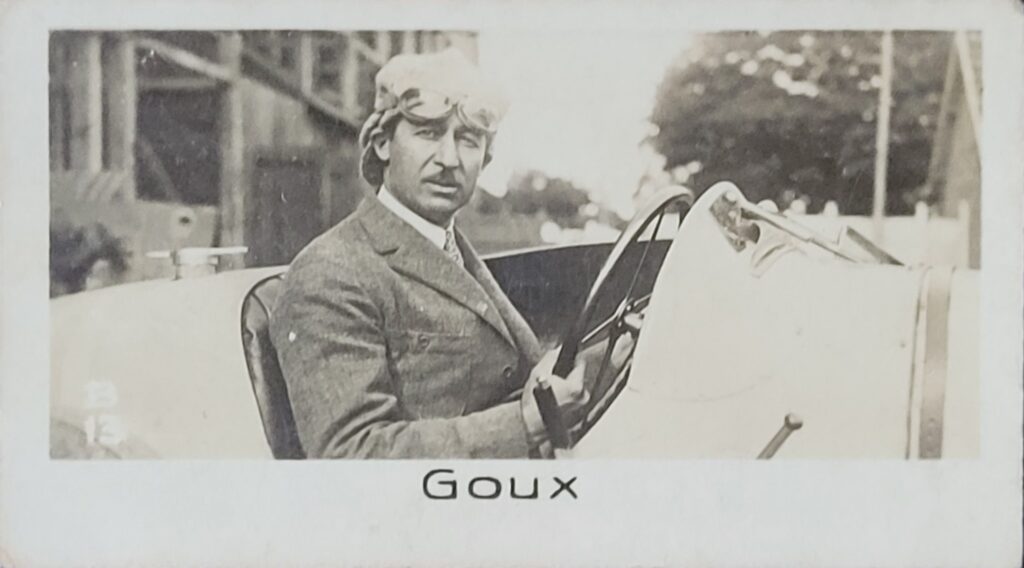
Today, the 1932 La Pie Qui Chante racing cards are quite scarce. Because of their miniature size and delicate paper stock, many have been lost, damaged, or discarded over the decades. High-grade examples, especially of star drivers like Chiron or Campbell, are considered rare treasures in the European motorsport collecting community. They represent not only an early example of motorsport memorabilia but also a cultural artifact from a time when racing heroes were every bit as celebrated as film stars.
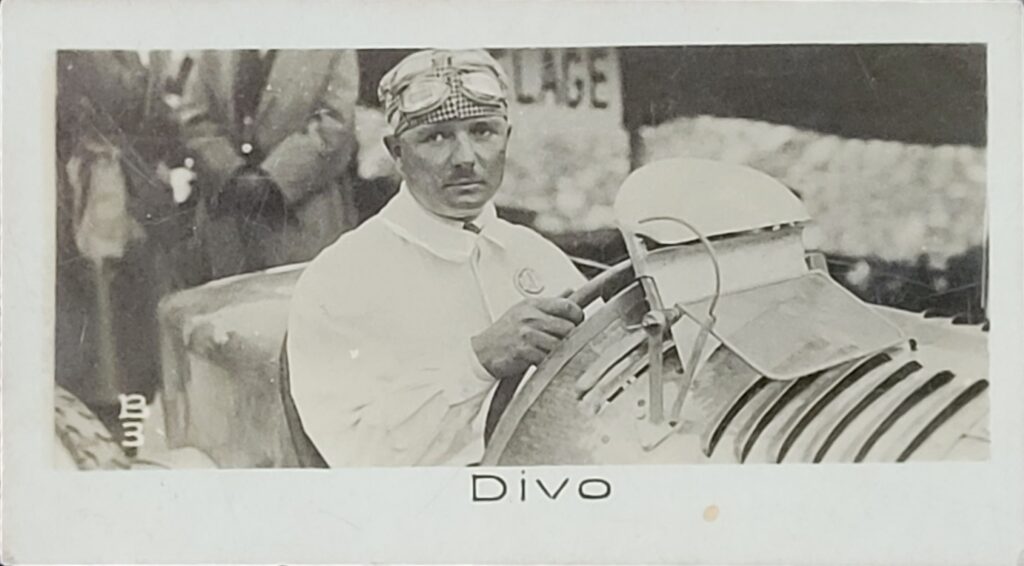
For collectors, these tiny cards offer something special: a direct, personal connection to the golden age of motor racing. Holding one in your hand feels like holding a piece of 1930s Europe — when the roar of supercharged engines echoed across the continent and a new generation of speed demons captured the imagination of the world.
Whether you’re a serious racing historian or simply someone who appreciates beautiful vintage ephemera, the auto racing cards from the 1932 La Pie Qui Chante set remain among the most evocative and charming collectibles from motorsport’s most romantic period.
The auto racing gallery of nine cards can be found at 1932 La Pie Qui Chante (FR)
Leave a Reply